
June 7, 2015
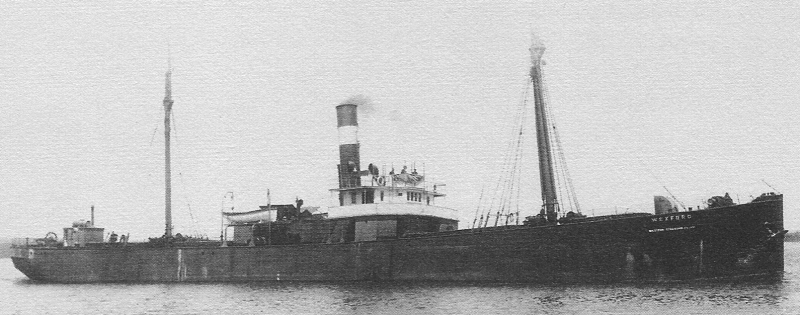
The Wexford wreck is a 250′ steel freighter, distinguished as one of Cris Kohl’s “100 Best Great Lakes Shipwrecks”. Located about 7 miles (11 km) Northwest of Grand Bend, in Lake Huron, Ontario, it combines history and tragedy with an adventurous and unforgettable dive.
The Wexford was one of eight ships that were lost with all hands in Lower Lake Huron, the worst hit, during the “Great Storm of 1913” (November 8-10). She was carrying a cargo of 96,00 bushels of wheat bound for the Port of Goderich. So severe and wide ranging was this storm that it was dubbed the “White Hurricane”, and it is recognized as the worst storm in the recorded history of the Great Lakes. Waves were reported to reach 35′ high. In the end, 248 sailors lost their lives (188 in Lake Huron) when their ships went down. The Wexford lost all 18 hands, along with 2 guests hitching a ride home. Ironically, it was the oldest ship to go down, with the youngest crew (most were in their 20’s, with one in his 30’s),
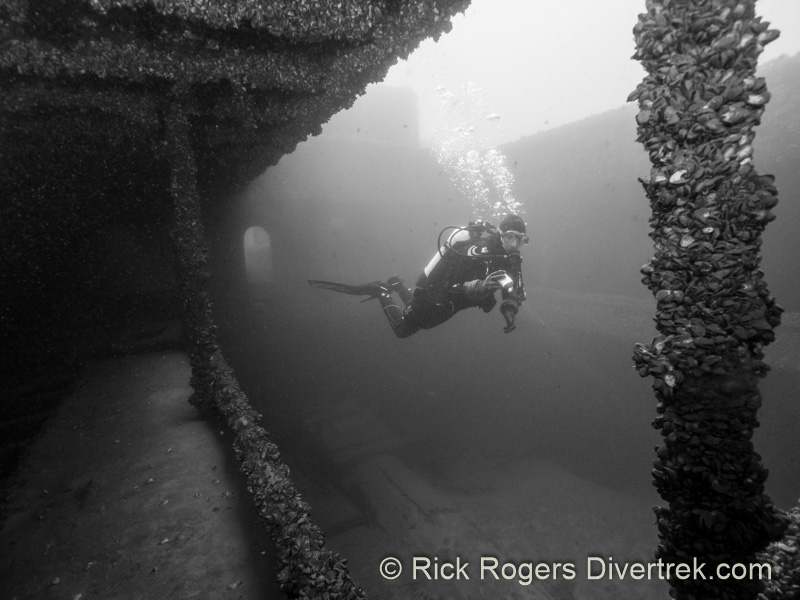
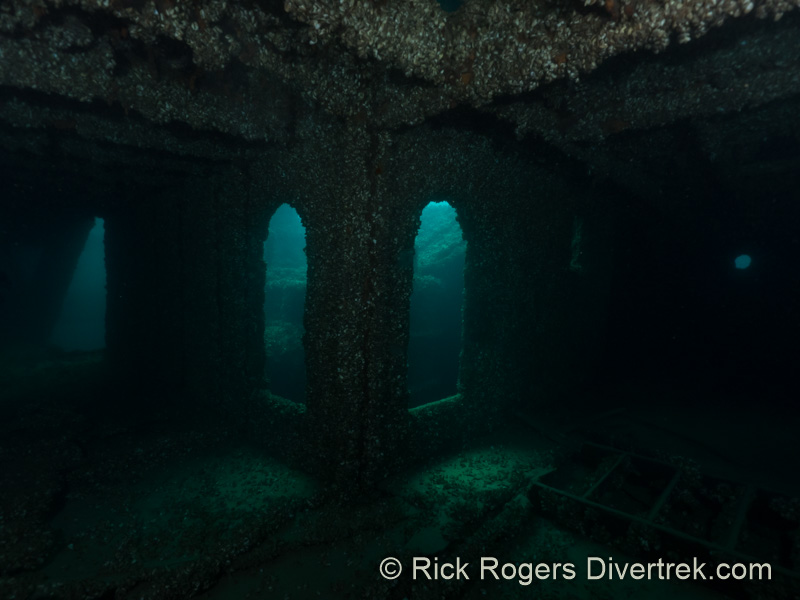
Built in 1883 in England, the Wexford (250′ x 40’1″x 16’7″) now sits upright in about 80′ of water. If you want a sneek preview, the Marine artist Robert McGreevy offers an accurate representation of the Wexford underwater. Considering that it’s been submerged for more than 100 years, it’s surprisingly in good shape and largely intact, thanks to the cold, fresh water of the Great Lakes. When I descended down the line I was a little alarmed at first of the lack of visibility for so early in the season, but slowly I began to see the wreck’s shadow materializing out of the blue-green haze.
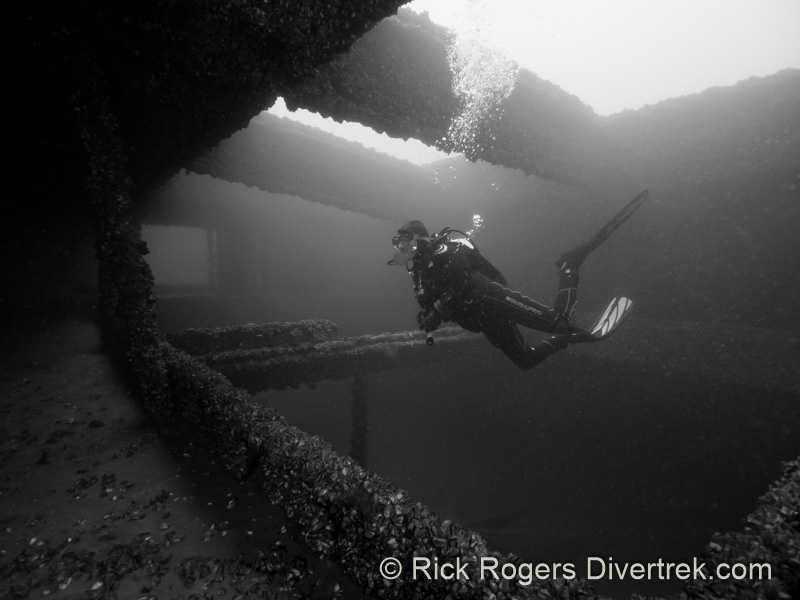
Visibility that day was about 20′, but I was relieved that the vis opened up once inside the wreck to a much clearer 40′. This I figured was likely due to the filter-feeding action of the Zebra mussels (actually an invasive species) which coat the inside, mostly at the upper level, and also due to some sedimentation. Water temperatures were a cool 45 degress F.
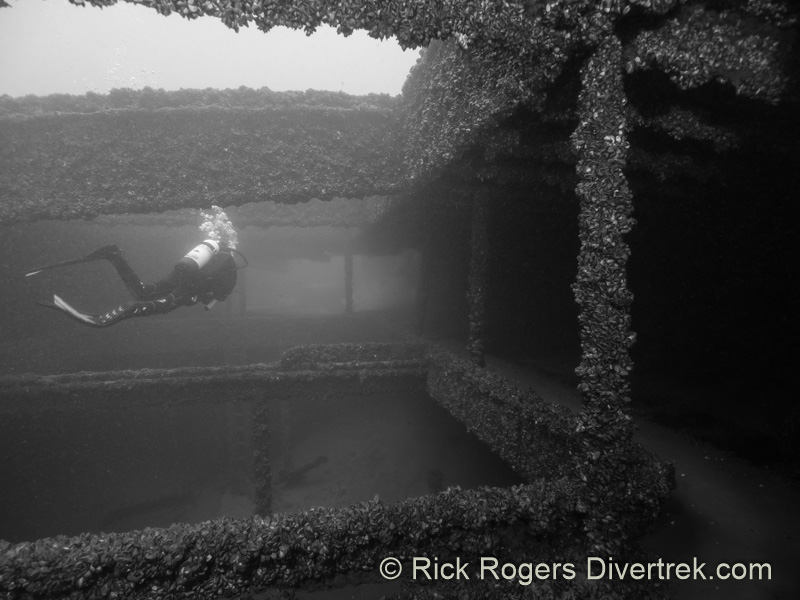
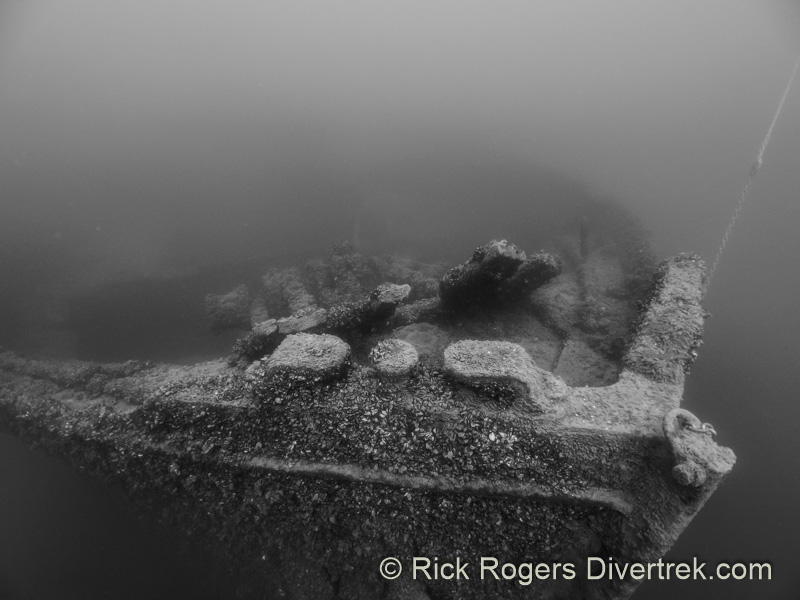
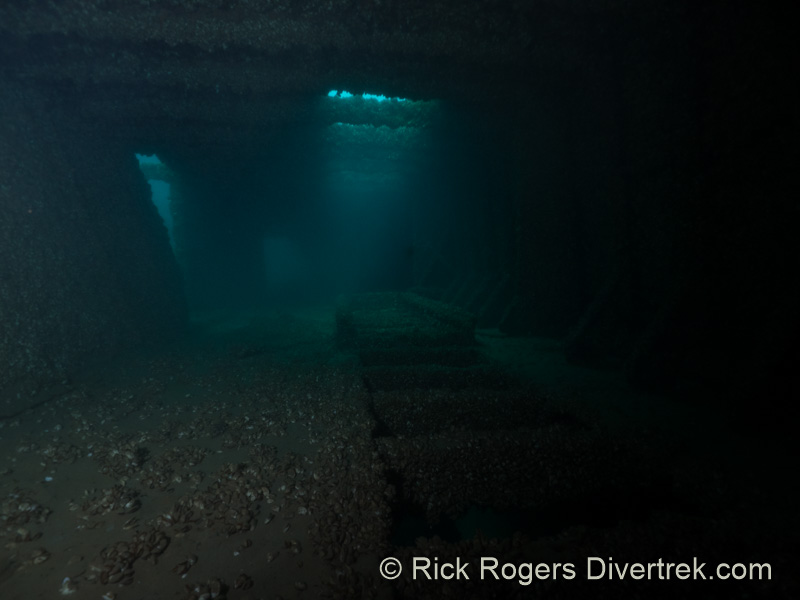
The wreck is relatively safe to penetrate, as you are rarely out of sight of direct light. The only real danger is silting, as long as you are prepared for the cold water. And you will want to stay clear of the bow, which has already “caved-in”, and will eventually collapse at some time in the future. It would appear that the counter weight of the two anchors (still in their wells) is still supporting the stempost, so far stalling the collapse.
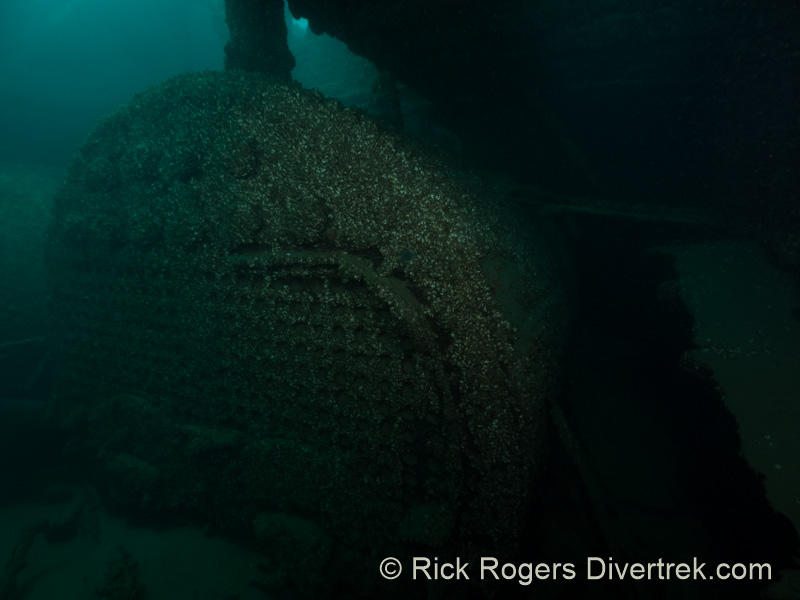
You’ll want to explore the deeper lower level first, and see the two massive boilers and associated machinery. You can pass by the Starboard boiler between the hull to continue to the stern. If you look closely you can still see some bits of coal on the boiler room floor.
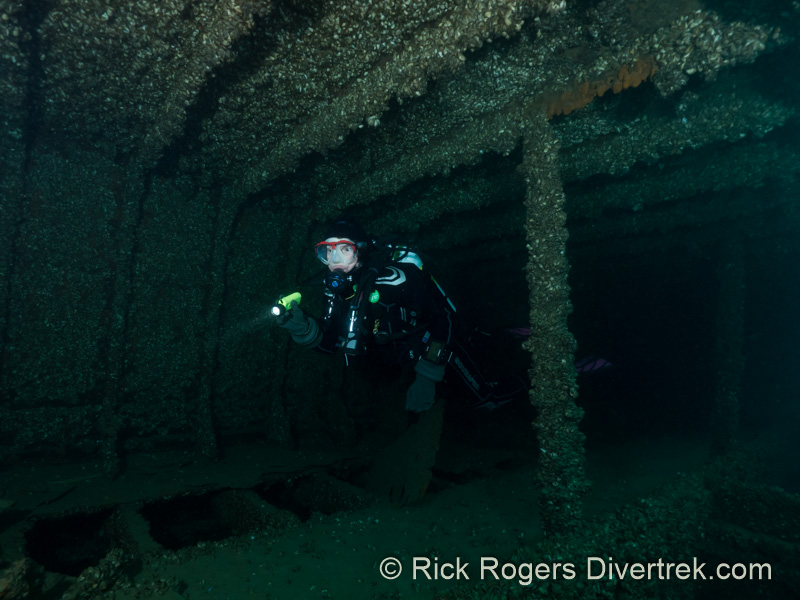
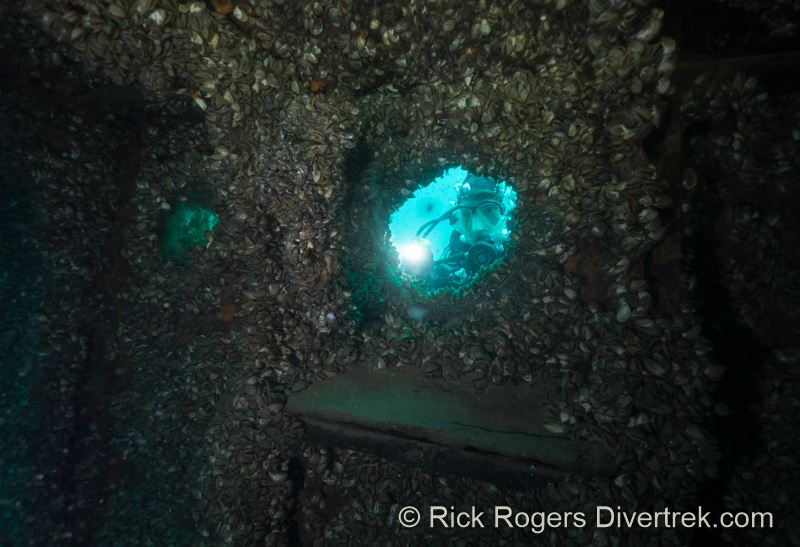
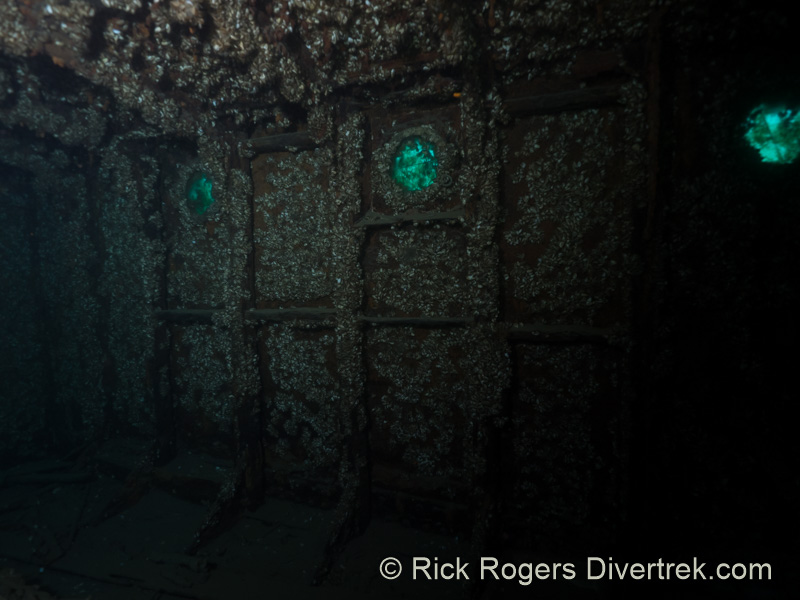
Over the years thoughtless divers have plundered the wreck of some of its artifacts, but I still found plates and bowls, a fire hose, and a large wrench. Please leave these for future divers to enjoy! Many of the port holes still have their glass intact, along with some wood paneling. The numerous long, straight and open passageways, for holding cargo, remind you that this was once a working ship.
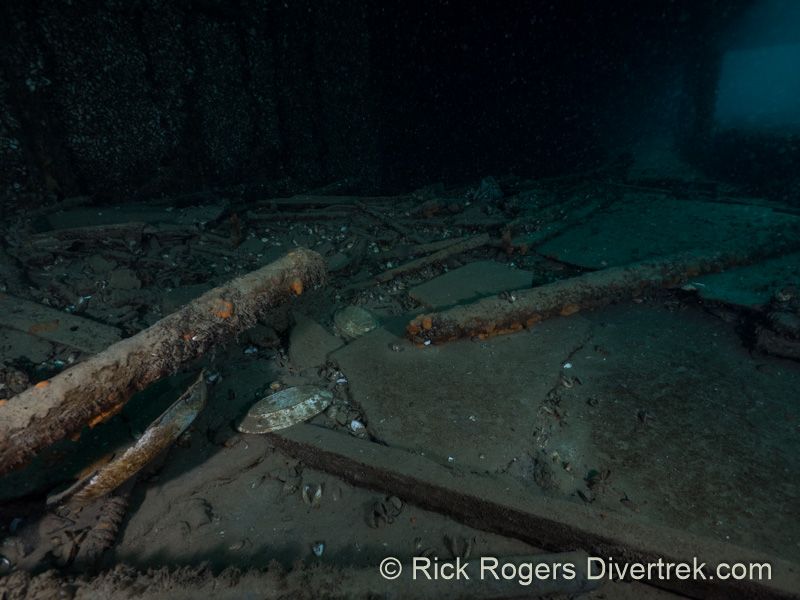
When you have used up much of your bottom time you can explore the deck. You will notice the absence of the pilothouse and smokestack. The storm washed them off! At the stern you will see the steering post and mechanism for the ship’s wheel.
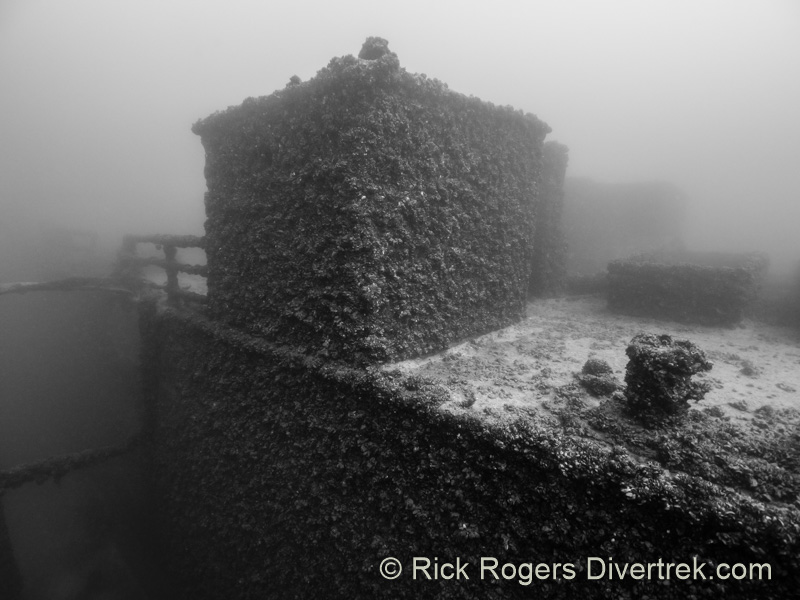
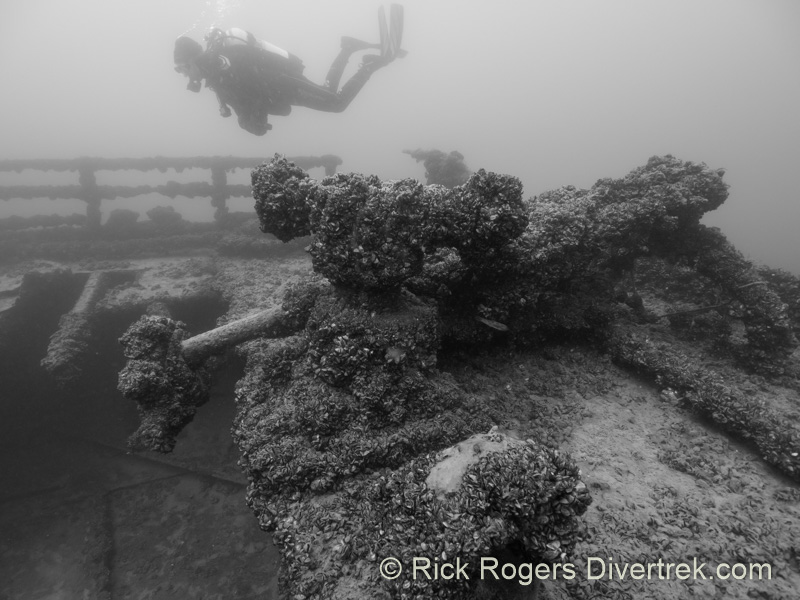
This is one of those wrecks that you could dive over and over again, discovering new things that you didn’t see before. Providing that the water and weather conditions are cooperative, the wreck offers alot of photographic potential: the interplay of light, depth of vision, perspective, and the multiple diagonal lines of the decks.
Tips:

Red Devil Scuba (named after the owner’s football team in England) in Chatham offers regular charters to the wreck, from Grand Bend. Gary, the owner, is a local expert on the wreck, and actually participated in the original archaeological survey of the wreck days after it was accidentally discovered in August of 2000. Preferring the quiet and relaxed atmosphere (and cost), of nearby Bayfield, we stayed at the “Loft B&B” Bed & Breakfast. I can easily recommend them to anyone. Heather and Bill are very thoughtful and gracious hosts, and were helpful in all things. You place your order for breakfast from a menu. Their accommodations are really first class. The nearby Black Dog Pub & Bistro in the downtown area offers a quality experience. And after dinner you can enjoy a walk along the Heritage Trail at the Lakefront, only a few minutes away, or browse the nearby shops. The “Malta”, a cargo ship, ran aground here in 1882 near Pioneer Park, along the trail, and is clearly visible from shore.
Fully Tek Charters (fullytek.ca) offers charters as well.
References: Cris Kohl, The 100 best Great Lakes Shipwrecks (Vol.1), 2005.