

August, 2021.
Southern Georgian Bay near Penetanguishene (“Penetang”) has some of the most interesting and photogenic wrecks in the Great Lakes. Two of Cris Kohl’s “Top 100” ship wrecks are located here, and explored in this post. Accessible to all skill levels, and in warm, clear waters, these are just simply fun wrecks to dive.
Heading out on the Georgian Explorer from Penetang Harbour, it look like another day of diving was going to be a “wash out”. The skies were dark, there was some driving rain, and even lightning strikes could be seen in the distance. But Captain Steve was optimistic that things were going to improve, and at the very least we would be able to find some protected spots to dive. I would’ve lost that bet that day as he turned out to be right! By the time we had rounded the peninsula toward the outer Islands the weather started to clear, and it turned into a memorably beautiful, bright day, with excellent diving conditions.
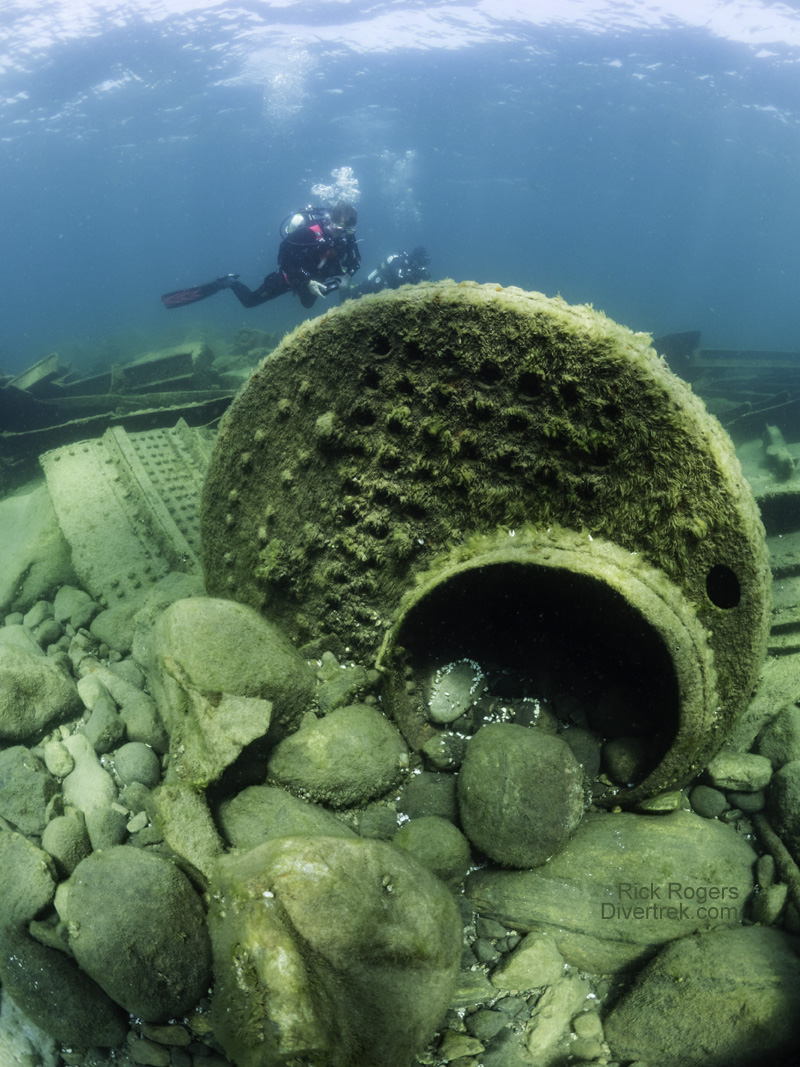
The first wreck that we headed for was the Mapledawn, off the NW side of Christian Island, and one of Cris Kohl’s top 100 wrecks. It’s easy to see why from the photos below. The Mapledawn was a 349′ steel freighter that stranded in a blinding snowstorm on November of 1924 while loaded with Barley.
It’s also distinguished as the only shipwreck that lies in two great lakes, each being a “Top 100” wreck! The Mapledawn began life as a steel freighter named the Manola in 1890. It was later purchased in 1918 for use in Europe during WW I. The plan was to cut the 282′ ship in half in Buffalo so that it could fit through the Welland canal (which bypasses Niagara Falls), move them through the St. Lawrence to Montreal, where the two halves would be reunited. But as the two halves were being towed across Lake Ontario, a snowstorm developed which resulted in the bow portion sinking off False Duck Island, west of Kingston, in December of 1918, just after the war ended. A new bow was constructed several months later and joined with the orphaned stern half of the Manola, and renamed the Mapledawn.
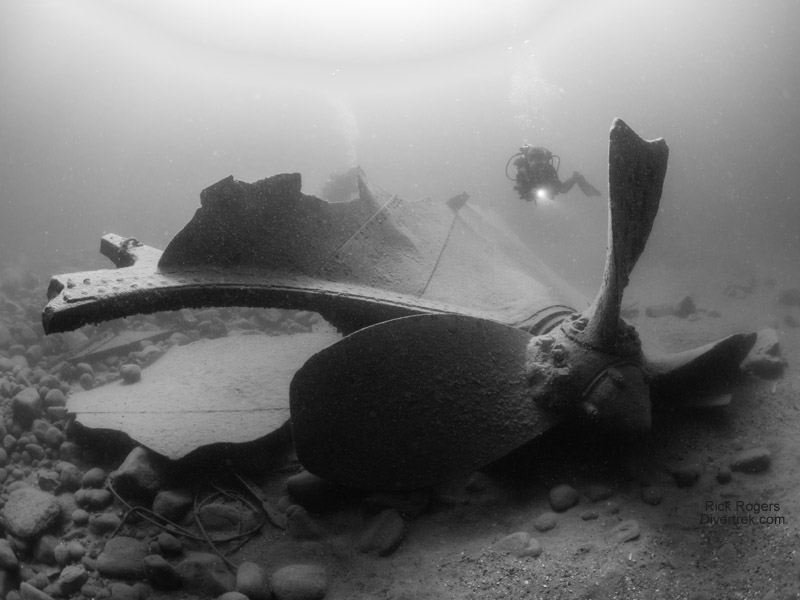
Today the Mapledawn rests in 10′ to 30′ of water on a rocky bottom with the bow at the shallower end, and the propeller in deeper water about 50′ from the stern. The gigantic boilers and steam engine are the tallest point of the wreck, and reach almost to the surface.
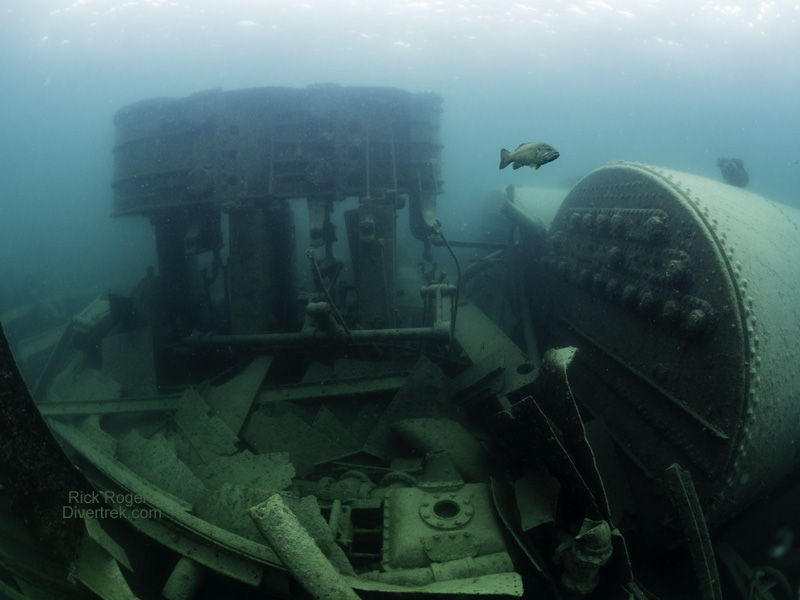
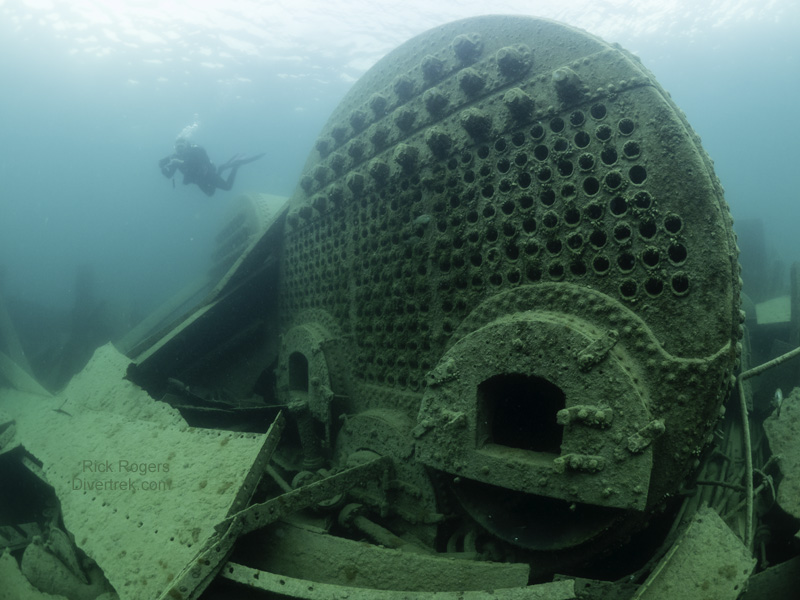
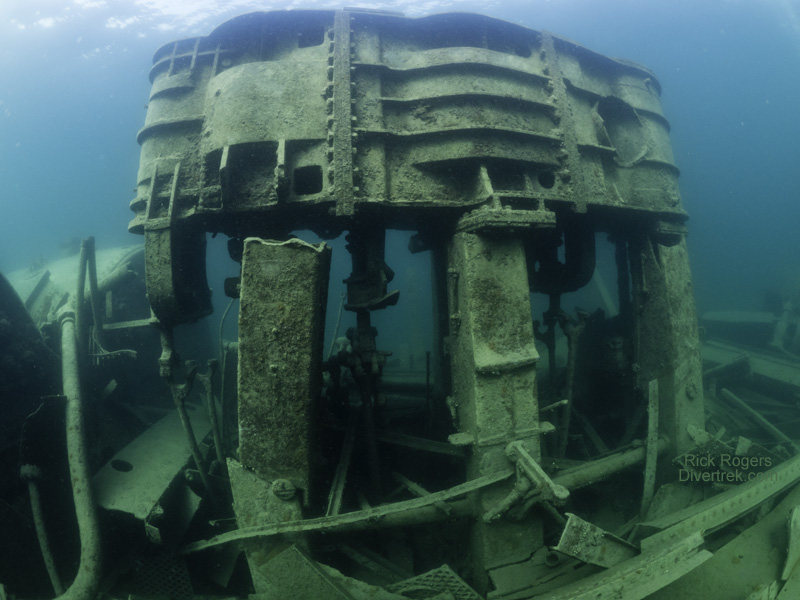
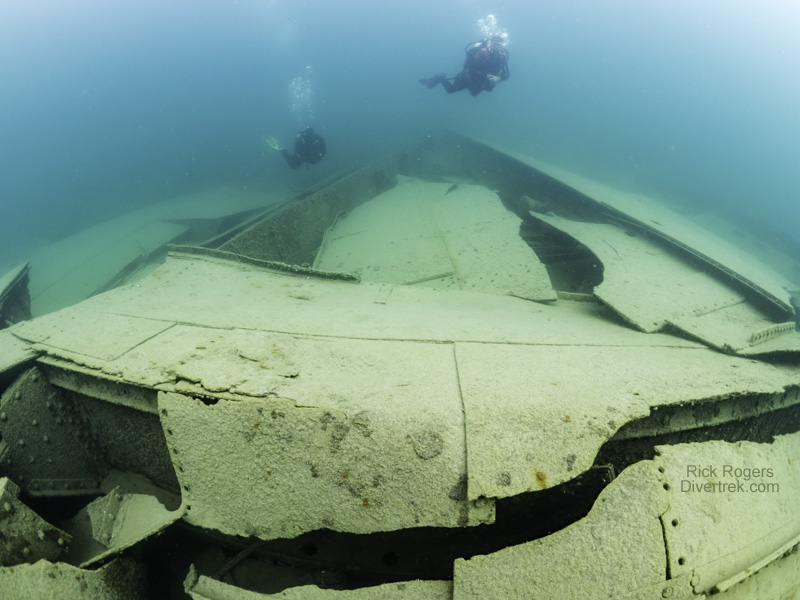
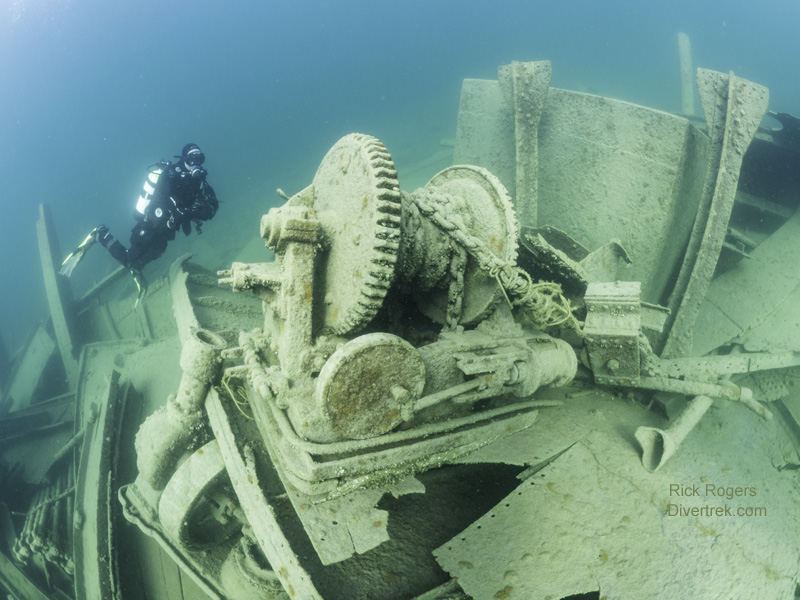
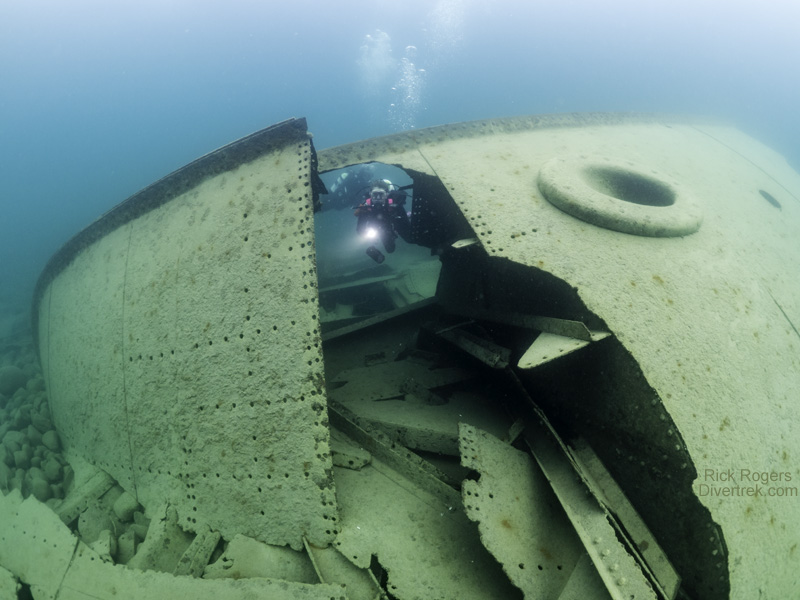
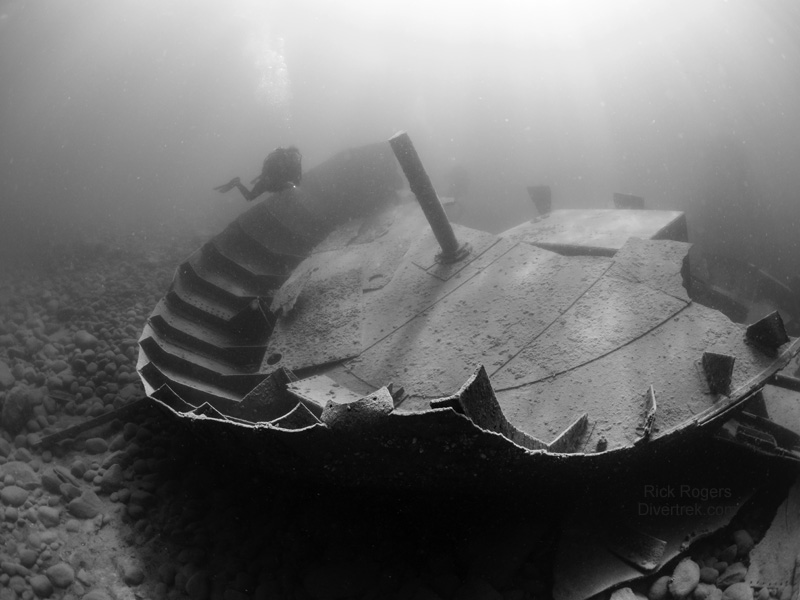
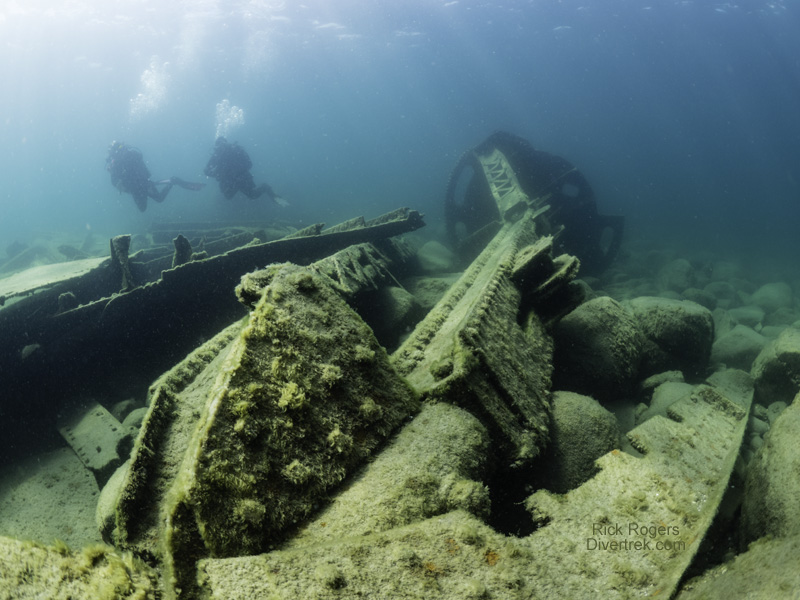
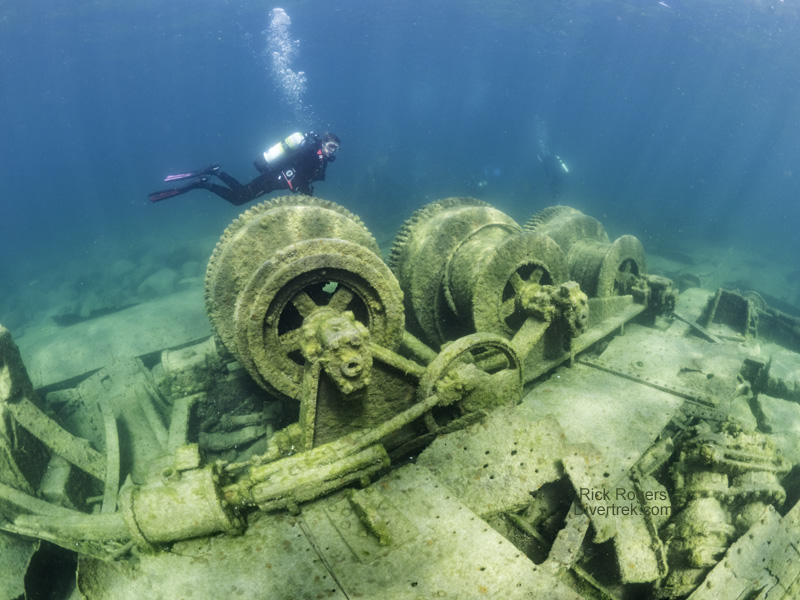
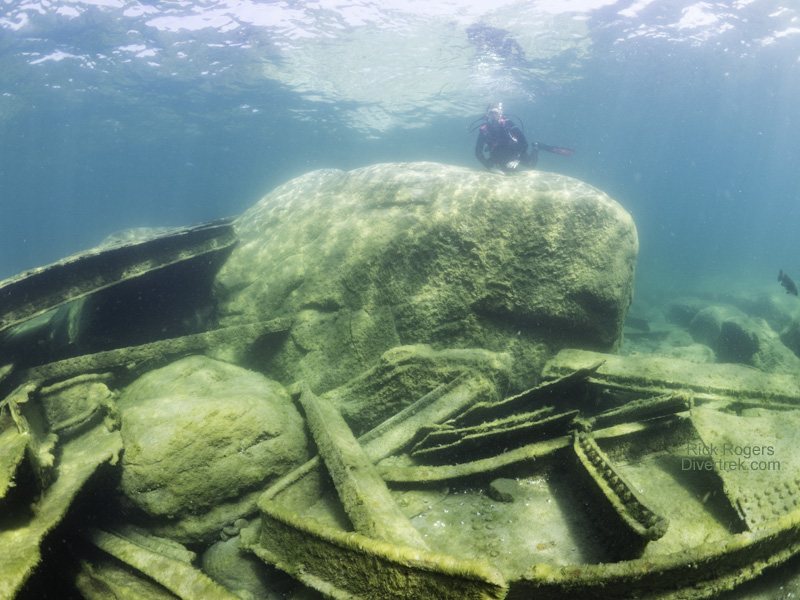
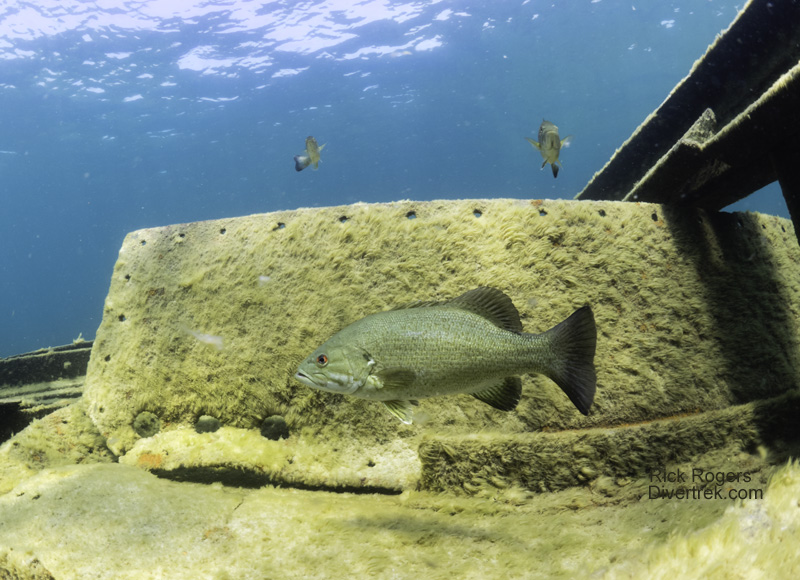
The second wreck that we dove, and one of the three big “M’s”, was the Michigan, a 300′ steel barge that lies in less than 15′ of water off the NW corner of Hope Island. The Michigan was built in 1890 as a railroad car ferry, and became a total loss when the gales of November blew the ship onto the rocks. This is a favorite wreck of Capt. Steve’s, as the debris field is so huge with much to explore: giant gears, twisted metal, a crane, and lots of other interesting machinery, metal and fish.
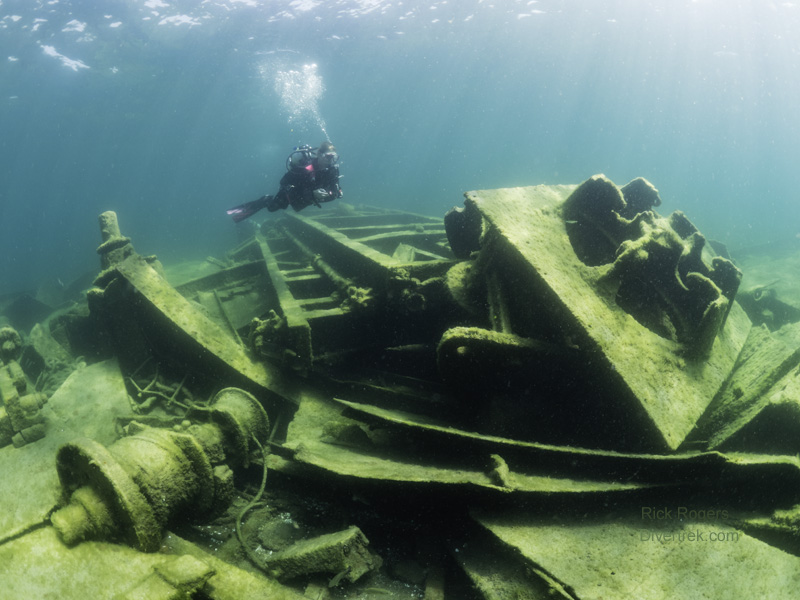
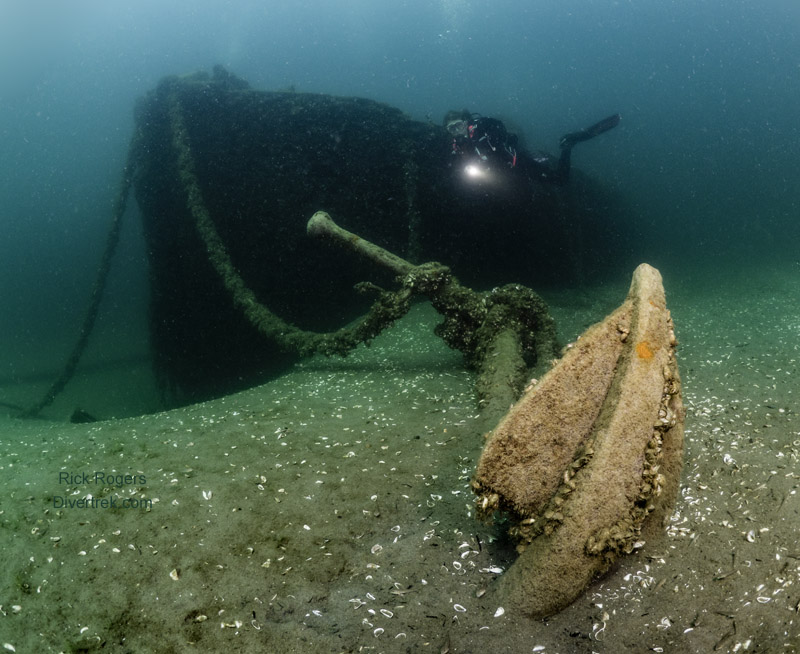
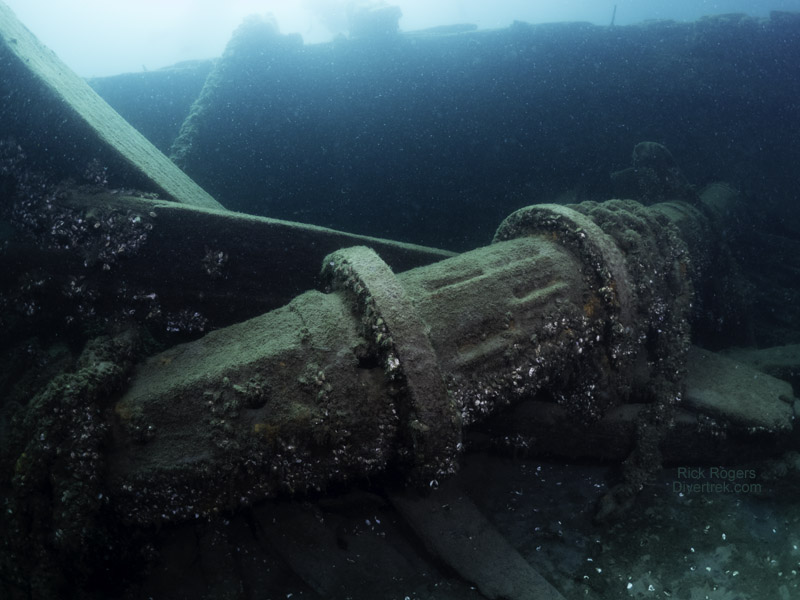
The Marquette was third wreck that we dove and is distinguished as the second “Top 100” wreck in the region. It’s a small 139′ bark (three-masted) sailing ship that was built in 1856 and foundered in November of 1867 with a load of corn with no lives lost. It now lies in 29′-54′ of water off the NE corner of Hope Island.
The hull is mostly intact, but no decking remains. Inside the silt-filled hull the center board box and winch can be found. A portion of the rudder remains as well.
References:
- “The Top 100 Best Great Lakes Shipwrecks”, Volume 1, 2nd edition, 2005, by Cris Kohl.
- “The Great Lakes Diving Guide”, 2nd edition, 2008, by Cris Kohl.
Tips:
We dove with Scuba 2000 who regularly charters the Georgian Explorer in Penetang. Although they had Divemasters for the check-out divers, we were able to dive our own plan. On the first day we dove the Chippewa wreck, which is located at the mouth of the Musquash River, and is sheltered from the winds on the open Bay. The Chippewa is a 94′ wooden steamer that was built in 1874. Be careful as the visibility is limited (10′) at this site, and the silt is easily disturbed.
The motels in the region were very pricey. This however lead us to a lucky find at the Dragonfly Dreams Inn. Cheryl is a very gracious and accommodating host. This welcoming and comfortable bed & breakfast has a well deserved 5-star review, and I can’t recommend staying there enough. It was only 5-10 minutes away from the Penetang docks, and restaurants for eating out.
The Georgian Explorer is a large, spacious boat with a head, and covered staging area. There is also a large storage area and seating below if required. They provide a hot casserole lunch with snacks and drinks provided. Captain Steve is very knowledgeable about the area, and has been diving it for decades.
The Penetang area is rich with history. If you have time, visit the historical Discovery Harbour at Penetang. It’s a reconstructed British Fort, post War of 1812, featuring two replica tall ships, the HMS Bee (a supply schooner) and the HMS Tecumseth (a frigate warship). Also nearby in Midland is the 17th century Sainte-Marie Among the Hurons, a reconstructed Fort that served as the headquarters for the Jesuit missions to the indigenous Huron Wendat people.