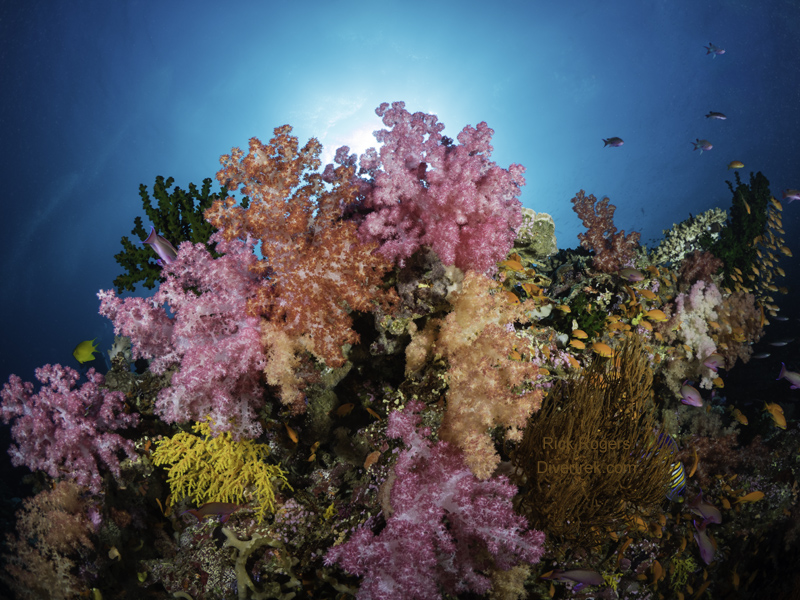
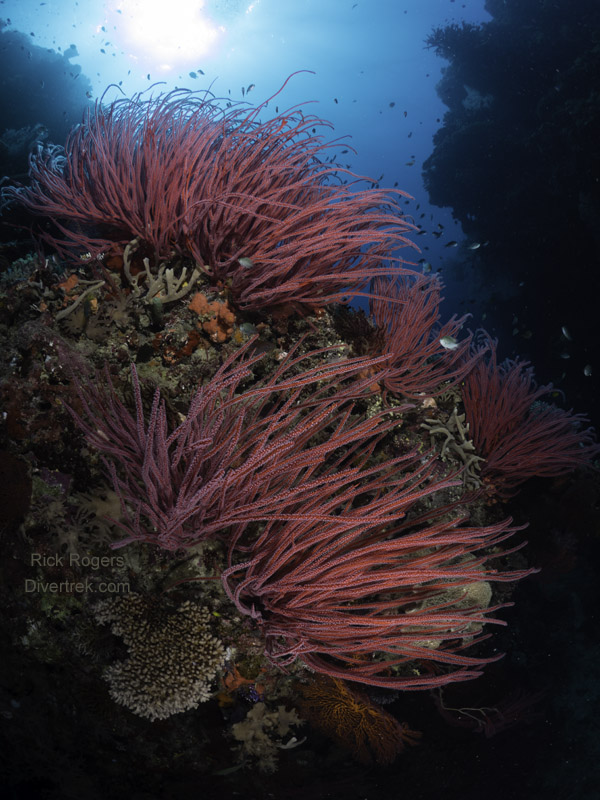
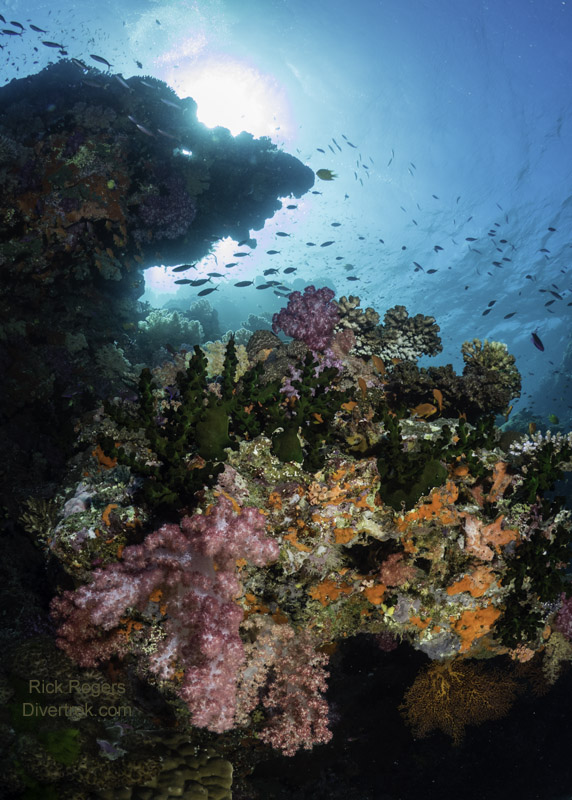
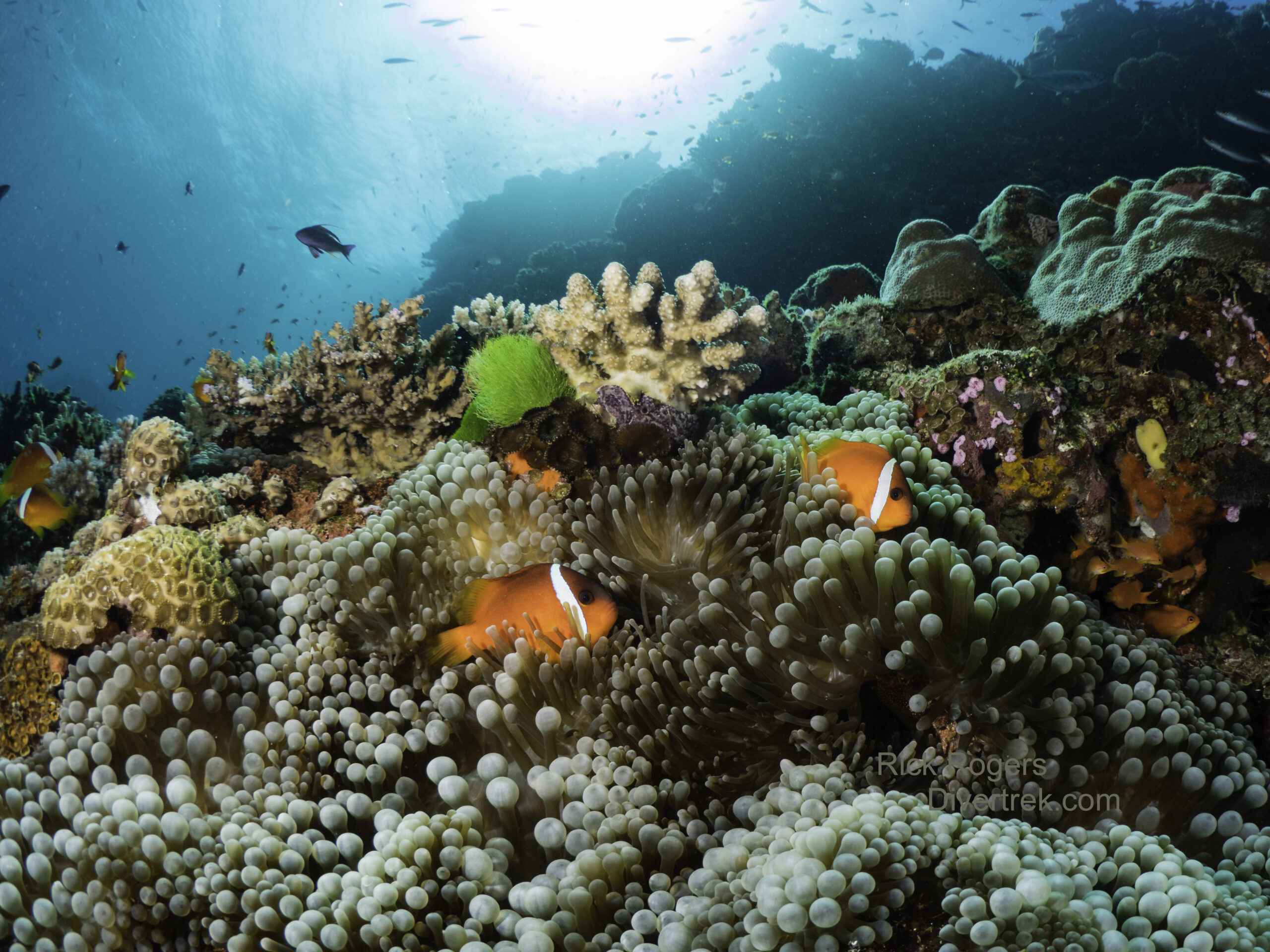
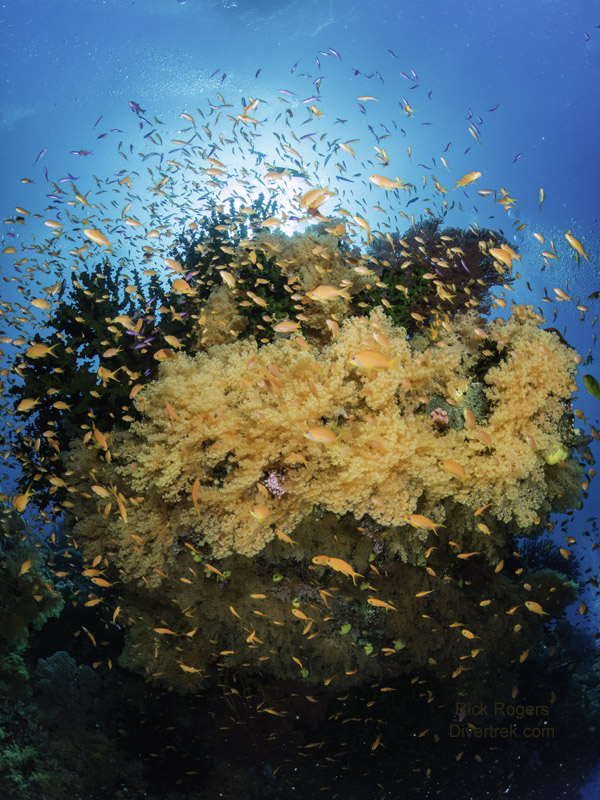
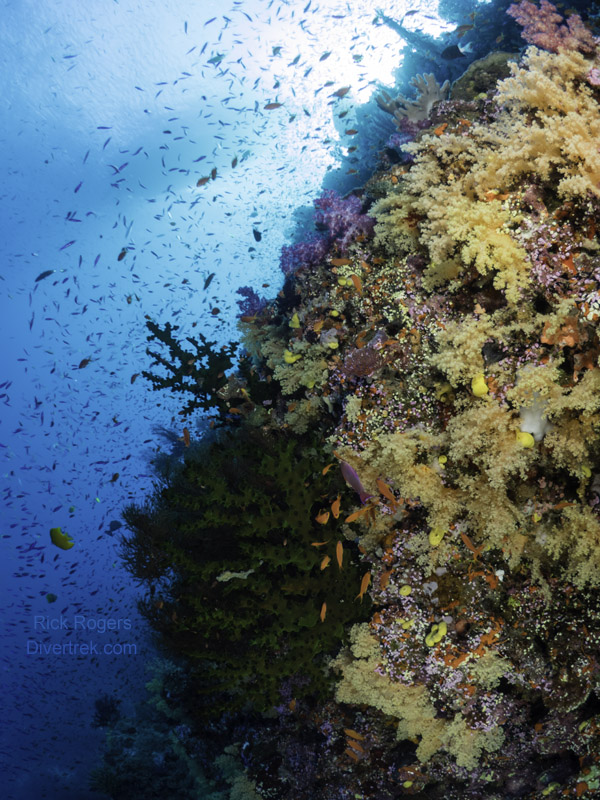
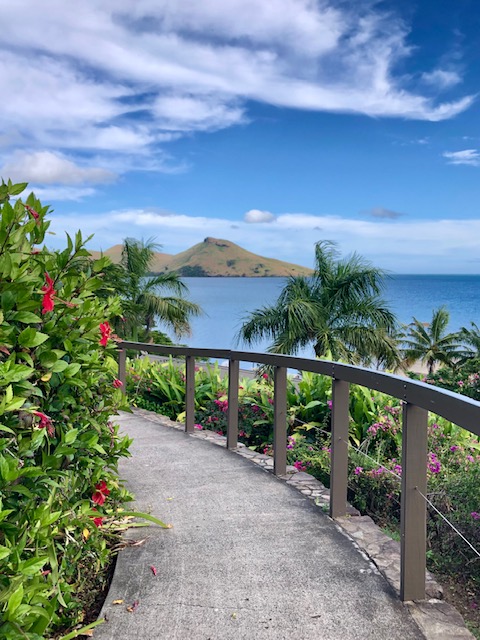
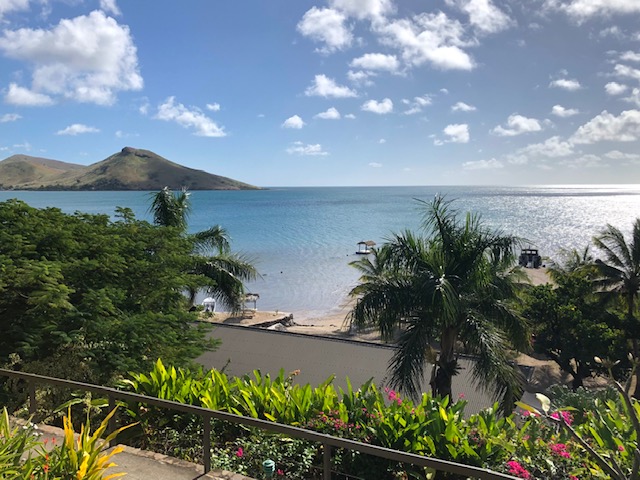
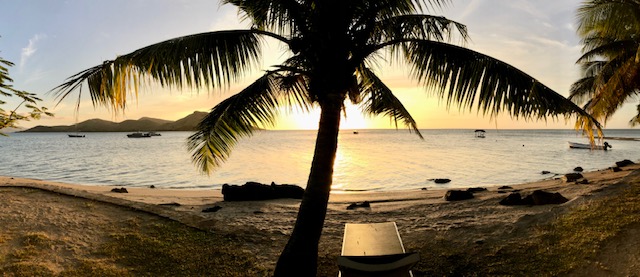
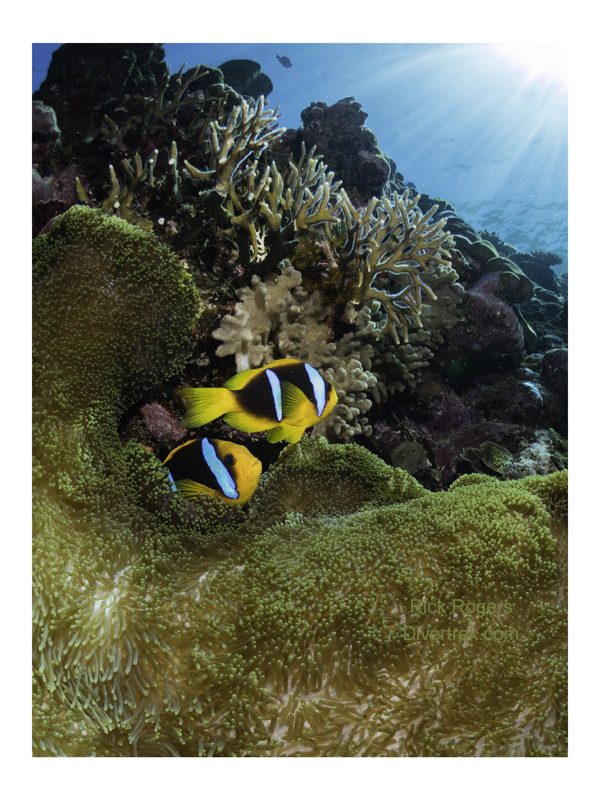
Morning sunrise over a beautiful Fijian reef . The soft corals here are so lush & colourful that you quite often won’t know which way to point your camera!
July, 2022.
Fiji has a well known and deserved reputation as the “Soft Coral Capital of the World”, and easily ranks within the top five coral reefs to dive. This trip focuses on the main Island of Viti Levu on the Bligh reefs (yes, that Bligh!) in the North, and the famous Beqa Lagoon shark dive in the south.
It’s little known that Fiji hosts the world’s third largest barrier reef system, the Great Sea Reef (GSR), or alternatively the Cakaulevu Reef. An area of globally significant biodiversity, it stretches more than 450 km and contains over 1200 km2 of reef systems. We dove a branch of that located in the Bligh Waters, located between the two main islands of Viti Levu and Vanua Levu. The “ring-shaped” Beqa Lagoon, where the shark dive takes place, can be seen at the southernmost tip. You can see from the image that the North has a much more arid climate compared to the south, which is rainforest. Image source: WWF-Pacific.
Diving the Bligh Waters.
The Bligh waters are named after Captain Bligh, who sailed through the area in a landing craft after the infamous “Mutiny on the Bounty” in 1789. Much of the area is now a Marine Conservation area, the Vatu-I-Ra Conservation Park, which offers some of the best diving sites in Fiji.
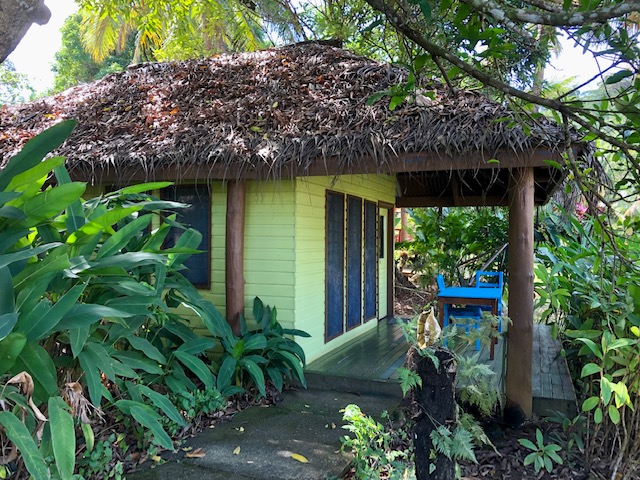
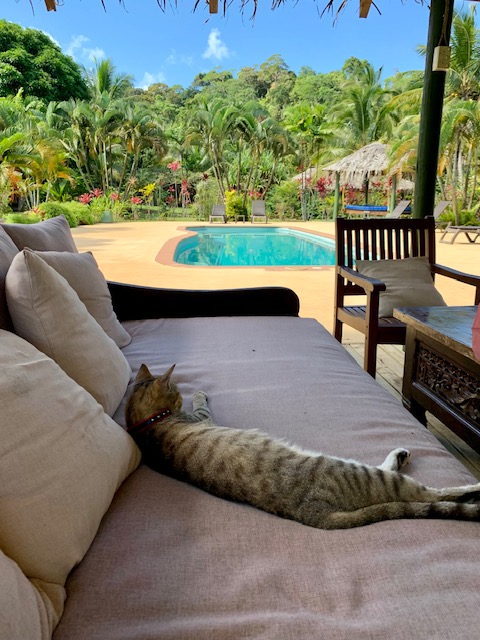
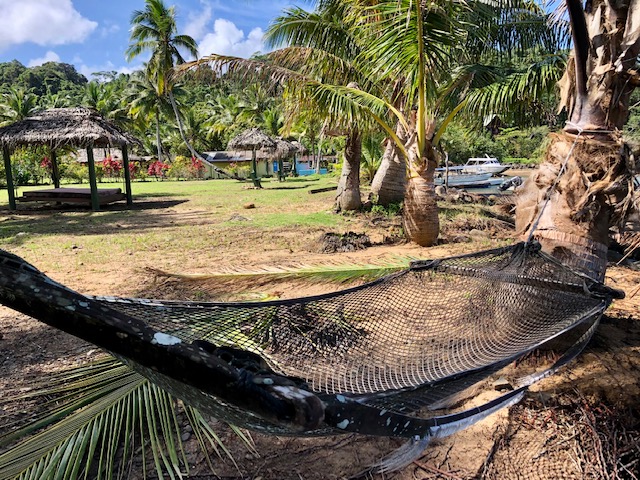
To access these reefs we stayed at Volivoli Beach resort which has an on-site dive shop, Ra Divers. My travel agent and the owner of Squba Holidays, Mike O’Meara, has stayed here many times and highly recommended them. The experience is absolute heaven on Earth; from the people who staff it, the grounds, and the food, to the spectacular diving. The resort is about a 2.5-3 hour scenic drive from Nadi Internationl airport on the West coast. Don’t worry about the length of the drive, as it actually goes by quickly, and it’s part of the experience. The shuttle drivers are happy to talk about Fiji, and you’ll pass by picturesque mountains, forests, charming villages, and of course fields of sugar cane (a main export).
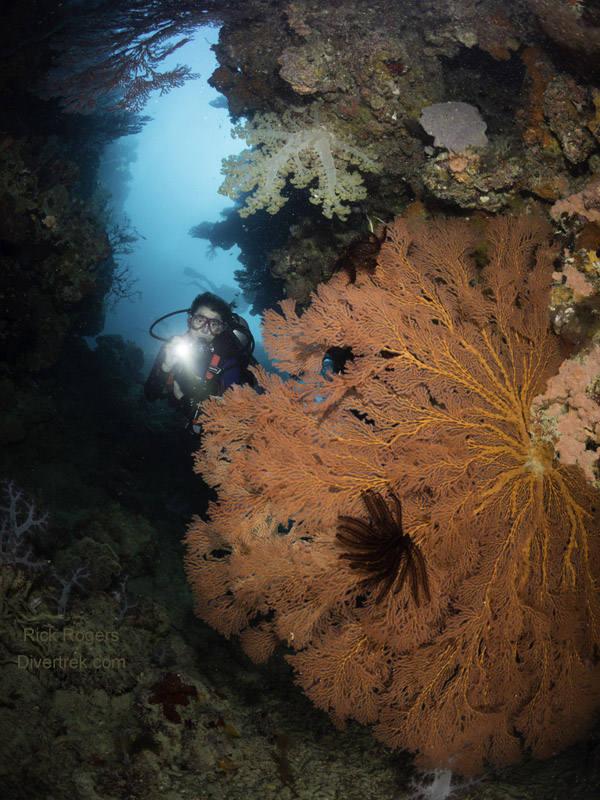
A Brittle Star on a Sea Fan at Blue Planet dive site. Fiji has the largest sea fans that I’ve ever seen! Owing to high winds for several days, we had to dive more protected sites to the West, away from the open Channel.. These sites don’t have the colour or visibility that sites to the East have. But yes, this is considered a “B” site!
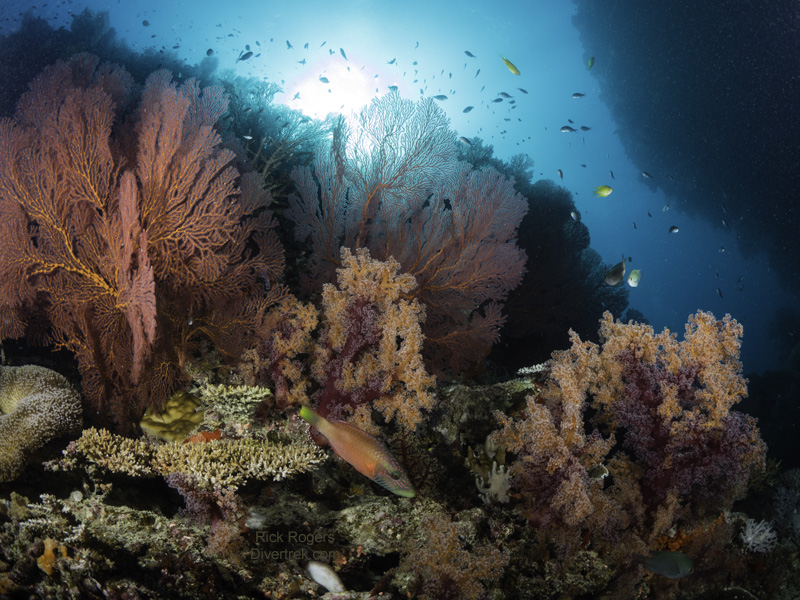
Morning sunrise over the dive site “Fantastic” to the West. The name says it all- an abundance of large sea fans, colorful soft corals, and abundant marine life.
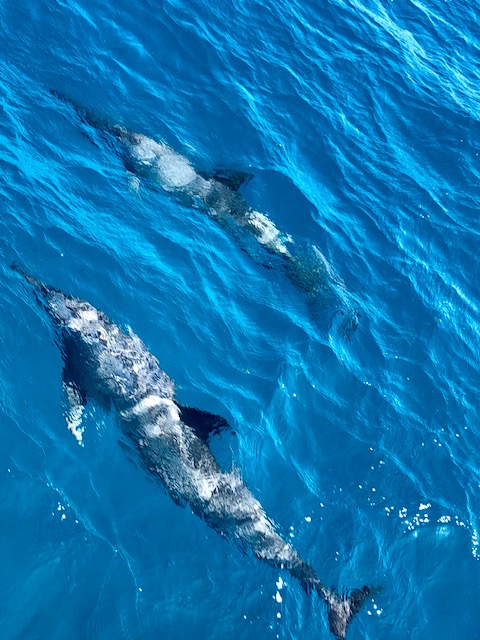
“Dolphins” yelled the captain. And then everyone with a cell or camera ran to the bow of the boat. These Spinner dolphins are almost always seen at the “Fantastic” dive site (pictured above), and will often come up to play in the bow wave of the boat.
Red coloured Sea Whips at the dive site “Underwater Fantasy”, in the West.
Another beautiful reef, at the dive site “Potluck”, in the Marine Park proper to the East
Clownfish City, literally, at the Potluck dive site. There are pods of Fiji Barberi clownfish and their host anenomes that extend as far as the eye can see.
The Eastern dive site in the Conservation Park proper that earns a special mention is “Mellow Yellow”. It consists of two pinnacles, one large and one small, that reach about safety stop depth from the surface. There’s plenty of light and current that the corals thrive on. The result is a lush explosion of colour and marine life. This is a must do dive site, and Volivoli Beach Resort is the only land-based operator that goes there (other than the Nai’a liveaboard).
Schools of orange Anthias swarm around this coral head on the small Pinnacle at “Mellow Yellow” dive site.
Jaw dropping. A section of the “wall” on the large pinnacle at Mellow Yellow dive site. It’s no wonder they call it that!
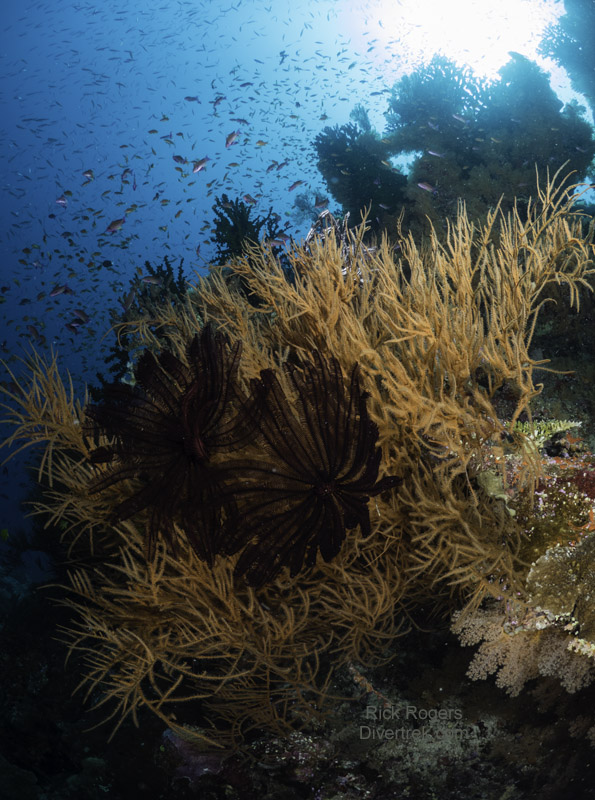
Yellow Sea whips with Brittle stars at Mellow Yellow dive site..
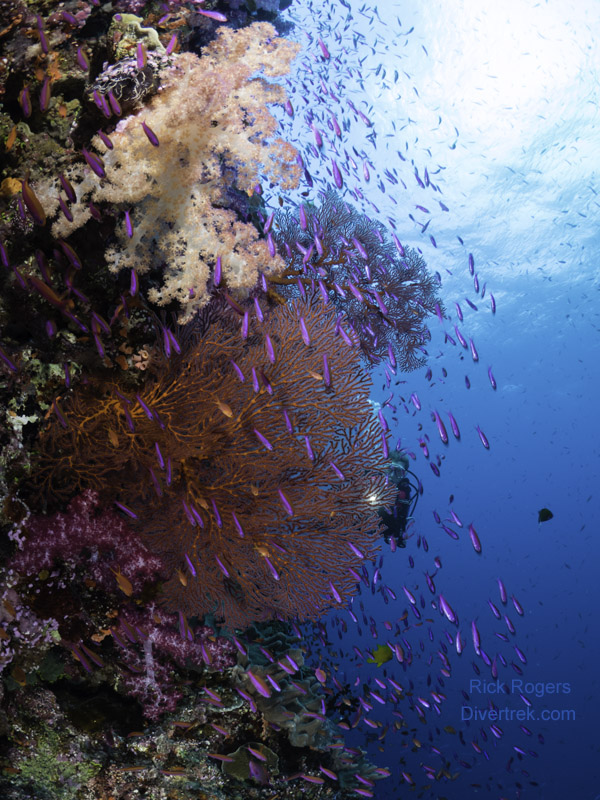
Diver with a school of Purple Anthias at Mellow Yellow. There’s always plenty of fish, particularly at the more remote sites.
Topside Activities at Volivoli:
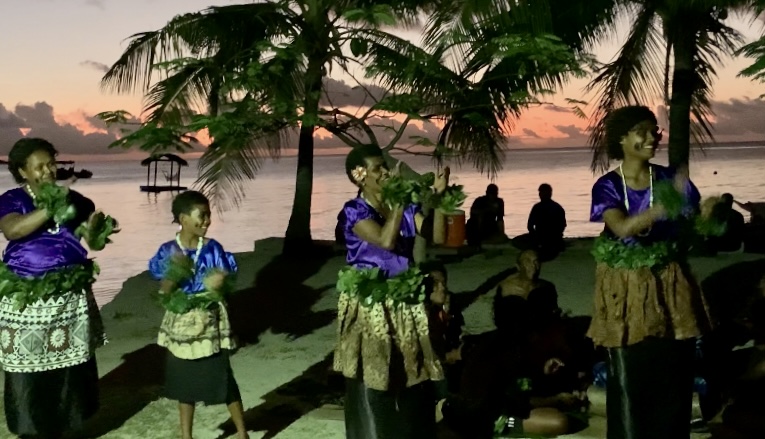
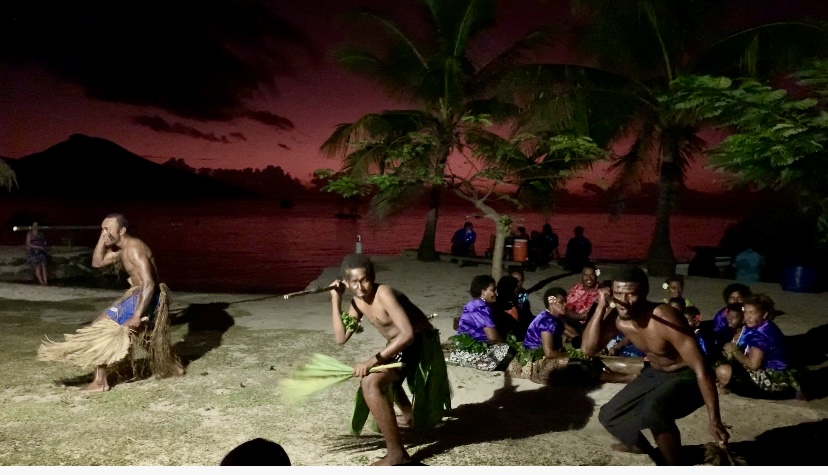
Ra Divers (on site) typically offers a daily 2 tank dive, but 3 tanks are offered at least once per week, or more if interest is there. They also offer a weekly Fijian “Bula” night & dinner for new guests. Bula (pronounced “Boo-lah”) is probably the first, and most frequent, word that you’ll hear on Fiji. I had construction workers that I passed on the way up greeting me with it, and giving a friendly wave! Also, after Bula, the second most common word you’ll hear is Venaka (or just Naka), meaning thank you.
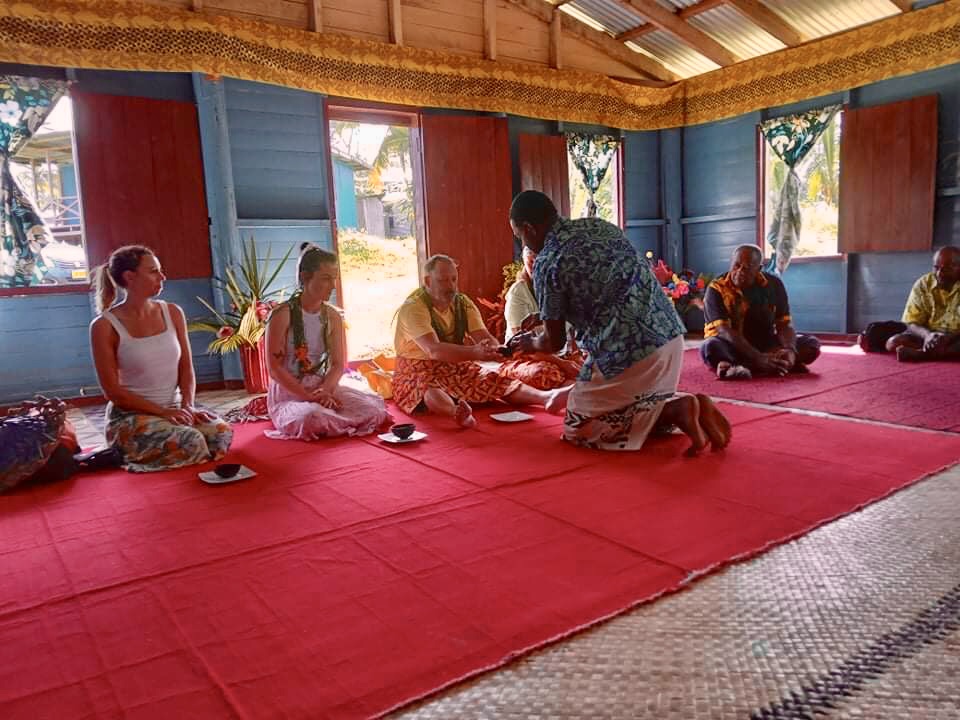
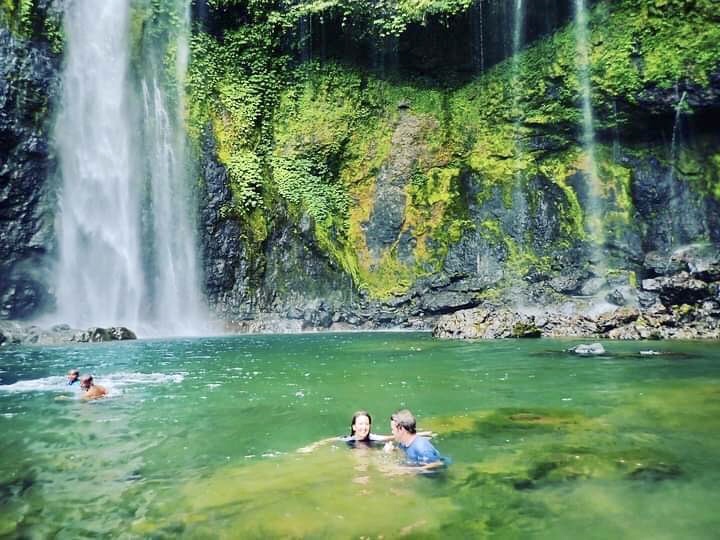
You can also book other popular activities with Soni Malumu through the resort to further enrich your cultural experience, such as a hike to the waterfall, a rafting tour, and a visit to a local village. Soni is a village elder, and a former manager at the resort dining room, who’s committed to preserving Fiji’s rich cultural heritage.
There are many shark dives on the planet, but what makes the Beqa Lagoon dive so special is that you can see up to 8 species on a single dive. They are: whitetip reef sharks, blacktip reef sharks, tawny nurse sharks, grey reef sharks, sicklefin lemon sharks, silvertip sharks, bull sharks and tiger sharks. We saw all except for the Tiger which, at the time of this writing, hasn’t been seen for several months. Although it’s no Tiger Beach, it’s still a great dive. And every dive is different, in terms of the species seen and the intensity of the action.
We chose to combine the shark dive with a few days of diving on the south coast by staying at Waidroka Bay resort, near Pacific Harbour. It’s about a 4 hour drive from Volivoli, and is a markedly different experience since it’s located in a rainforest.
The resort will take you by boat to the shark dive using their own dive master to a site called the “Bistro”, located in the Beqa (pronounced “Benga”) passage. Note that the shark dive must be booked in advance and is actually run by Aquatrek divers. The shark dive provides an example of ecotourism, where the local villagers have waived their rights to fish there in exchange for a portion of the Reserve fees paid by visiting divers ($20 Fijian dollars, or $9.25 USD). The fees are also used to train and hire locals as wardens to patrol the Reserve. Nonetheless, with the price of shark fins fetching high prices, poachers still try (see the second photo below).
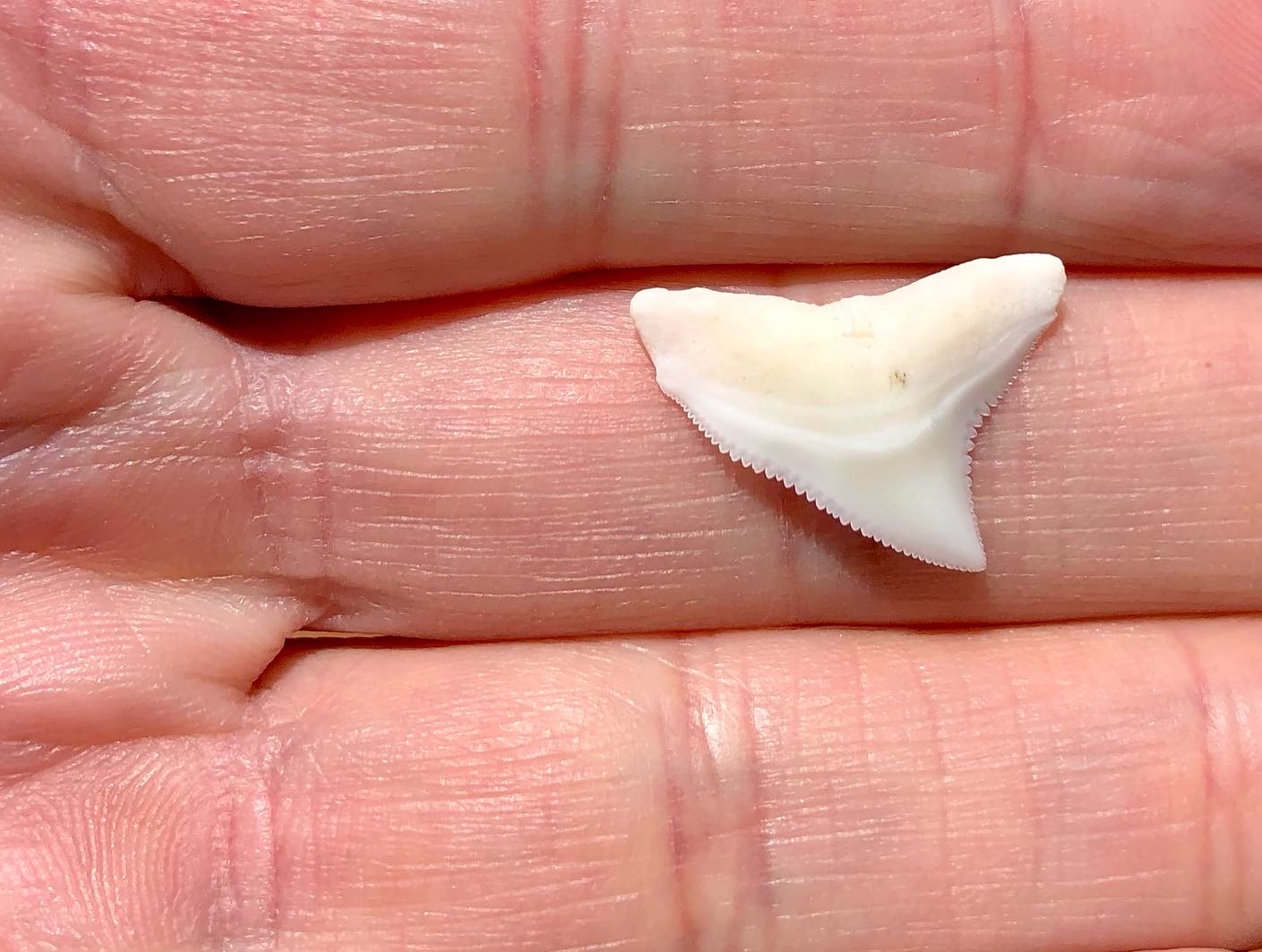
Calibrating my strobes on my dive buddy (and need to turn them down more). Be careful not to have your strobes set too high, as the white underbellies of the sharks overexpose very easily. The shark dive takes place 60′ down behind a short man-made stone wall which is primarily used by divers to help maintain their position in case of strong currents which are often found there, and can be seen in the divers bubbles above. The wall also ensures that the divers are located a safe distance away from the bait, as the currents could potentially push bait onto the guests! Although the visibility was excellent (60+ ft) that day, it was relatively dark due to cloud cover and rain. A Bull shark makes a close pass, likely attracted by my strobes (video lights are not allowed). You can see the bait pail in the background which is generating interest by the sharks. It’s rigged with a series of lines and pulleys to be opened at an appropriate time. Note the two hooks in the shark’s mouth. Fiji’s waters are also under pressure from foreign long-liners, not just local poachers. Don’t unwittingly support this! If you want to eat fish and don’t know where or how it was caught, it’s best to leave it off your plate.The Pacific Bull sharks here are huge, much larger than their Atlantic cousins that I’ve seen. I must say that I never once felt threatened by any of the sharks there. A young female Silvertip shark, only about 5′ in length. She took a momentary interest in one of my strobes- with a bump- because of the high contrast coloration of the white strobe diffusers (which look like fish pieces), and the electric field they emit. This is not unheard of for young sharks who haven’t yet “figured things out”. A small Bull shark tooth. You can see from the dentition that Bulls are related to Tigers. After the bucket is opened and the sharks have eaten all the fish, the majority of them dissipate. You are then allowed to look on the bottom for shed sharks teeth, which fall off during the feeding. Sharks regularly shed their teeth to ensure that they are always razor sharp!
Other Diving in the South:
We did two other days of diving to look into the reefs on the South side. We were lucky that the winds calmed down from what they were earlier in the week. The calmest weather (wind) in Fiji is typically April-June. But the south side tends to get the prevailing Trade Winds blowing to the Northwest.
A photo of the map on the dive shop wall of the Beqa Lagoon dive sites frequented by Waidroka divers (not complete, appended). Green is land, yellow is submerged (reef). We dove Three Sisters & Side Streets (to the Northwest of Yanuca I.) on day 1, with Mata Point & Aquarium (to the West of the resort) on day 2. The well known dive site “Frigates Wall” is at the lower left on the fringe reef wall, and can only be visited on calm days.
The Seven Sisters dive site is a maze of 7 pinnacles. From what I saw, the reefs don’t have the quantity (colour) or diversity of corals as I saw in the North.
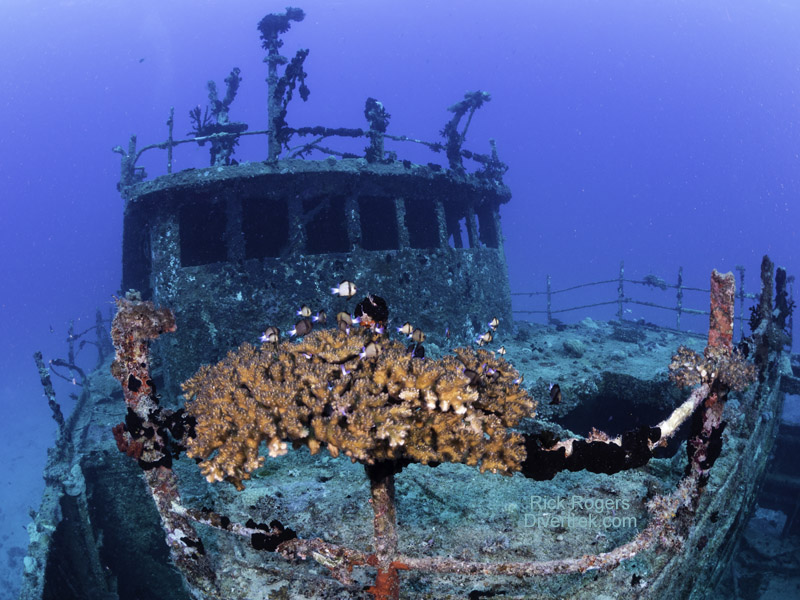
The Tasu II, located next to the pinnacles of the 7 Sisters, was a decommissioned Taiwanese long-liner that was deliberately sunk in 1994. The ship is about 100′ long and lies in 90′ of water. The 7 Sisters & wreck are normally dived together, and are sheltered from currents.
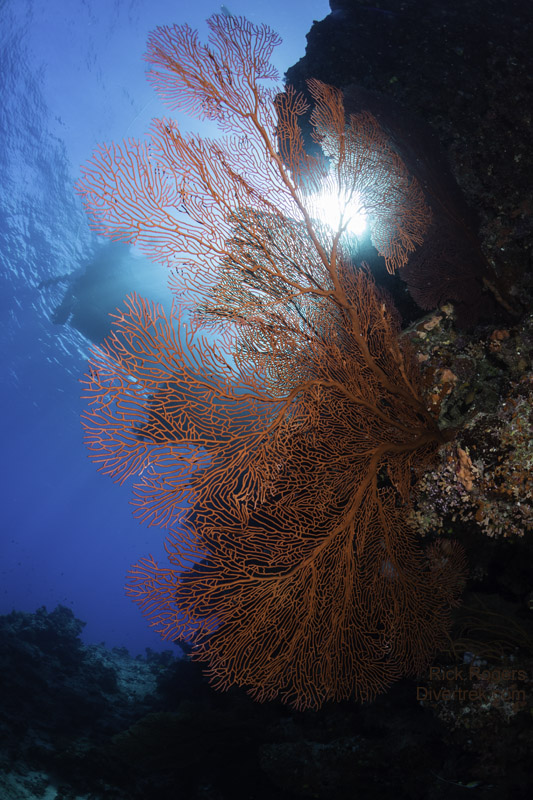
A large sea fan with our dive boat in the background. The dive site “Side Streets” is a series of linear, parallel coral reefs, from which it derives its name. Expect to see large Gorgonians and Clownfish. We also saw Nurse sharks and White Tip Reef sharks. Maximum depth 60′.
Clark’s Anemonefish at Mata Point. Your best to avoid wide-angle lenses for these last two dive sites.