
January, 2016
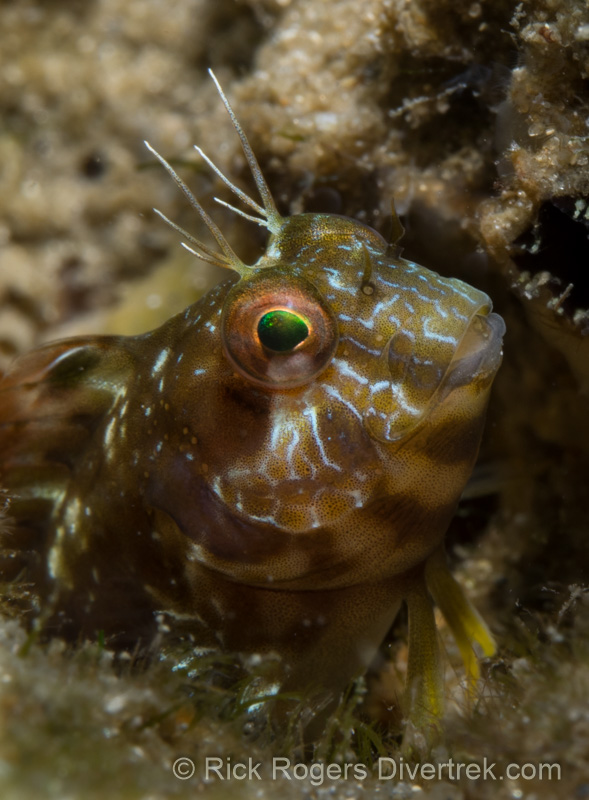
The famous Blue Heron Bridge is located in West Palm Beach, Florida. It’s a macro lovers dream, and has even been called “Lembeh Straits East”, after the “critter diving” capitol of the world in the Philippines. Incredible biodiversity, and an easy shore dive nestled in a beautiful park. Little wonder this biological hot spot has been listed in the top diving sites of North America, and people from all over the world dive it.

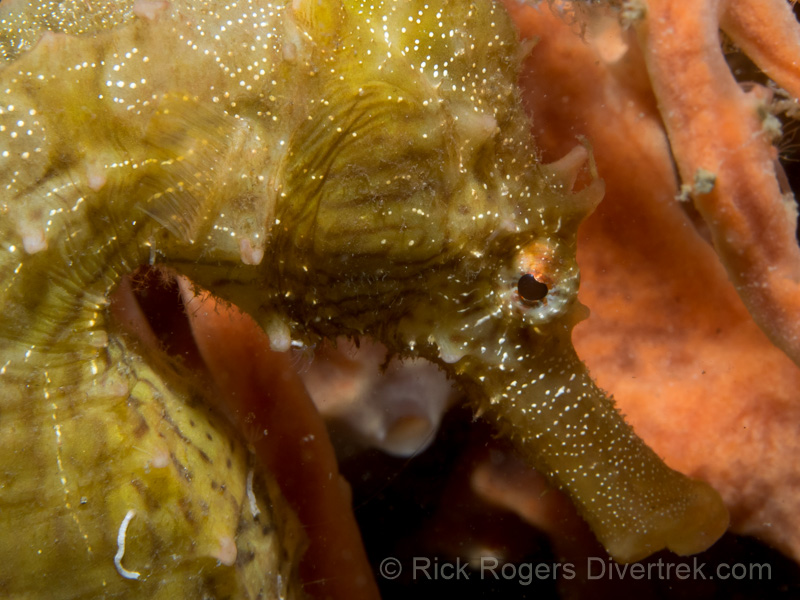
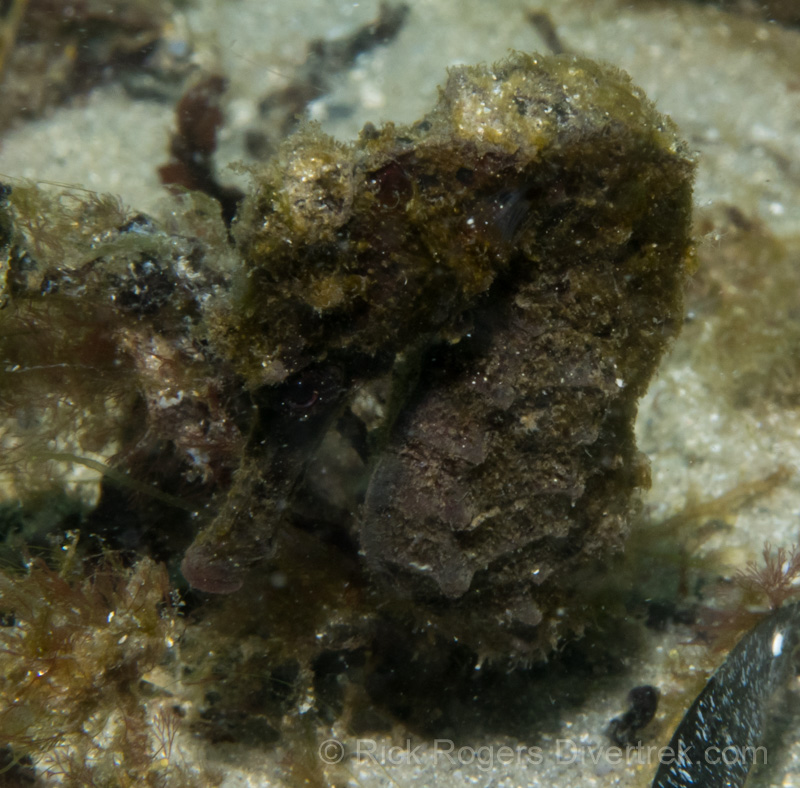
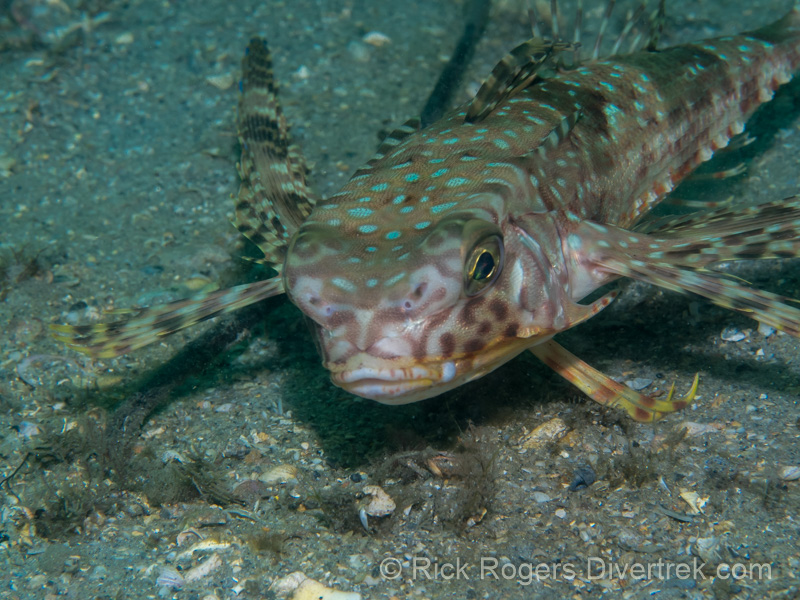
This was my first trip to the Blue Heron Bridge (BHB), and an exploratory trip for the area. I saw many more things at the BHB than I could ever hope to photograph. One could spend a life-time photographing the wealth of marine life found here. From Southern Stingrays, and schools of Barracuda and Atlantic Spadefish, to prehistoric looking Batfish and Sea Robins, all they way down to Seahorses and the tiniest of nudibranchs only a few millimeters across. And you may also be lucky enough to spot a Manatee seeking refuge here during a cold snap. The bridge’s close proximity to the ocean, it’s hard structures, and the nourishing currents that rush through here twice a day from the tides supports all this abundant life.
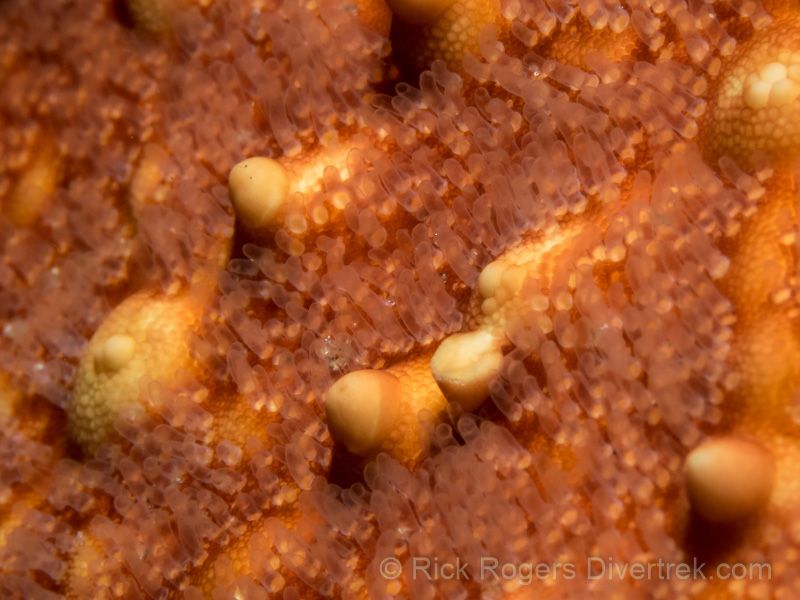
There are other advantages to diving the BHB. It’s a bargain at only $38 USD for the rental of two tanks, weights and a dive flag (a legal requirement). The depths ranged from 6-22′, resulting in dives that were over 2 hours long. It’s also a part of the Intercoastal Waterway, so it’s largely sheltered and not as impacted by bad weather (winds). In addition, it has a snorkel trail for you to explore, and more importantly, for any non-diving members of your group. And bonus, you don’t have to fly half-way around the world to see may of the same unique supermacro life, like Bumble Bee shrimps!
The downside is that word is now out on this place, and it can get quite busy at peak times (weekends, particularly in the summer). I’m told that up to 100 divers may visit here on a peak day. I had to arrive an hour and a half earlier than high tide in order to get close parking, and get set up.
The Diving:
For practical reasons the bridge may be divided into three regions: the West side (main bridge), the snorkel trail, and the East side (small bridge). It’s best to pick one side of the bridge or the other, otherwise you will be too rushed and unfocused.
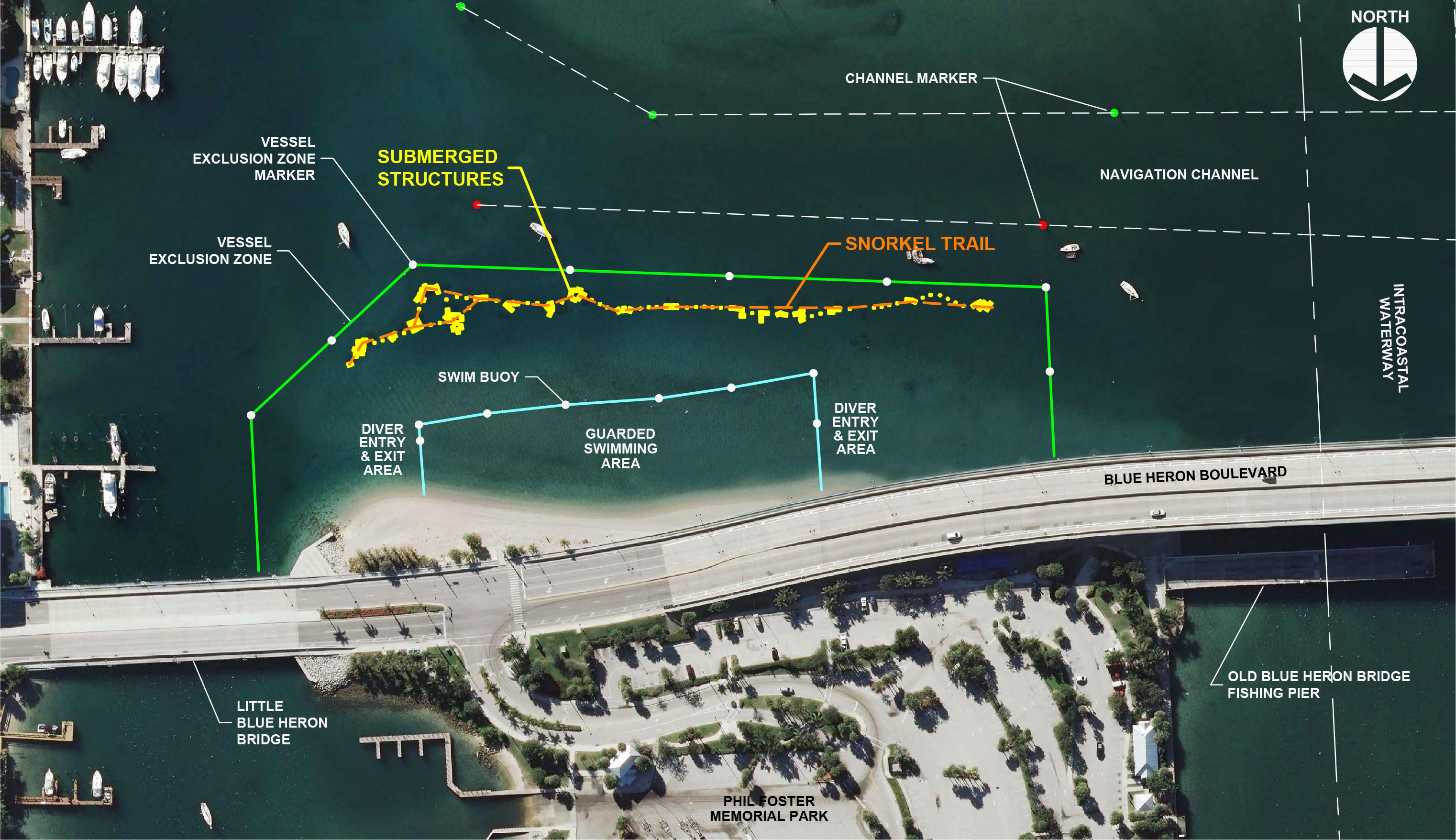
The diving is best, in terms of visibility and current, one-half hour on either side of the high tide. All the local dive shops list these times on their boards, but you can look up the times for the Port of West Palm beach . But always wanting the maximum bottom-time, I got in 1 hour before the high tide and explored the area between the swim area (NO diving inside here) to the area just outside the snorkel trail for about a half-hour, then made my way over to the bridge that I wanted to explore. The current is swiftest in the deeper channels around the snorkel trail, and you can judge its speed before getting in the water by looking at the tilt of the markers (buoys).
The actual snorkel trail is interesting to explore, and composed of man-made structures that act as an artificial reef. There are three Hammerhead statues at the beginning (West) part of the trail. But I found the area difficult to take pictures in, as the snorkelers and student divers there tend to stir up the silt.
The visibility is best with the incoming tide, as it brings in clean ocean water, and varied anywhere from 10-20′ over my stay. Divers told me that it can reach as good as 50-60′ when the right conditions conspire. It depends on many factors: the amount of recent rain, activity in the port North of the bridge, the opening of the canals in the North to the weather conditions on the ocean which can bring in silt with the incoming tide.
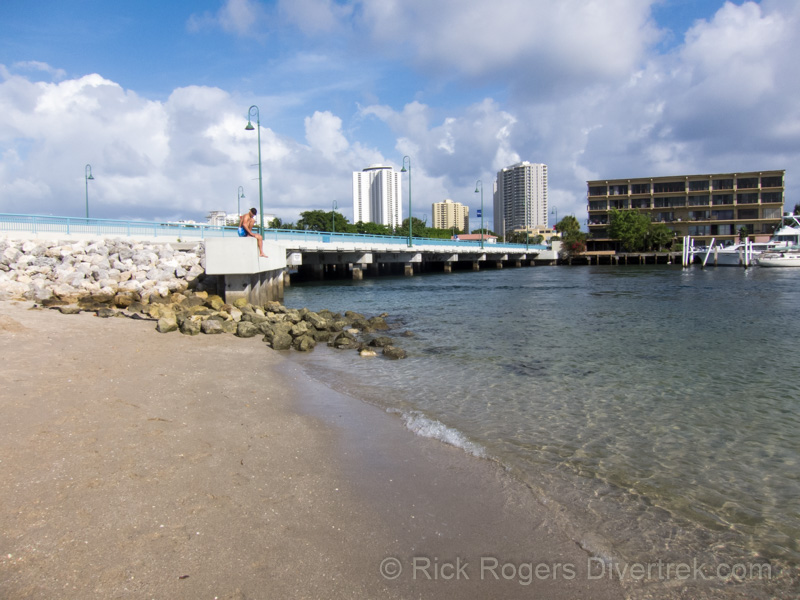
You will most often see fishermen on the West side on the fishing pier. Another good reason to carry a dive flag. The Sheriff’s department and Coast Guard have a large presence here, and they will ticket divers without them. A mutual respect exists between the divers and fishermen here. I was told that there has never been an incident between the two groups. But I just avoided going near the fishing pier.

The sandy, grassy and “muck” bottoms in the central area between the bridges (inside the Vessel Exclusion Zone) are rich with life. I had alot of fun exploring here while waiting for the current to slow. The navigation is simple here since the park lines-up nicely along a north-south axis. The snorkel trail heads along a east-west axis. A compass is very useful, but it’s also easy to “pop up” and take a look when you feel the need, since it’s so shallow.
The Marine Life:
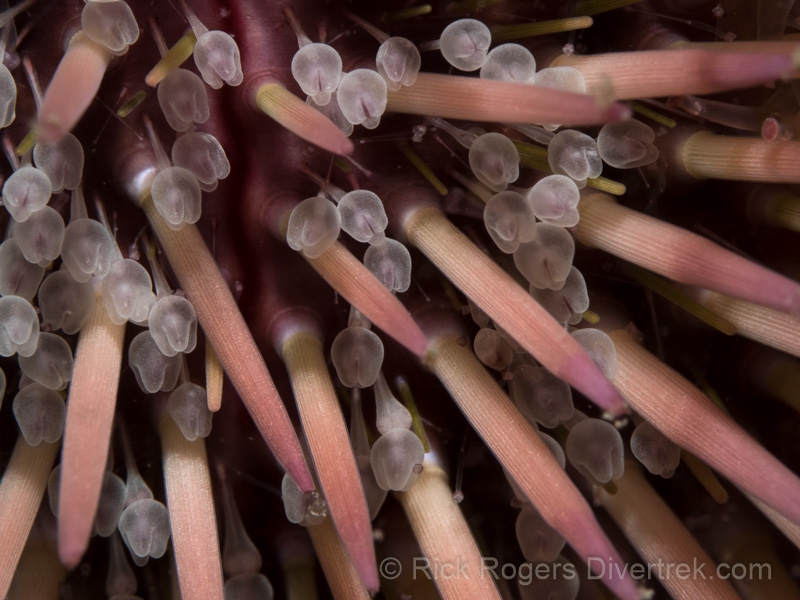
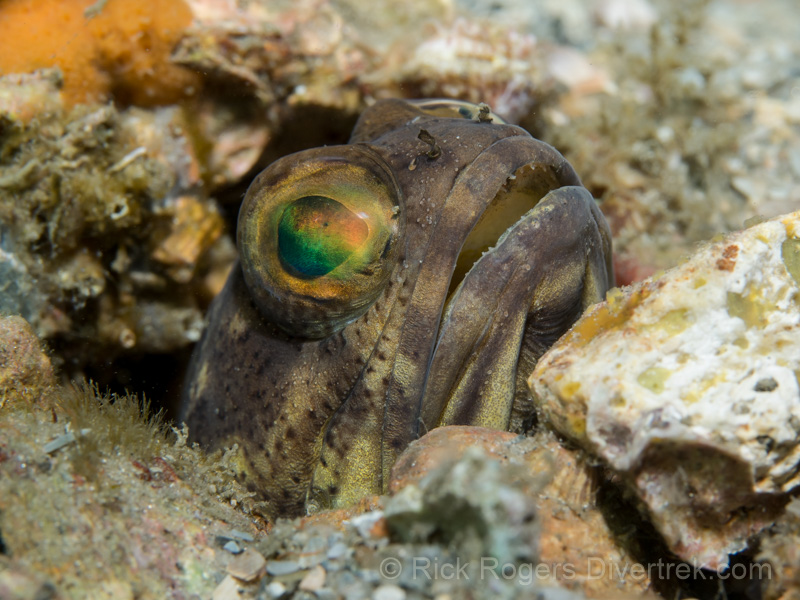
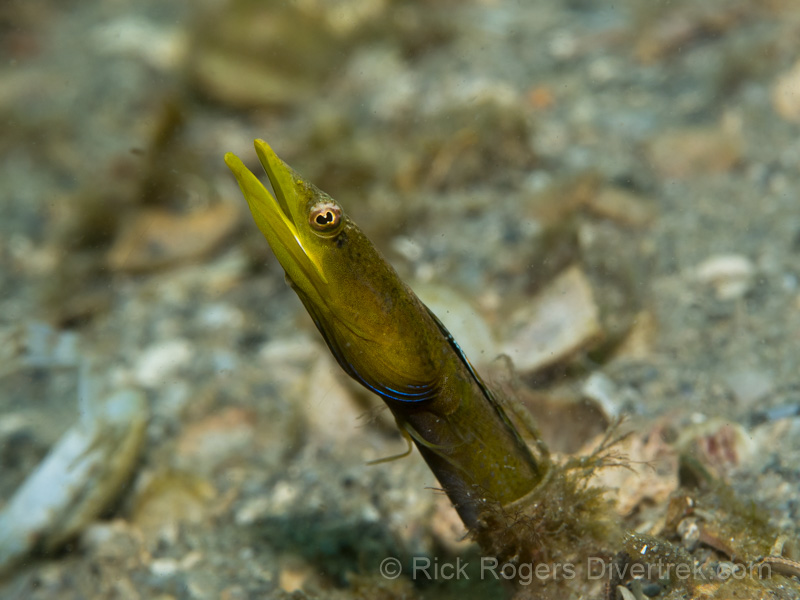
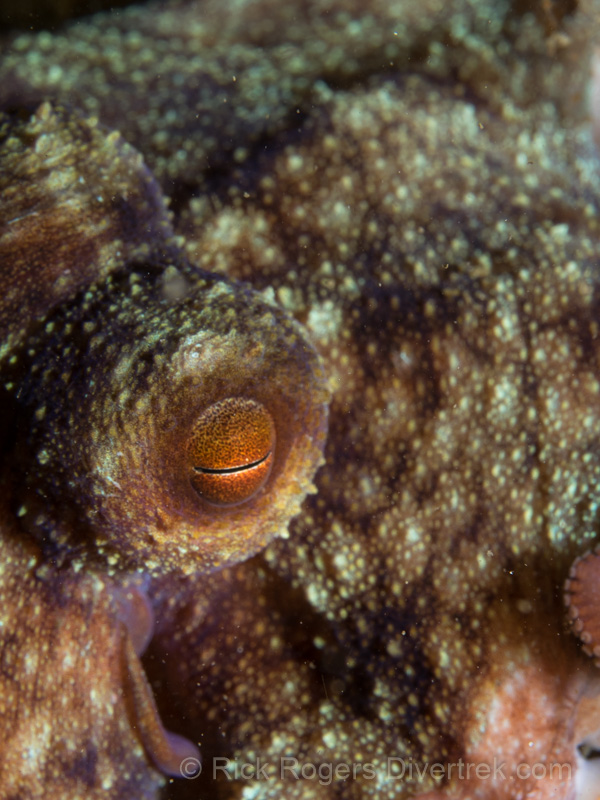
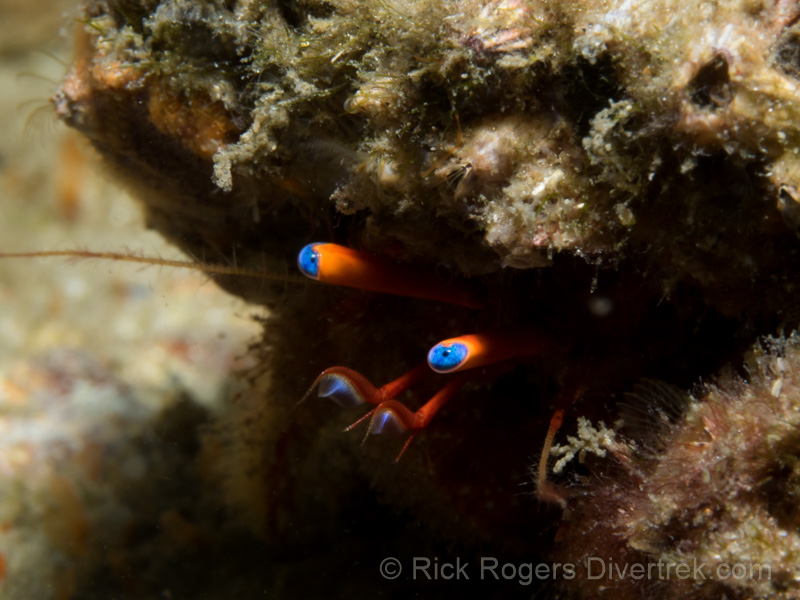
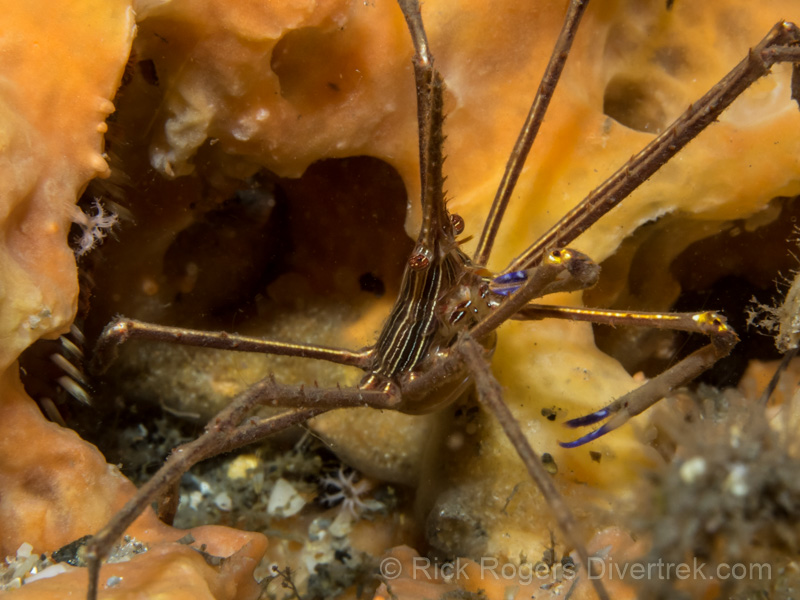
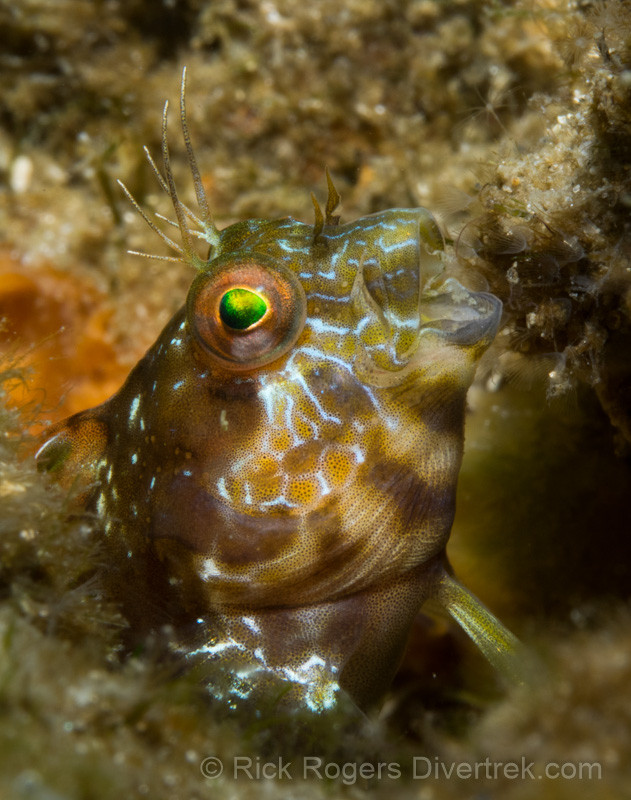
There are seasons for some of the animal life here. For example, in summer the Frog fish congregate here to mate. I found many of the same critters on both sides of the bridge, as they do move around. But what is important to realize is that the life here is more habitat specific. It’s like the BHB is a biome composed of smaller ecosystems: sandy areas, gravelly areas, boulders, grassy areas, “muck”, and reef (both natural, and man made), with two rivers bordering them. So look at the photos (here or elsewhere) carefully to help you find where to look. This is why I found it helpful to hire a local guide for two dives to learn more and train my eyes to find more critters, that I would’ve otherwise missed. Be sure to look inside of any debris, like old discarded bottles, for creatures that may have taken up residence. The following photos were taken over four dives.
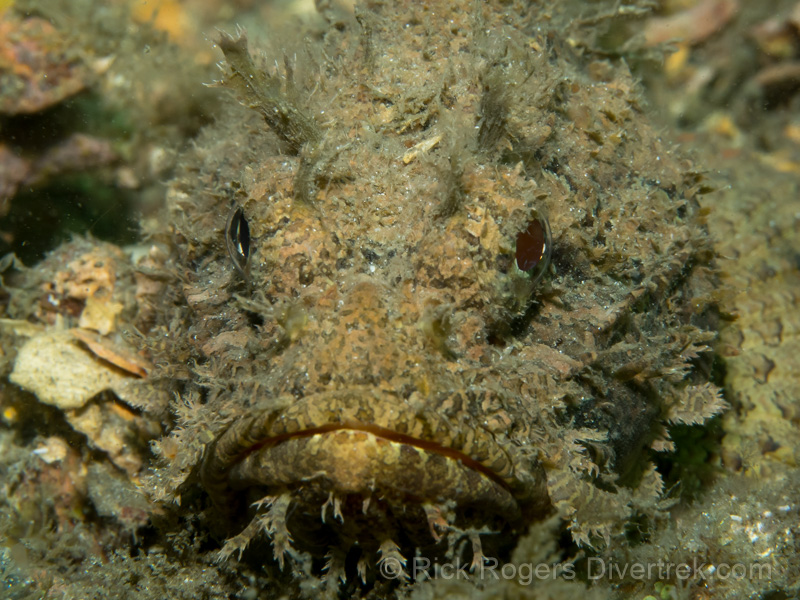
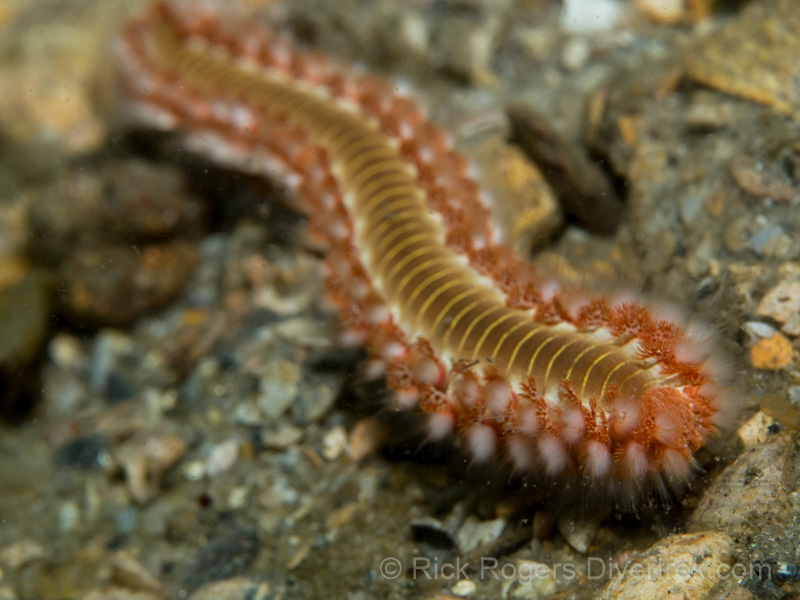
Here are some of the pictures from memorable moments taken while exploring the shallow areas between the two bridges and around the snorkel trail:
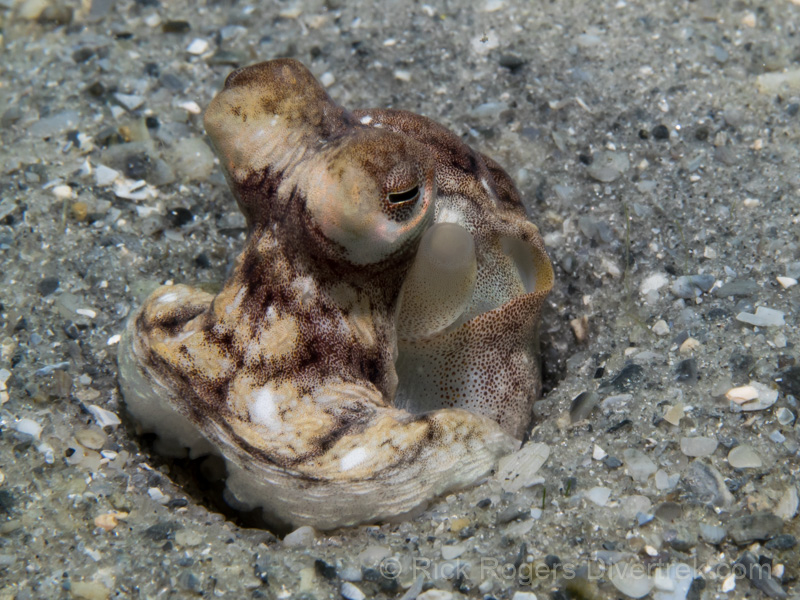
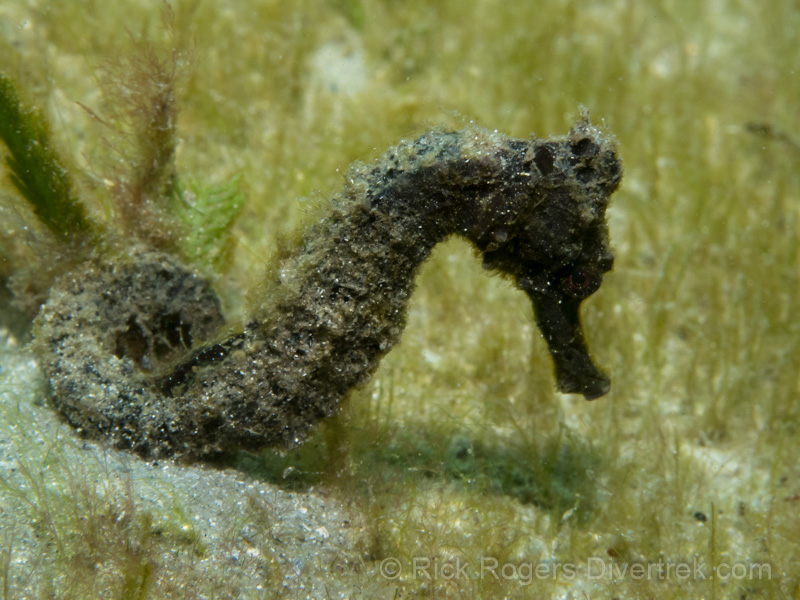
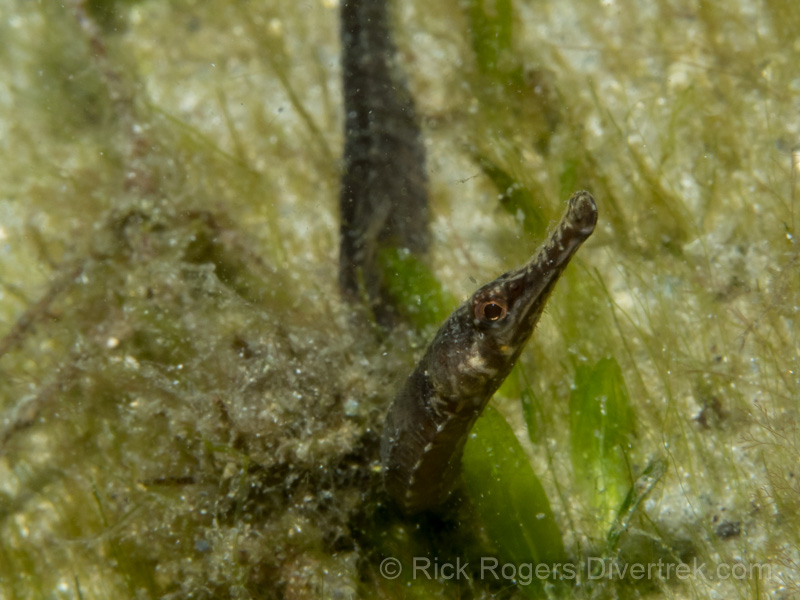

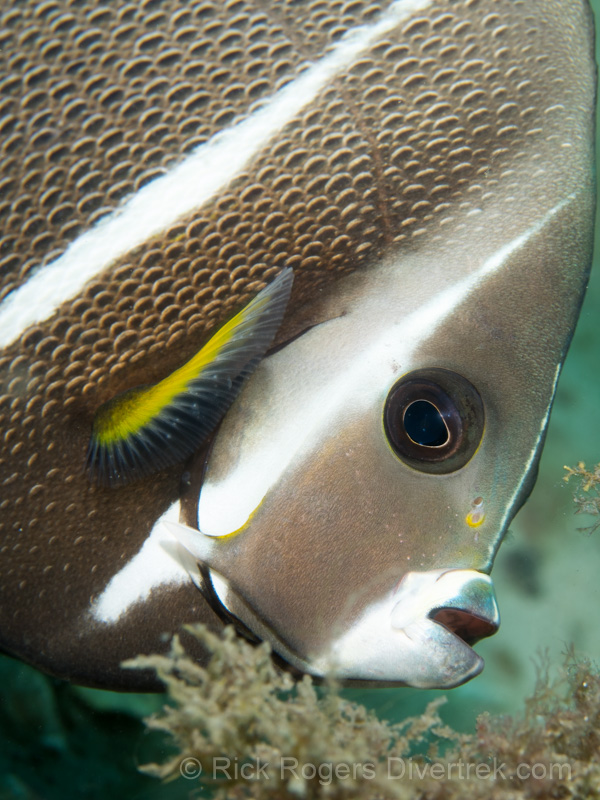
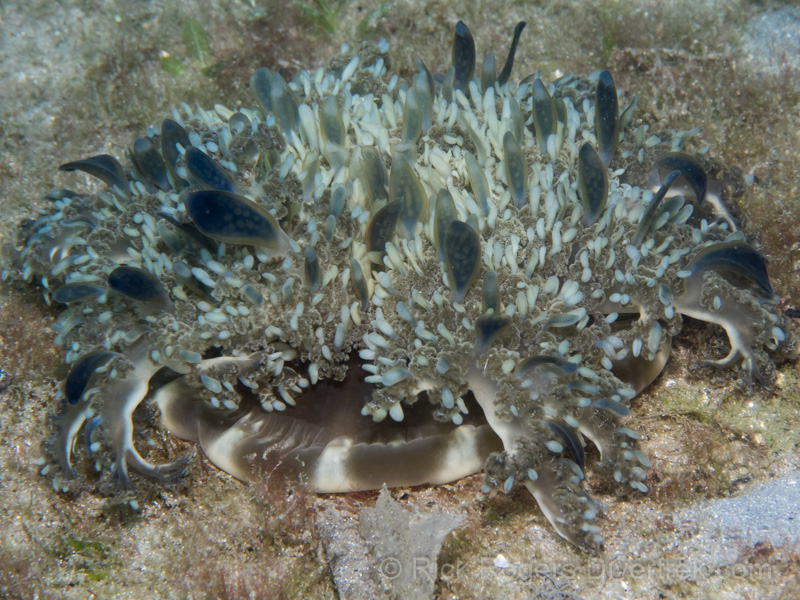
When the current slows down, the areas around the bridges may be explored. Explore the bottom areas in front of and behind the bridge, not just under it, the slopes, as well as the bridge supports. Since the animals are often so so small and well camouflaged, I found them by noticing movement out of the corner of my eye. Here are some memorable pics from those dives:



Other Local Diving:
If the weather is good, you also have the option to head out to the open ocean for some reef diving. It’s all drift diving here, about the speed of a slow walk (1 knot). From a map you can see that the West Palm Beach area is the furthest point East of the state, and it juts out into the warmer waters of the Gulf Stream current. This is the reason that you will find the same marine life, corals and sponges here as you would in the Caribbean.

I was pleasantly surprised at how nice some of the reefs were (ie. the “Breakers”), and how abundant the fish life was (unlike in many other locales). I saw a Hawksbill turtle, two large green Morays, and the largest Southern Stingray that I’ve ever seen. It was also encouraging to see only one small lionfish over four dives. The water temperatures were an unseasonably warm 79 deg F (it’s usually in the high 60’s to low 70’s). But beware this time of year, the weather (wind) can be very touchy, and one day I experienced 2-4′ seas (occasional 5′) with a viz of 30′.
Tips:
There are two dive shops close by the bridge. I rented the gear from Force E divers on the West side of the bridge on Blue Heron blvd. They’re open early and are happy to chat about the bridge and supply you with a detailed photocopied map for diving it. I’ve provided a PDF copy of the map here:ForceE_BHBmap
Purivida divers is on the East side of the bridge, and that’s where I got in touch with a pleasant and experienced guide, Andrea, who enjoys working with photographers. The cost was $85 USD.
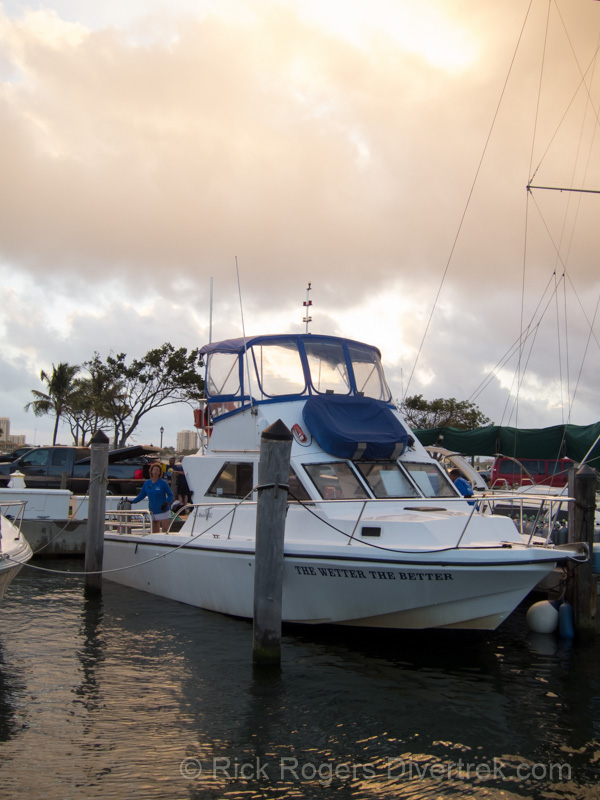
I can recommend Bill Walker’s Dive Charters. He’s very welcoming, experienced and accomodating. His boat is well appointed and has two fresh water rinse hoses, a large rinse bucket for your camera, and a deck shower. The divemasters were very helpful in all things. Water, soft drinks and pineapple fruit were offered.
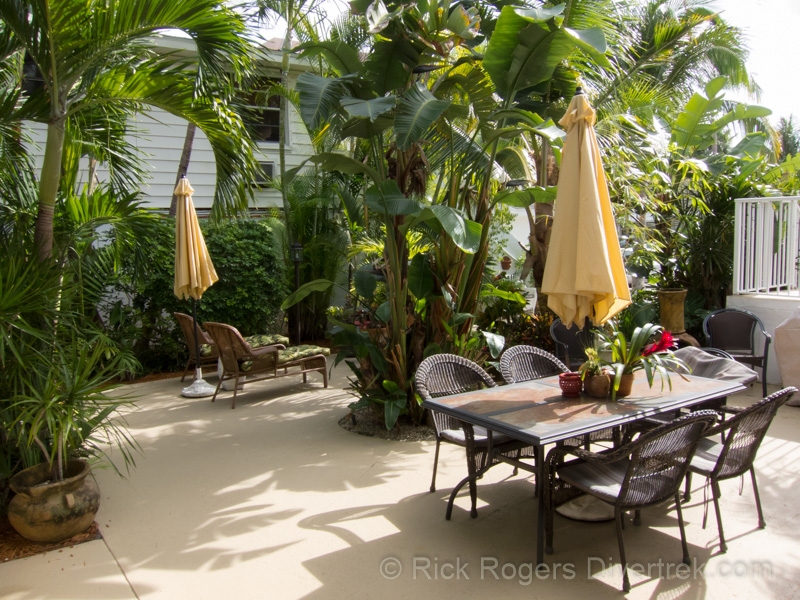
Palm Beach is a very expensive area to stay. But we found a real gem in Sunshine Shores Resort. It’s very reasonably priced, and it seems designed for divers, giving a 10% discount. It’s only minutes from the BHB, and all amenities and restaurants. The apartments have kitchenettes, are nicely furnished inside, and have lineoleum floors so you don’t have to worry so much about your wet gear. They have an outside shower, a rinse hose, and lines to dry your gear. The apartments all surround a relaxing courtyard that is beautifully landscaped.
Visit the Blue Heron Bridge Dive Club facebook page for more photos, updates and useful information.