

October, 2016.
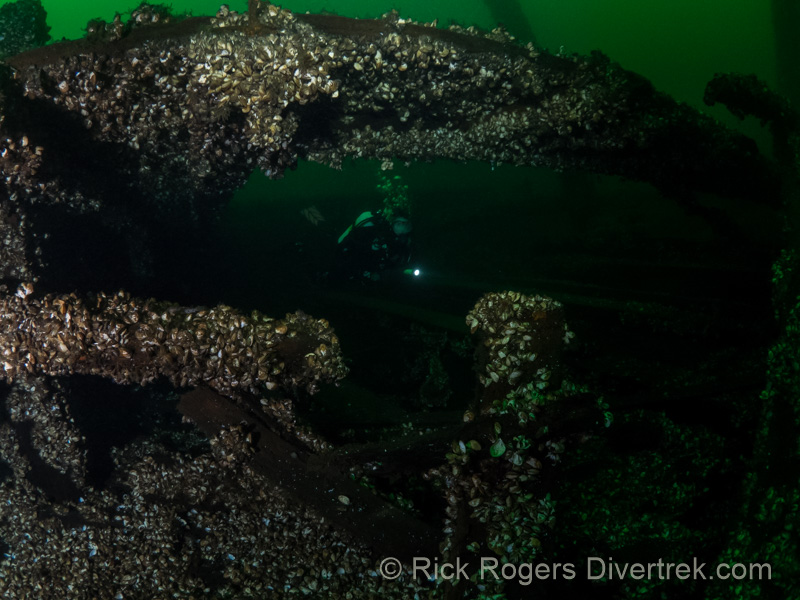
When the weather is calm it’s time to take advantage of some of the more exposed, and seldom dived wrecks. One such wreck is the three masted schooner “The City of Sheboygan”, which lies deep in a very exposed area south of Amherst Island. It’s well preserved, mostly intact and regarded as one of Kingston’s “A” wrecks. The other wrecks on this dive- the “Wire Schooner” and “Bismarck”- are unidentified, rarely visited, and have their final resting place in an area that is known as the “Wolfe Island Graveyard”.
The City of Sheboygan was originally built as a lumber schooner, and launched in 1871 at Wisconsin in the city after which she was named. The overloaded ship foundered in a violent storm on September 25, 1915 while carrying a cargo of feldspar enroute from Kingston to Buffalo, New York. The ship’s captain, his wife (the cook) and three other crew members were lost.
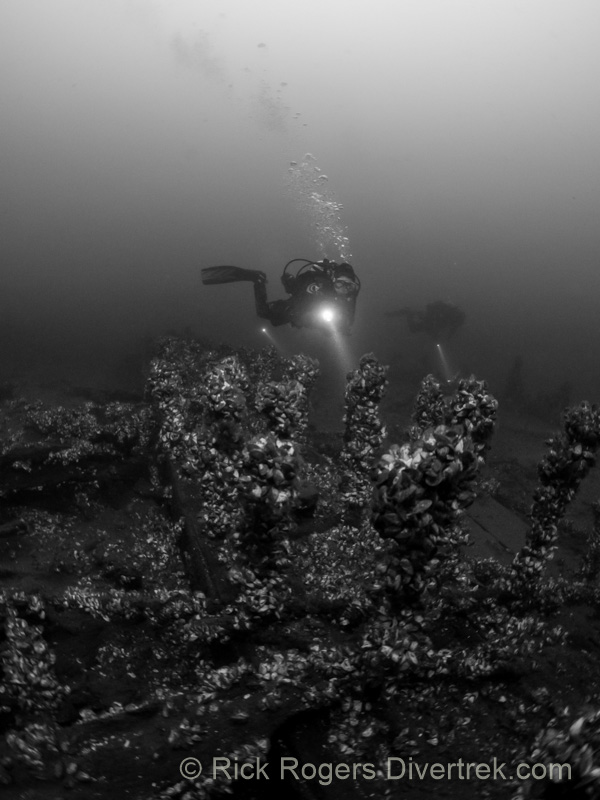
Today the vessel lies at a depth of 90-105′ of water. As you will see, the 145 year old wreck is in relatively great shape, and only missing the ship’s wheel, anchor and the name plate (which are on display at a the Marine Museum in Kingston). The encrusting zebra mussels thrive in six or seven year cycles, depending on their food supply, with this year appearing to be a minimum. The visibility was about 30′, albeit dark, due to the mid-morning sun, and the filtering of the light at the surface due to a warm-water algae bloom. The water temperature at depth was at 52 degrees F.
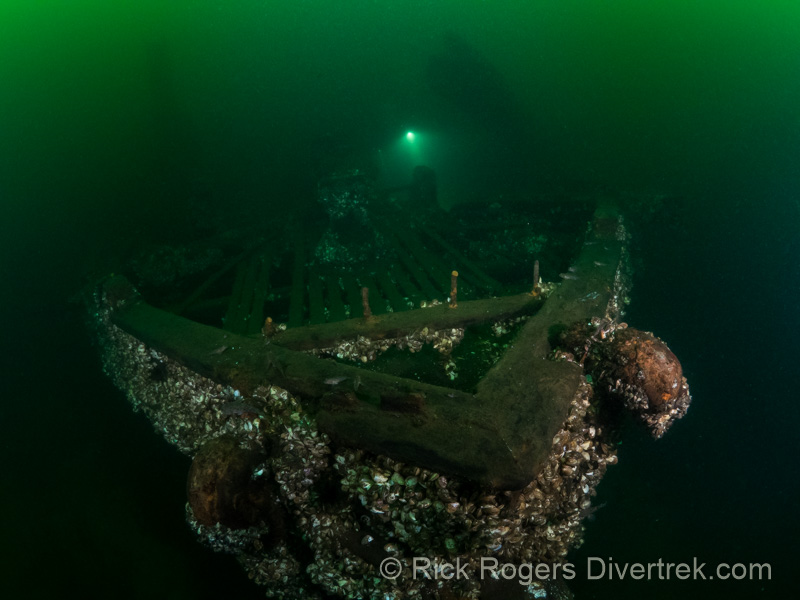
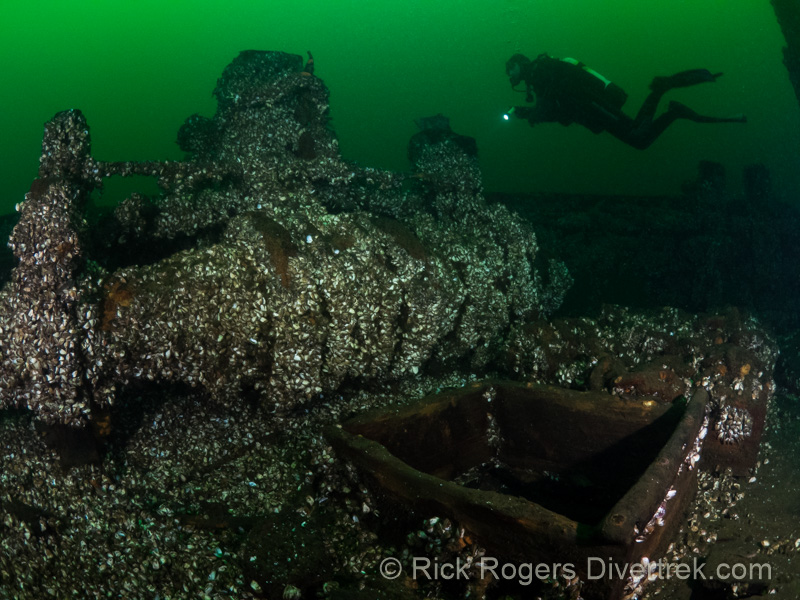
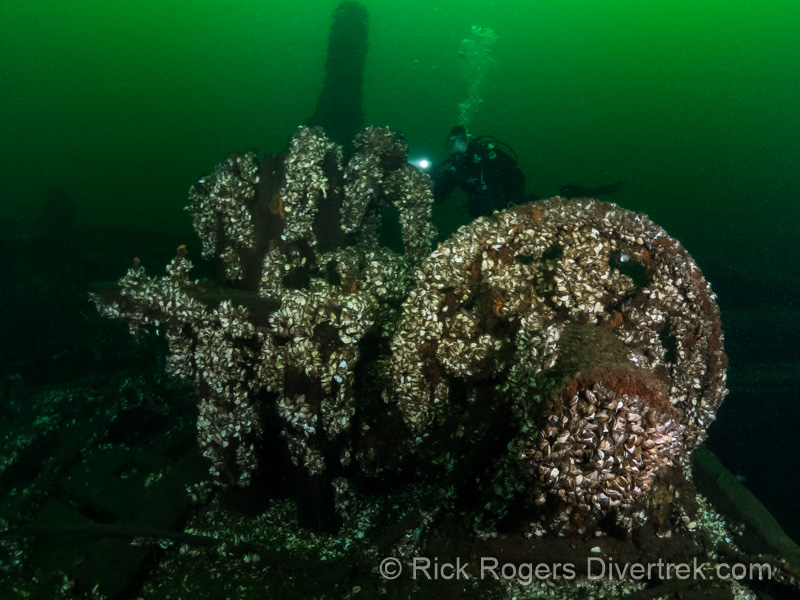
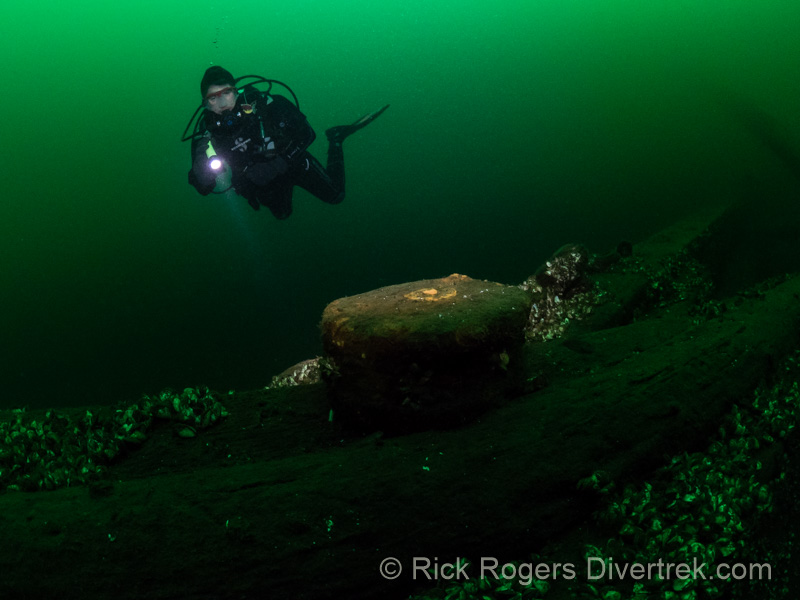
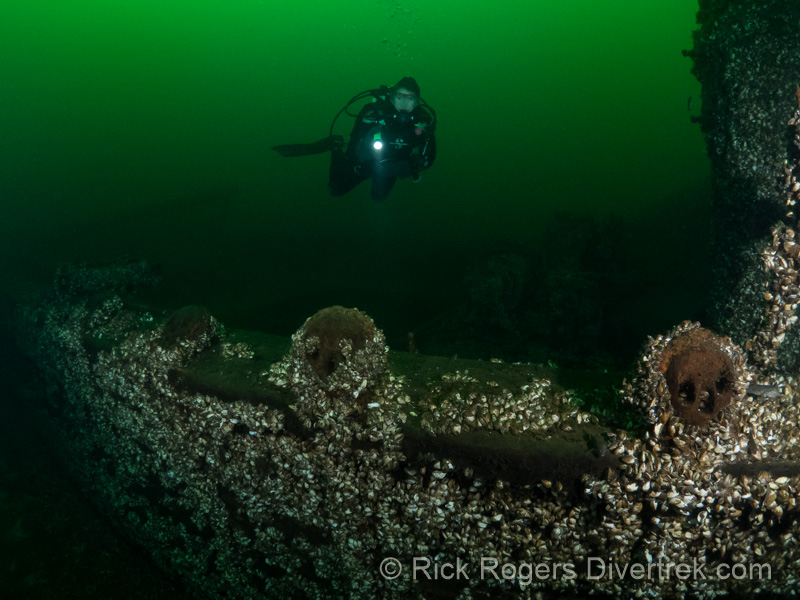
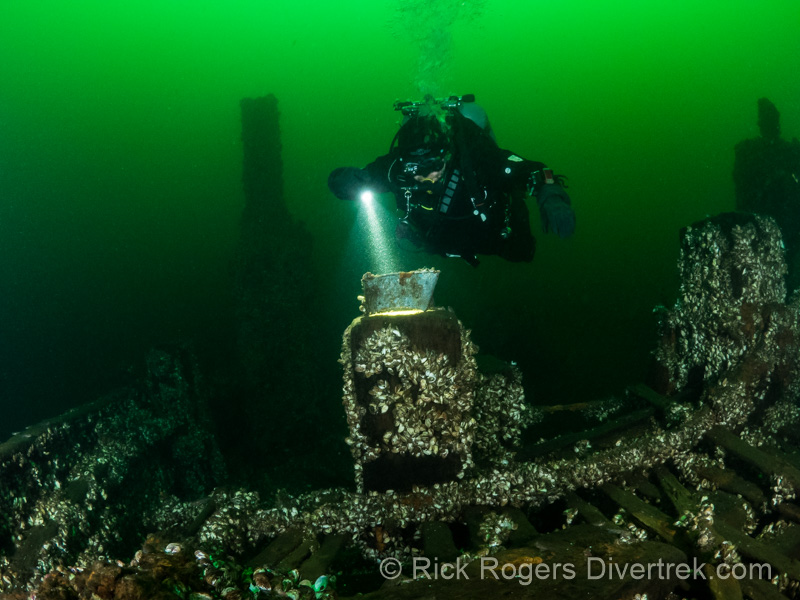

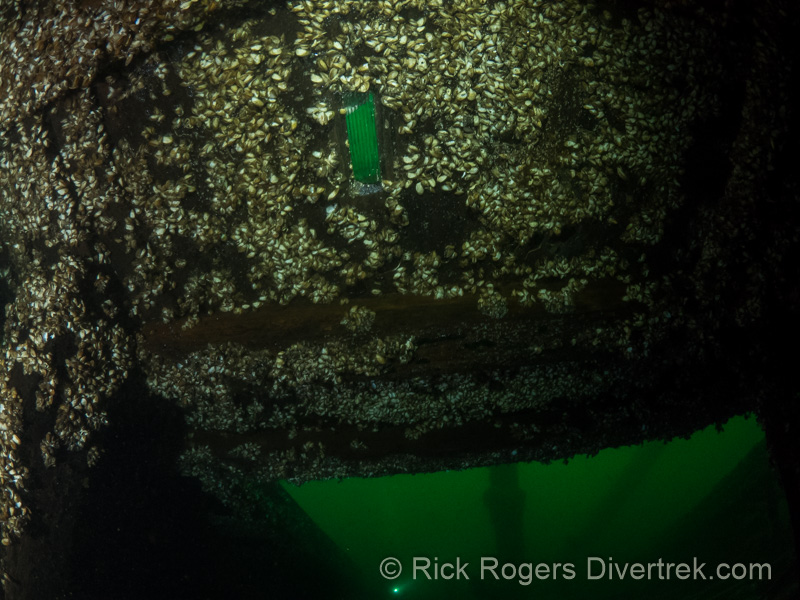
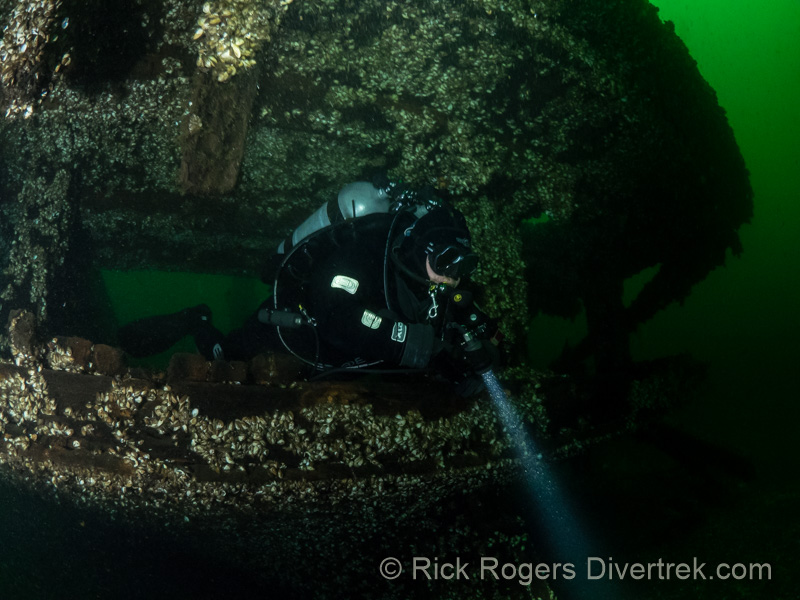
The “Ships’ Graveyard” refers broadly to a triangular area between Amherst I., Wolfe I. and the Kingston penitentiary. There you can find the remains of many ships that were scuttled in the 1920’s and 1930’s from when the City of Kingston decided to clean up the Kingston harbour of derelict ships. Some of them have been identified, and are moored for diving, but most are not.
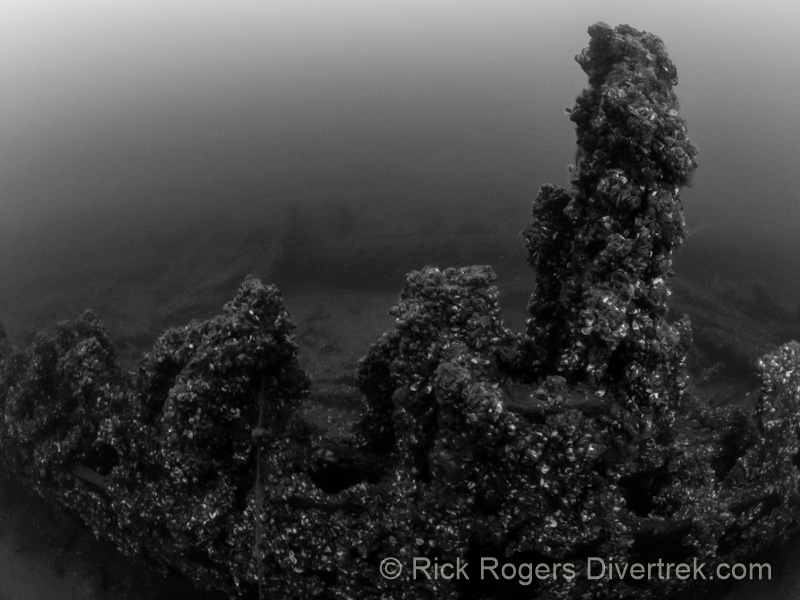
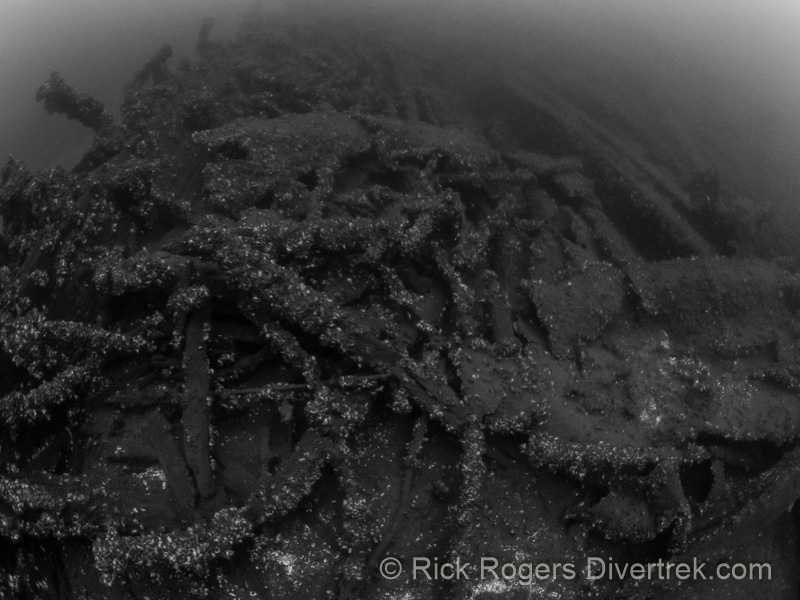
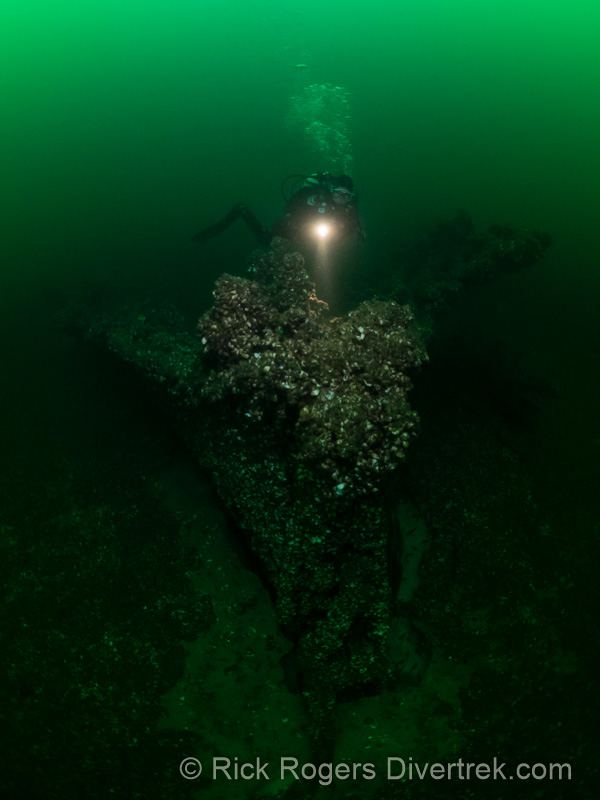
The Wire Schooner and Bismarck wrecks have not been identified, despite efforts by local diver historians, and so get their names from their prominent features. The Wire schooner wreck has large amounts of discarded steel cable (wire) in its hull. The Bismarck wreck, a 200′ steamer, gets its name- as you might guess- from it’s huge size. Both wrecks sit in about 90-100′ of water to the bottom, and have collapsed, with their ribs still defiantly standing. Many ships in the graveyard-as is the case here-were sunk by burning. This also had the benefit of eliminating the superstructure so as not to be a navigational hazard. This explains why so much of the framing (“ribs”), decking, and superstructure appears to be missing.
These two wrecks are not moored, but rather are “shot-line” dives. In a shot-line dive, the dive boat first locates the wreck on sonar, then marks the spot with a dropped, weighted line attached to a surface marker. This gives divers a reference line to make a descent to where the wreck is located. Calm weather, along with divers being comfortable with free ascents and descents are requirements to safely make these dives.
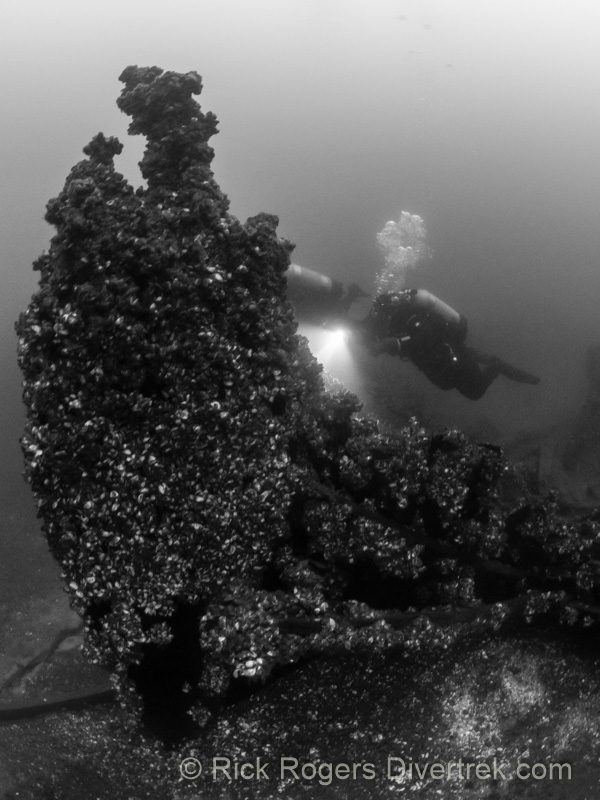
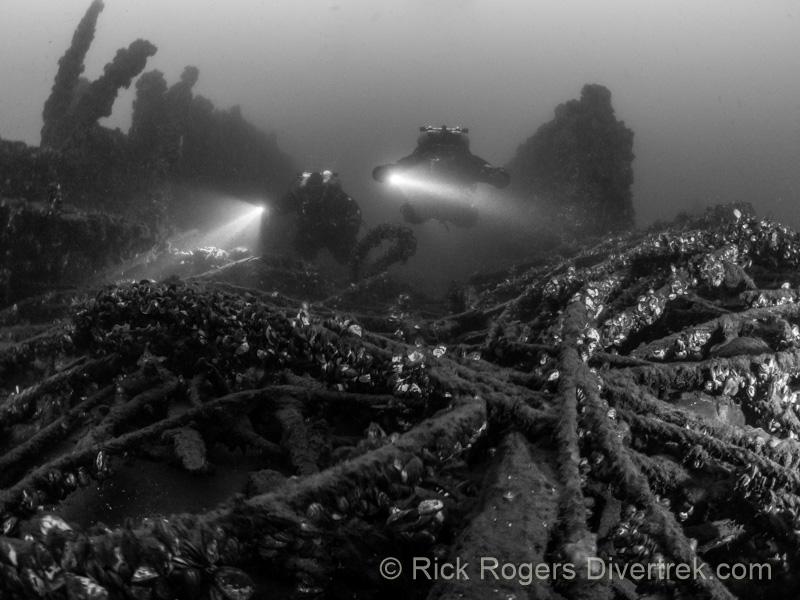
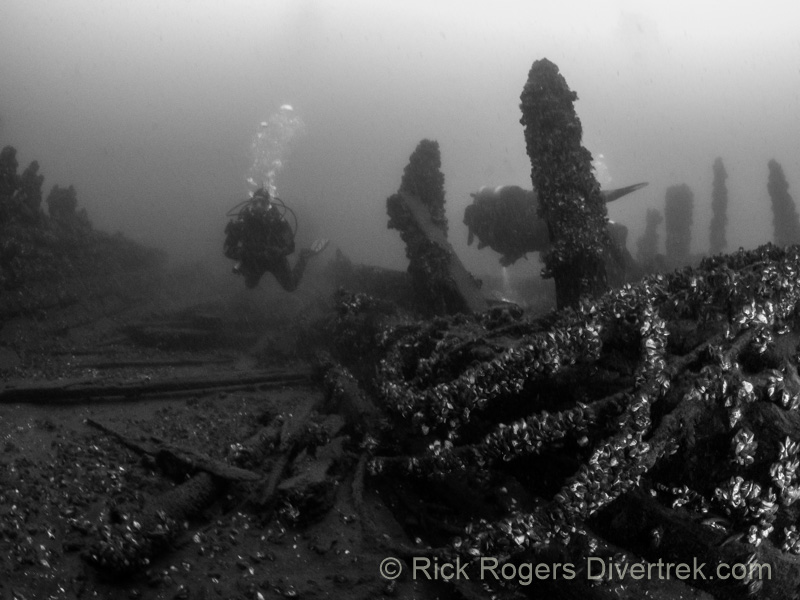
Unfortunately we were diving air for these last two deep wrecks, which really limited our bottom times. So we’ll return again next year to satisfy our curiosities. There’s about 75 yards of line connecting these two wrecks, beginning mid ship on the port side of the Wire Schooner. This line is covered in silt, and slack, so it’s easily missed. If you want to do both wrecks, you’ll be best to only do one circuit of the Wire Schooner before heading off to the Bismarck. Initially I missed the connecting line, thinking that it was missing.
Tips:
We always dive with Pat Coyne, of Pat’s Charters. He operates a fast six-pack boat that can quickly get you anywhere in and out. Pat himself is also a tech diver, and has a deep knowledge of the area, it’s wrecks and history. The calmest predictable weather, with best visibility, is in the spring to early summer.
Related articles:
Kingston wreck diving, the Cornwall & Marsh Shipwrecks.
Kingston wreck diving, diving the George Davie & Glendora Shipwrecks.
References:
“The 100 Best Great Lakes Shipwrecks, Vol.1”, Cris Kohl, 2nd ed, 2005.