

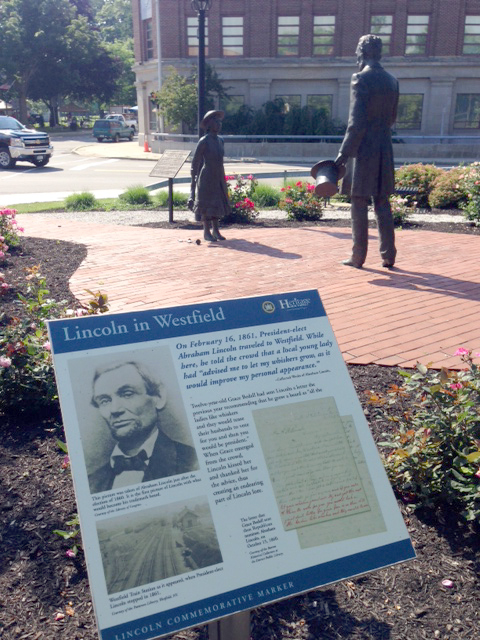
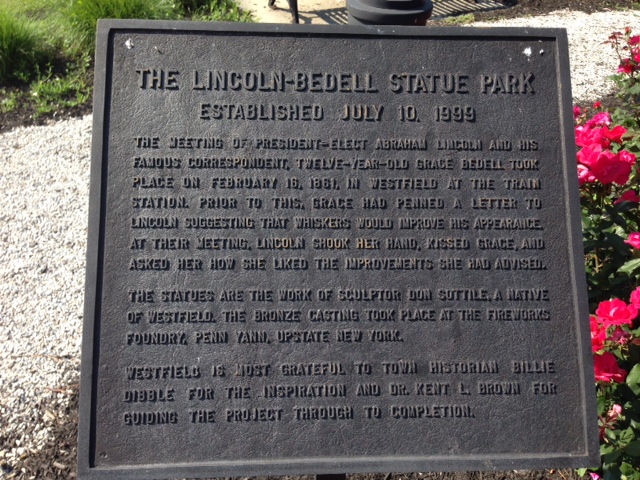
I’ve never dove Lake Erie from the American side, so I jumped at a chance to join a friend sharing an Osprey Charter from Barcelona Harbour, New York. Having a few hours to spend before boarding, we explored the nearby town of Westfield only a few minutes away. There we discovered an interesting museum, and a touching piece of American History that took place there- how Lincoln acquired his trademark beard. At the corner of Main st. and Portage st. in Westfield you will see a pair of statues commemorating this moving piece of Lincoln lore.
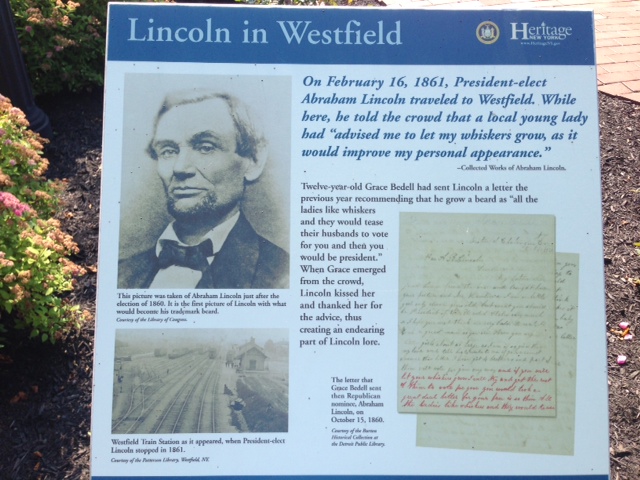
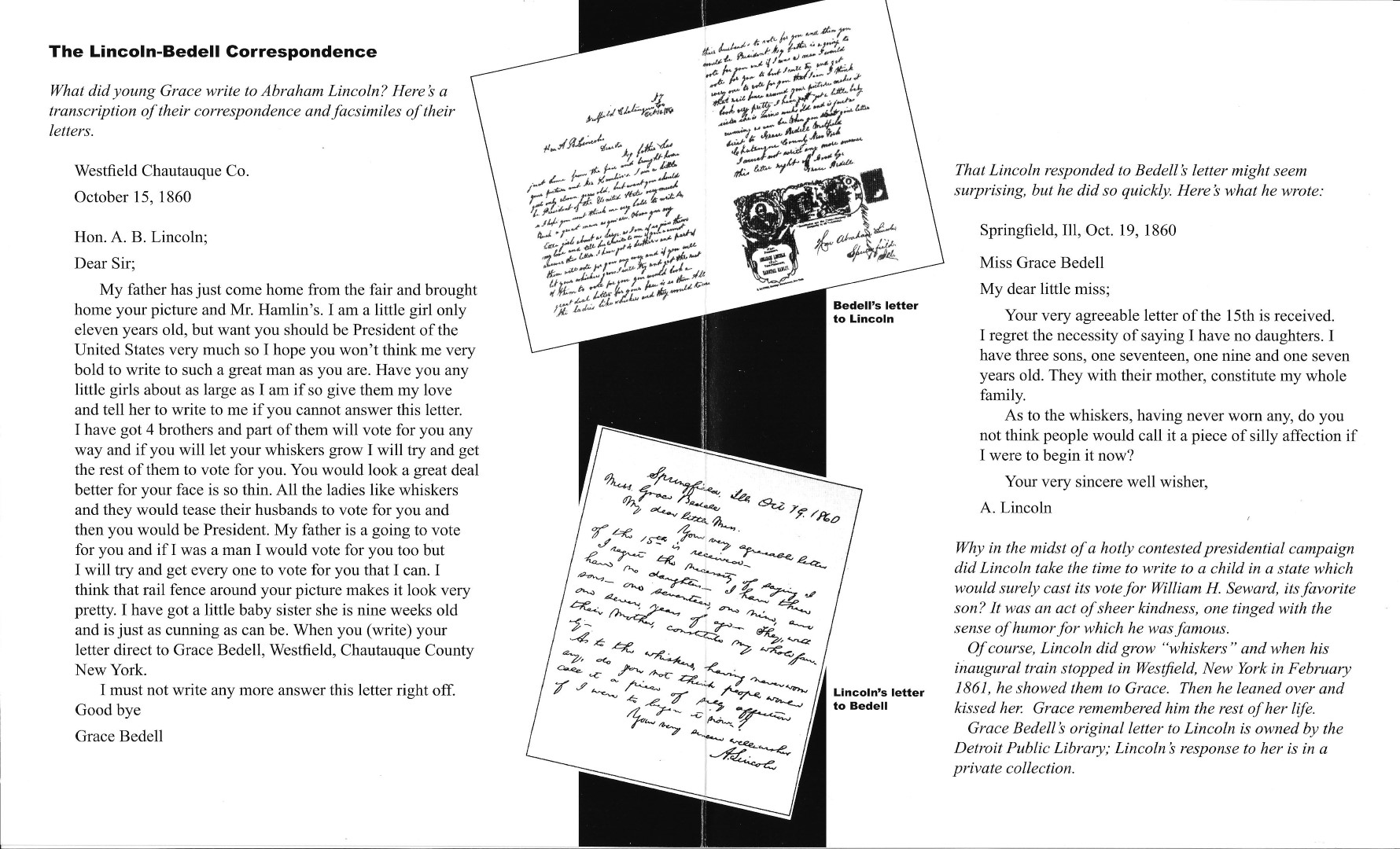
Briefly, the story begins in Oct. of 1860, when 11 year old Grace Bedell wrote a letter to candidate Abraham Lincoln, telling him that she wished him to become President. Her advice to him was to grow a beard. It would make his thin face look better, and because women liked “whiskers”, they would tease their husbands into voting for him. Lincoln quickly wrote back to her with his characteristic sense of humour. You can read the letters below. Of course, Lincoln did grow the beard. And as president-elect, his inaugural train made a stop at Westfield, where Lincoln asked to meet Grace. The statues capture that moment.
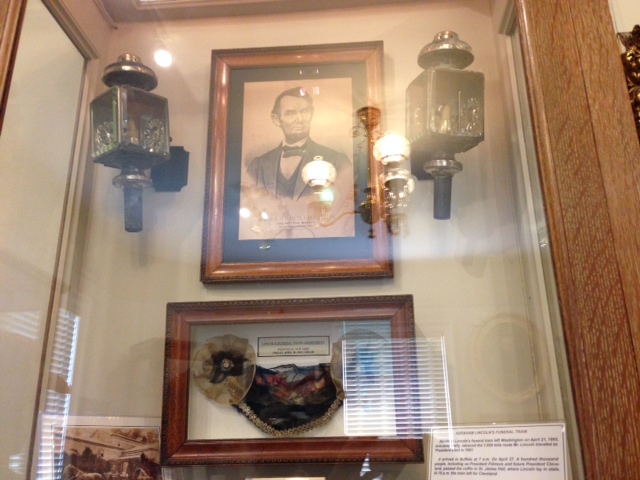
Across the corner you will also see the McClurg Mansion (circa 1818) which is now a museum. It houses an impressive collection of time period pieces, fine art, china, and furniture. The second floor displays a civil war collection, and include Lincoln’s carriage lamps, and the only surviving ribbon from his funeral train. For only $5 dollars, the guided tour is well worth it. Budget at least an hour.
Now for the diving.
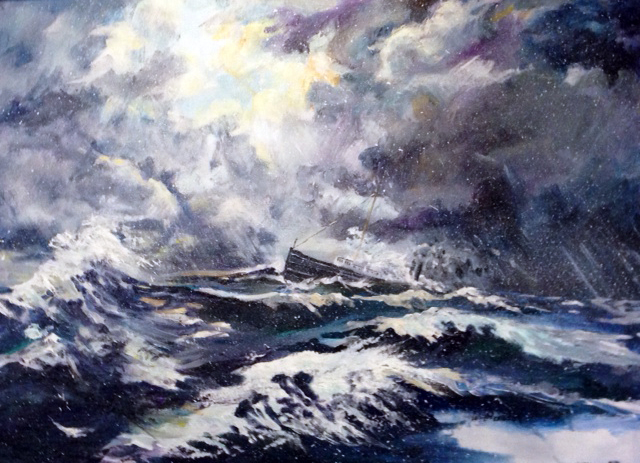
The Saturday afternoon was bright and sunny (and hot, for dry suits) with a very light wind. It took less than an hour to reach our first wreck, the 238′ Dean Richmond. The ship was the largest package freighter in the Great Lakes when launched in 1864. She was a wooden, arch-type, twin-propeller freighter, that sank with the loss of all 18 hands in a severe storm of Oct.14, 1893. The wreck now lies upside down in 100-120′ feet of water.
The water temperature was a chilly 41 degrees, with the visibility about 60′. The first impression you get when you descend the line is how massive this over-turned ship really is, like a sleeping giant. The one propeller that still remains in place is very photogenic. You have just about enough bottom-time (on 29 % Nitrox) for one trip around with occasional stops. As you move around you will notice some dynamite damage from when the ship was opened for its suspected treasures. Look in the cracks and splits for resting Burbot fish. Burbots are easily recognized by the barbel at the tip of the jaw, with a cat-fish like head, and eel-like tail. Unfortunately my camera had fogging issues, so I only was able to salvage two photos from that dive:
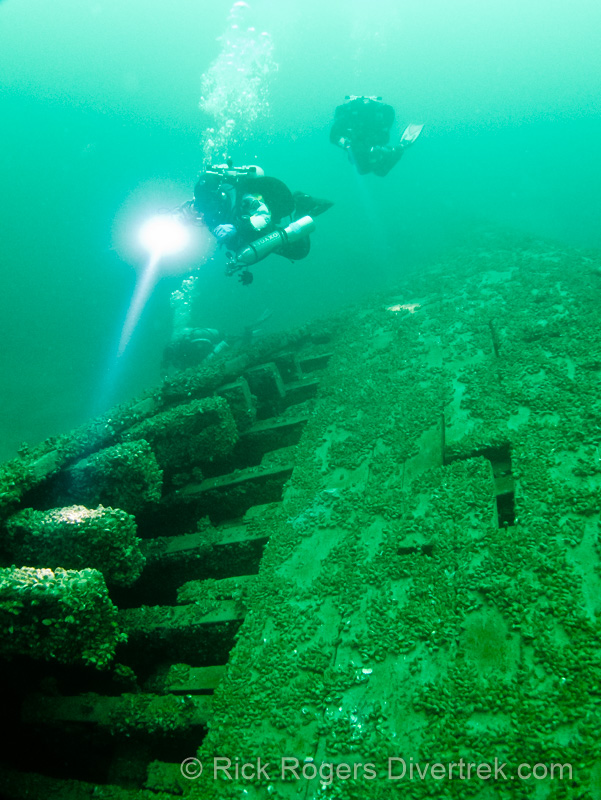

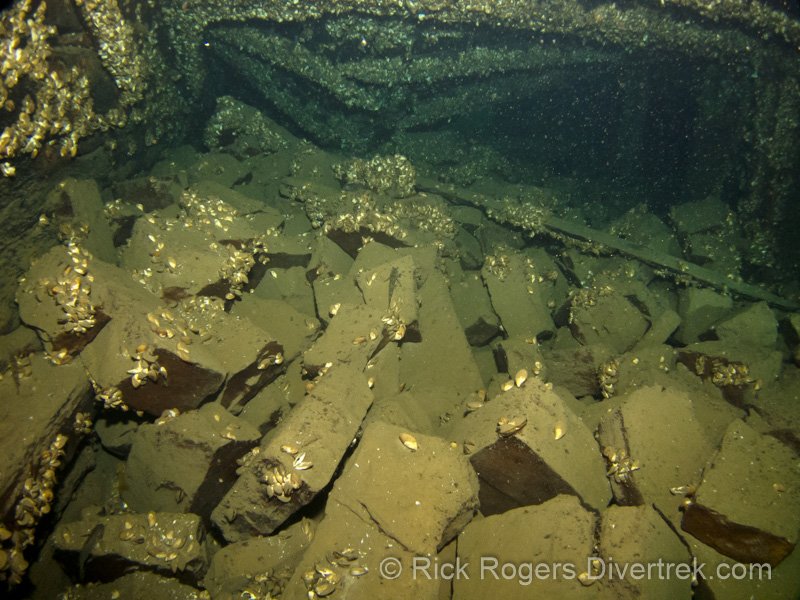
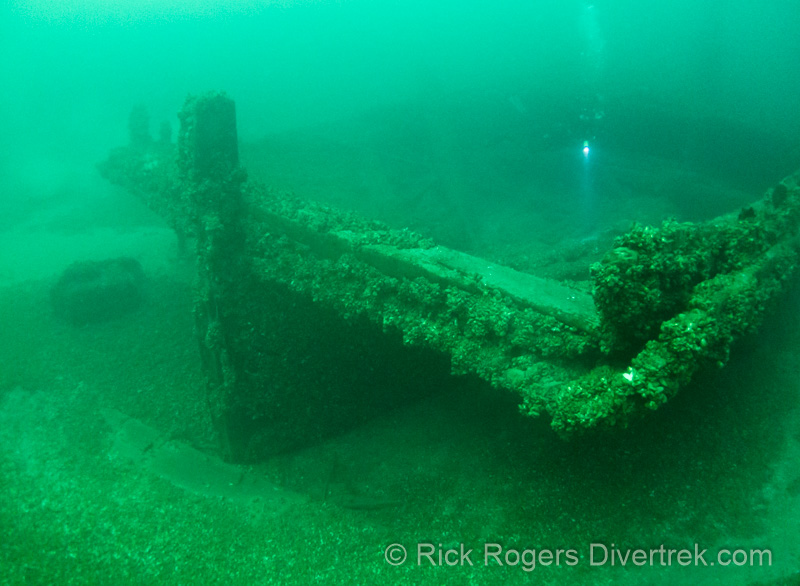
The second wreck visited was the 137′ barkentine Indiana. The term Barkentine refers to a schooner having 3 or more masts with a square-rigged foremast. The ship was built in 1852, and sank in a storm on Sept. 1870, but the crew survived. She now rests upright in 90′ of water. The visibility here was 30-40′, and the water temp. was 43 deg.F. The bow has collapsed, and the winch, capstan and deadeyes are all visible. You can see her cargo of stone through all the hatches and from the collapsed stern deck. We saw quite a few Burbot fish here. Burbots are a predator fish, but are shunned from eating because of their appearance and texture.
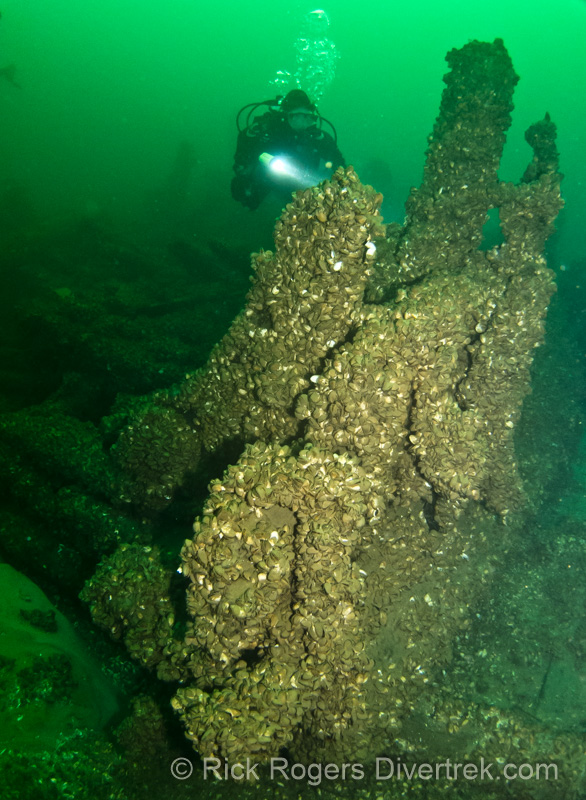
I suppose where else can you see a 170 year old schooner that still has its two masts upright and its bowsprit intact? On Sunday with overcast skies, and light winds we turned to the 81′ Washington Irving. It mysteriously disappeared (calm weather, no reports of fire or collision) in July 1860 with all six people who were on board. It now sits 120′ on the bottom slightly listed to port, and partially buried in the silt. As I was heading down the descent line I kept wondering when the viz would open up. It didn’t. Be forewarned that this site is dark (“pitch-black”, you’ll need a light), with the viz typically in the 10-20′ range, and has a very thick layer of light silt that is easily disturbed. Due to these conditions, and the relatively large number of divers (17) on a small wreck, it very quickly got “smoked out”, and photographic opportunities were very limited.
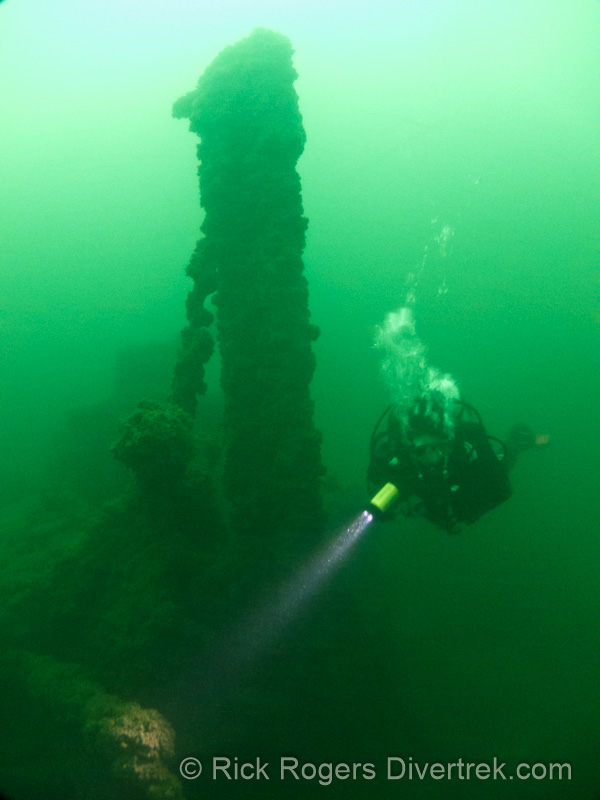
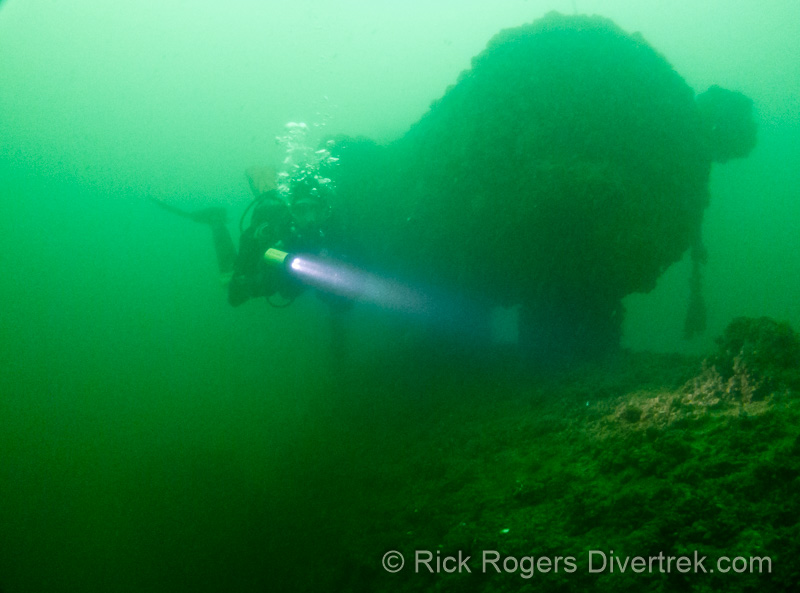
The second dive of the day was one of Chris Kohl’s top 100- the 237′ steamer, the Brunswick. The wreck begins with the boilers at about 85′, and the deck is just less than 100′. Again be forewarned that the viz is typically in the 10-20 ‘ range (some divers ran lines to be sure they made it back to the mooring line), and dark. The thick layer of silt moves around this wreck with time and is very easily disturbed. The bow has collapsed, and the stempost was really all that remained. Interestingly I did find a fire axe on the port bow deck covered in thick silt. It had disappeared until recently. Rumour has it that the diver that took it was persuaded to return it.
Tips:
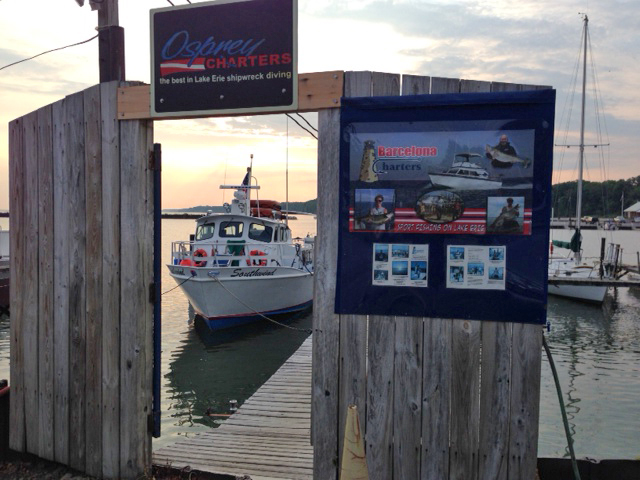
The Osprey Charters boat is located at the Munroe Marina, adjacent to the Barcelona Harbour where the lighthouse is. The boat is very spacious and has a below deck seating area with window viewing. A personable young couple, Captain Mike and his wife Brandy, now run the boat. You can get tank fills right at the Osprey shed (Air, Nitrox, Helium and Argon).

There are no chain motels in the area, so your two options are the Holiday (by the highway) and Theater Motels (in Westfield) or one of the B & B’s. We stayed at the Theater. Its no-frills, and old, but clean. The owners are in the process of renovating it. But it’s good value for $69.99 .
There is one nice B & B that I did see right beside the Lighthouse with a view of the Lake (Lakeside B & B) that would warrant some looking into.