
March, 2016
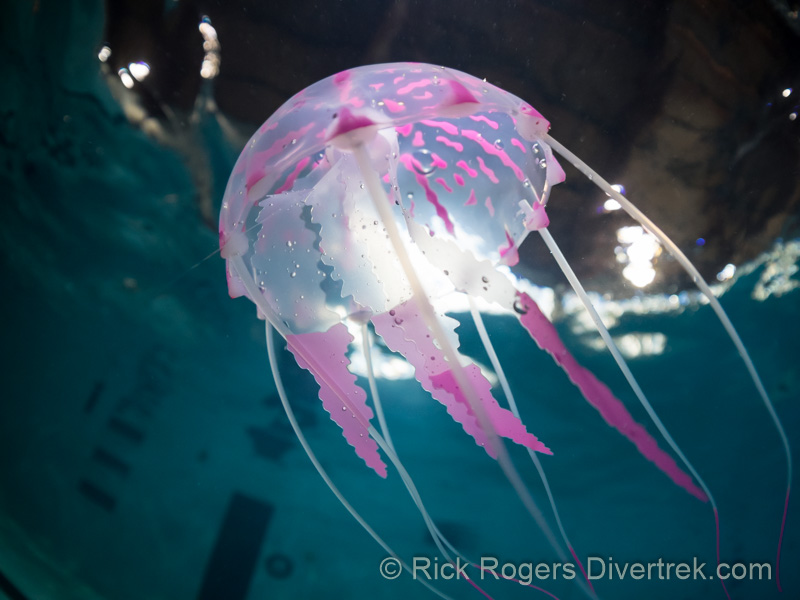
Since Olympus’ announcement last summer of their superbright Zuiko 8mm f1.8 fisheye Pro lens (micro 4/3 series), I’ve been wanting to get one for my wreck photography and next big animal trip. The early reviews weren’t overstated. This is one impressive piece of engineering. And it’s just fun to play with.
What better way to test a fast f1.8, 180 degree field of view lens than through astrophotography? So I took advantage of a clear and cold night. You can see from the pictures how excellent the optical quality of this lens is. I pushed this exposure for as long as practical, using the 500/f rule of thumb (where f= the equivalent 35 mm focal length= 16 mm in this case). Under a magnified view, the stars at the upper left in the photo were just beginning to trail due to their distance from the North pole (the axis), and therefore larger rotation rate. Since this lens has no infinity focus setting, I had to manually focus on a distant light source, as best I could. This lens has actually inspired me to do more astrophotography.
All the images shown here were shot in RAW format before converting to JPEG. I did this to get a more realistic impression of the image quality, since the camera’s internal processing engine automatically edits JPEG’s.
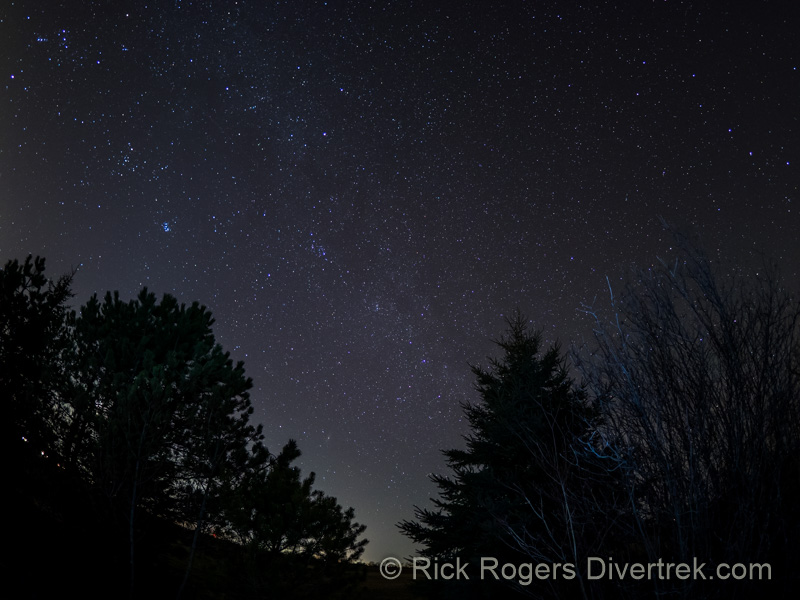
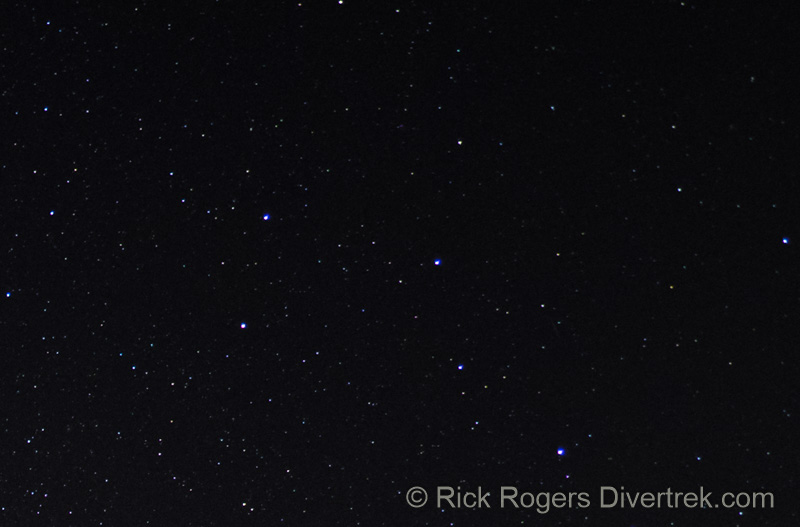
Astrophotography is one of the harshest tests that you can put to a lens. Using the above image, I could find no spherical aberration (“blurry” focus), distortions or stretching of the stars, and they were all “pin sharp” right out to the corners. The only “defect” that I could find was a very slight chromatic aberration noticeable around the brightest of stars, but that’s when pixel peeping. There was a total of 4 or 5 red/blue coloured pixels which gives an aberration level of about 0.14% (the ratio of the aberration pixels to the image height pixels). To put this in perspective, anything less than about 0.4% is generally considered to excellent. But this tiny amount doesn’t take away from the full-sized image, and it wouldn’t be worth my time removing it with software, like Lightroom.
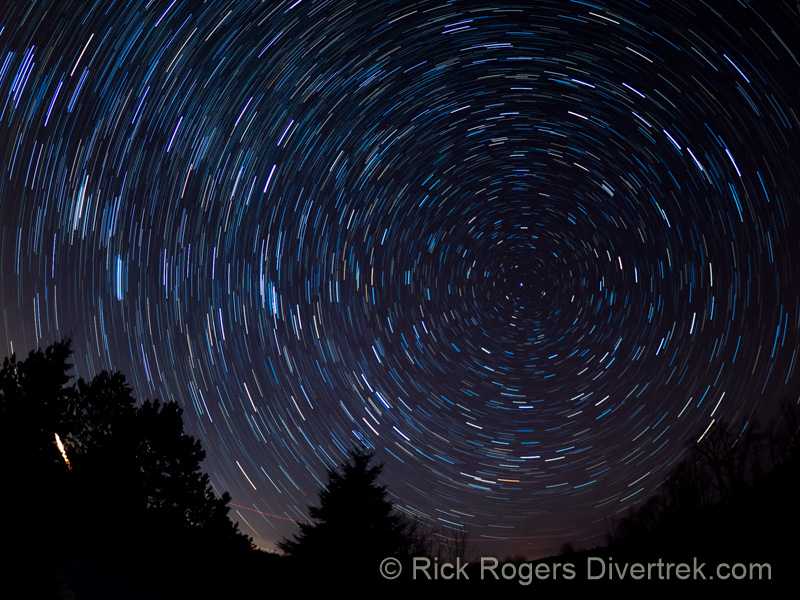
However, under “normal” circumstances I could find no evidence of chromatic aberration (“colour-fringing”) in the high contrast scenes that I shot below, even with wide aperatures. Believe me, you will be snooping at the pixel level. I expected this much from a Pro series lens.
As you can see in the photo below, fisheye lenses have vertical and horizontal areas in the middle (“crosshairs”) where there is no distortion. This is where you want to place straight lines-if you have, or want to keep them straight. The most distortion (“Barrel distortion”), or bending, occurs toward the four corners. Lightroom can correct most, but not all of this Barrel distortion, at a cost of lost information through cropping. Since Lightroom doesn’t have presets for the micro 4/3 Lens series, you will have to do it manually. In underwater photography, there are few straight lines like this to deal with, and the curved distortion produced by the lens is often appealing.

Another thing to keep in mind when using a fisheye lens is the “forced-perspective” that it produces. Near objects look really close, while distant ones look further away. This is what produces those dramatic reef scenes, and striking close focus photographs with a fisheye. Depending on your subject, and what you hope to accomplish, you might want to keep a little more distance. This is why my dog’s nose (see the photo below) looks bigger than it really is, producing a comical effect. This also explains why they don’t use fisheyes for portrait photography!


Of course I couldn’t wait to get it into the water to experiment with it. So still being winter, with snow and the lakes frozen over, I rented out a local pool with some friends. This is a perfect opportunity to keep-up your diving and underwater photography skills.
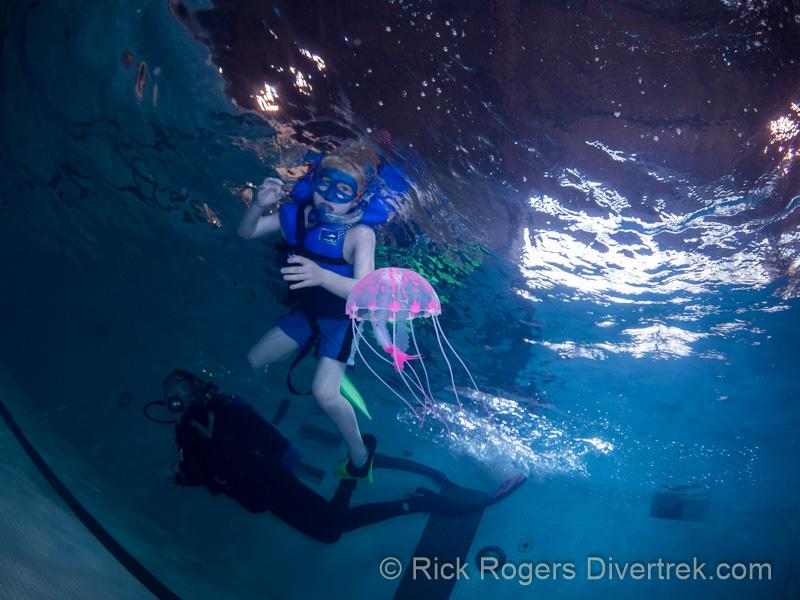
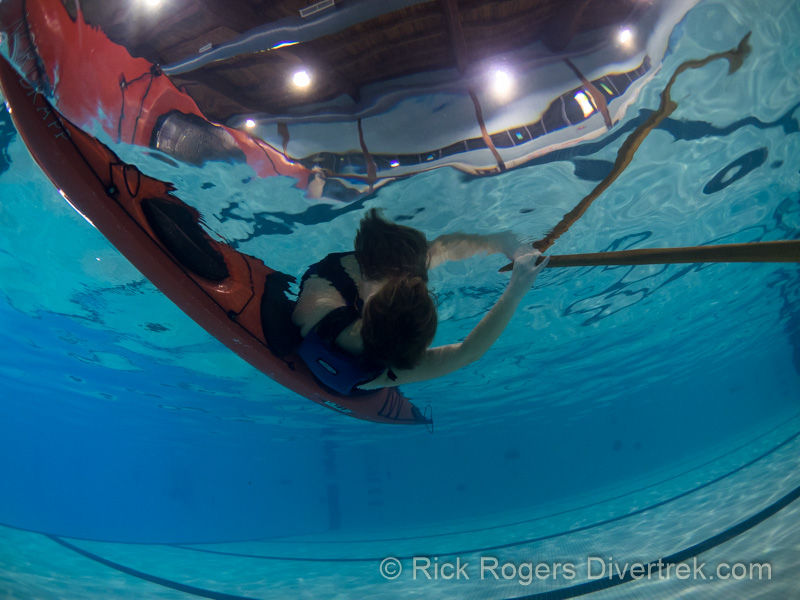
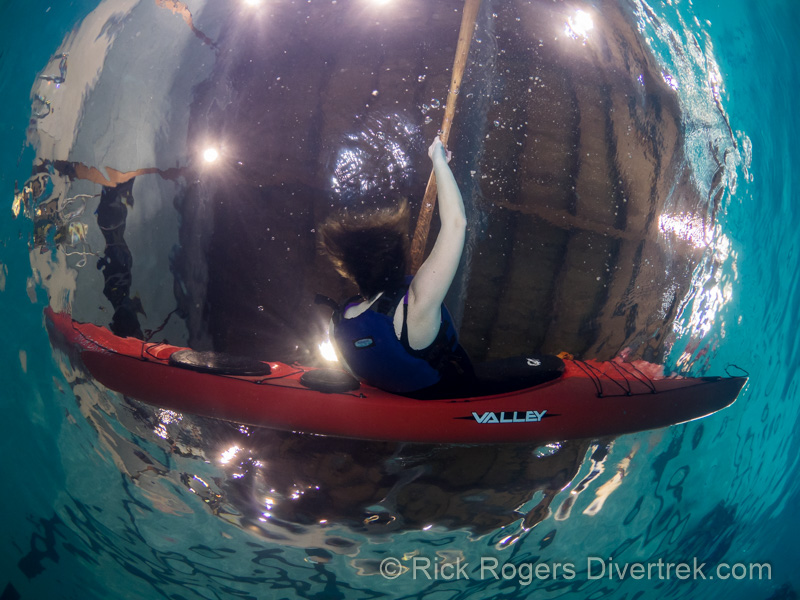
Conclusion: This lens is worth every penny I paid for it ($1049.99 CAN), and I’ll join the growing chorus of positive reviews about it. It’s fast focusing, ruggedly built, weather sealed (dustproof, splashproof & freezeproof), cutting edge (world’s first f/1.8 fisheye), and has excellent quality optics. Divers will especially appreciate the splashproof lens in the event of a flooded housing. I can’t wait to use this lens in the upcoming dive season!