
June, 2023.
Renowned for having the highest concentration of shipwrecks per mile worldwide, Bermuda has earned a prestigious spot on National Geographic’s list as a must-visit diving destination. It boasts an abundance of 300 relatively shallow wreck sites, vibrant fringing reefs, a unique system of historical forts, and limitless topside activities. Discover why Bermuda deserves a spot on your short-list.
“Welcome to Bermuda”, said the cab driver. “Normally it’s nice this time of year. But we’ve had a wetter than usual month, maybe breaking a 73 year record”. Things could always be worse I replied. While many divers who are going to get wet anyways don’t mind the rain, underwater photographers do. The run-off and aeration of the water ruins the clarity and contrast of your photos, and turns the nice aquamarine blues to greyish. As it turns out things could’ve been worse, and we were some of the fortunate ones. The next day some flights were unable to land, and outbound travelers had to return to their hotels to rebook flights out. Luckily the low-pressure system was working its way out.
On our first day of diving, the Captain selected the Niobe Corinthian (dubbed the Corinthian), and the King George dredger for the second, based on conditions. The visibility at that time was a darkened 30′. Luckily I got a chance to dive these a second time later on in the week as the lighting and visibility improved, and those are the images I’m showing below.
The Corinthian is Bermuda’s newest wreck, having been sunk in 2017 as an artificial reef. Like most shipwrecks it has a storied past. The ship first arrived in Bermuda in 2005 as a floating casino & stripper ship. Operating 12 miles offshore in International waters in order to skirt Bermudian anti-gaming laws, the ship still needed to use its home port in Bermuda and in 2006 authorities raided the ship and seized some 100 gaming machines. In 2007 fire damaged the ship and it was raided again by police the following year. After that the ship fell into disrepair, with the government eventually taking ownership in 2014.
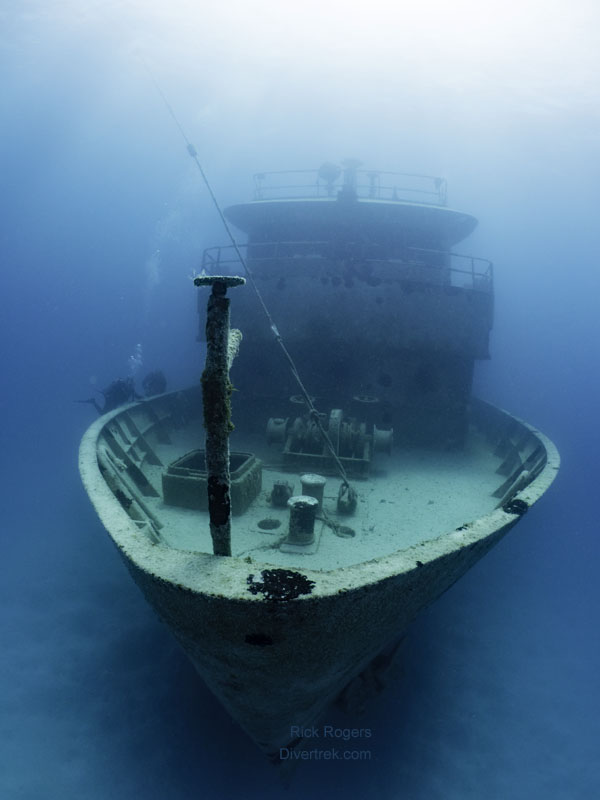
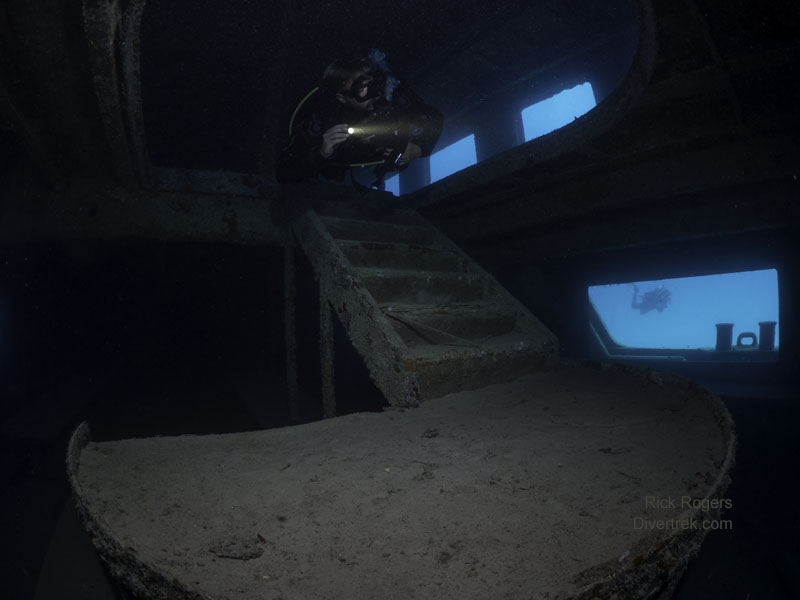
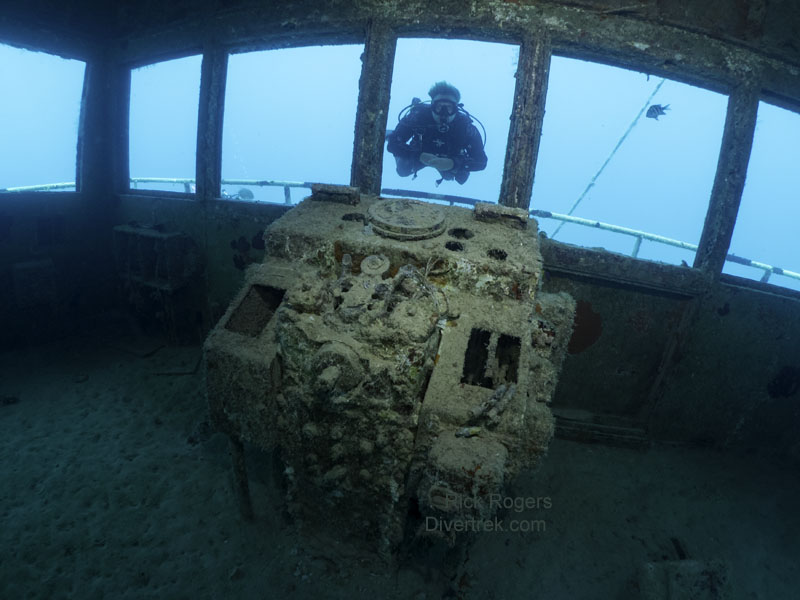
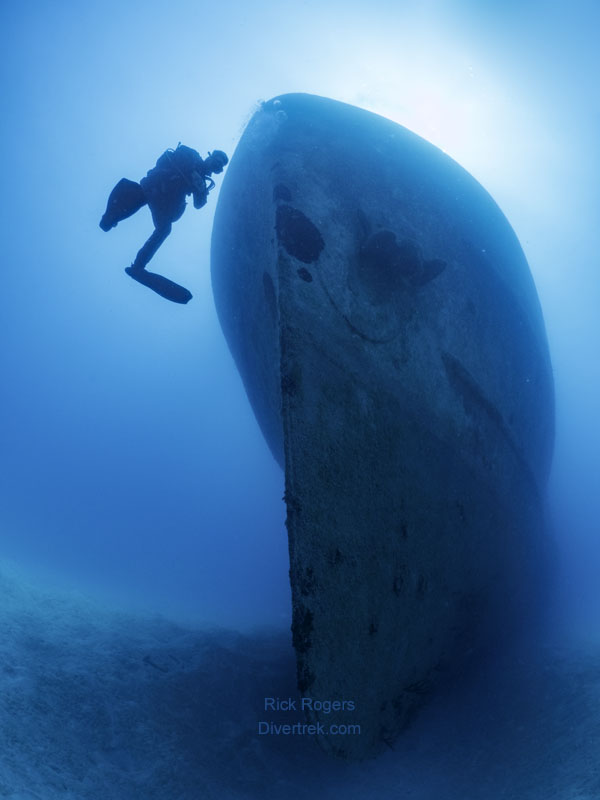
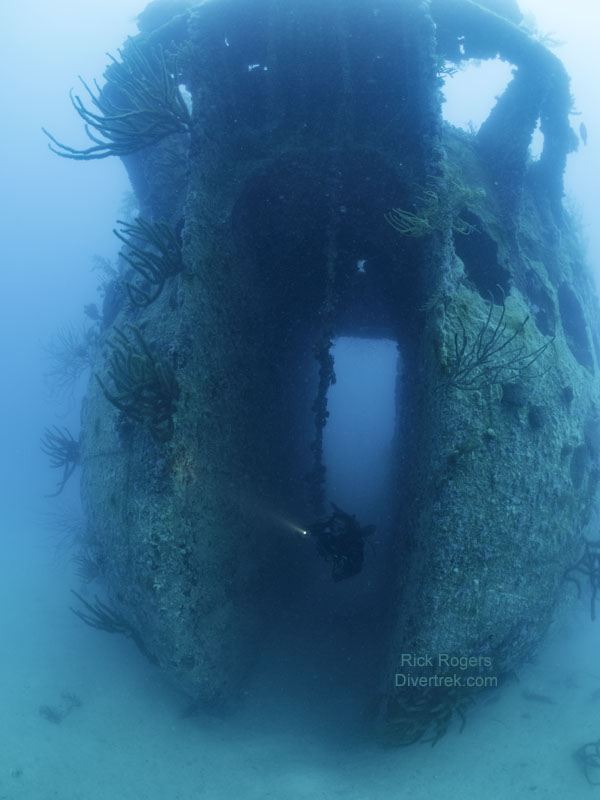
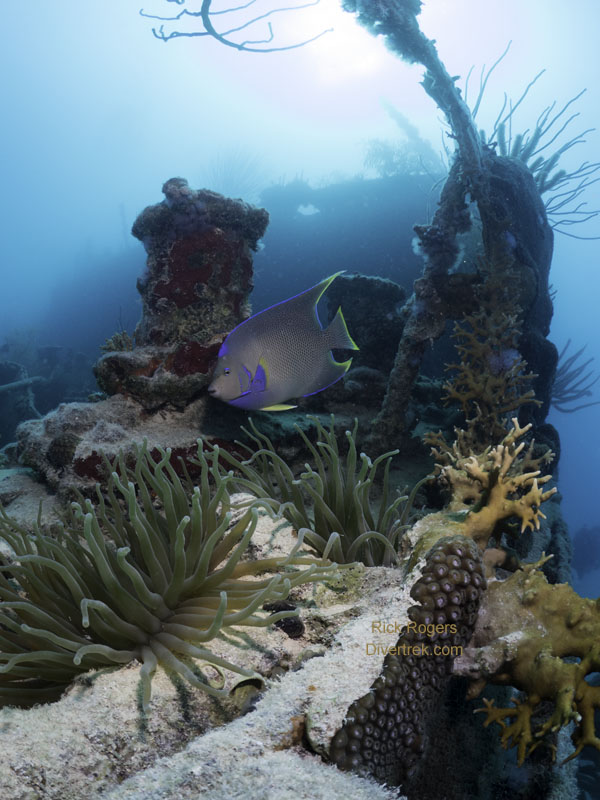
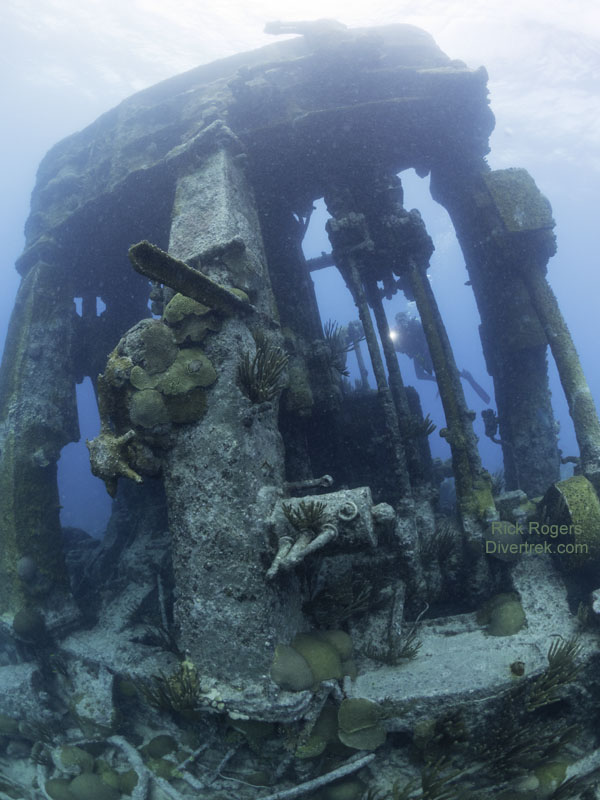
The second dive, the King George dredger, built in 1910, first filled me with a large degree of skepticism when it was announced. A dredger? Seriously? With all of the possible wrecks that we could be diving, a dredger? DO IT! This is one of the nicest wrecks that I dove all week! It has an interesting architecture, a mysterious ambiance, and since it’s been sunk for so long it has an abundance of animal life and corals. The engine room is easily accessible, and complete with engines and catwalks. I can’t understand why this wreck isn’t promoted as a must do dive. Having outlived its usefulness, the 171′ ship was scuttled in 1930, and now rests in 60′ of water. Visibility is typically 30-40′.
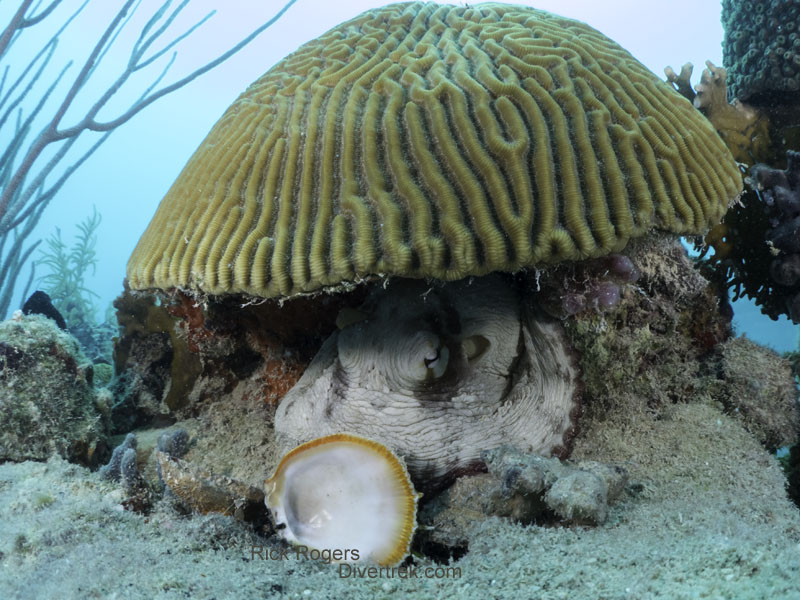
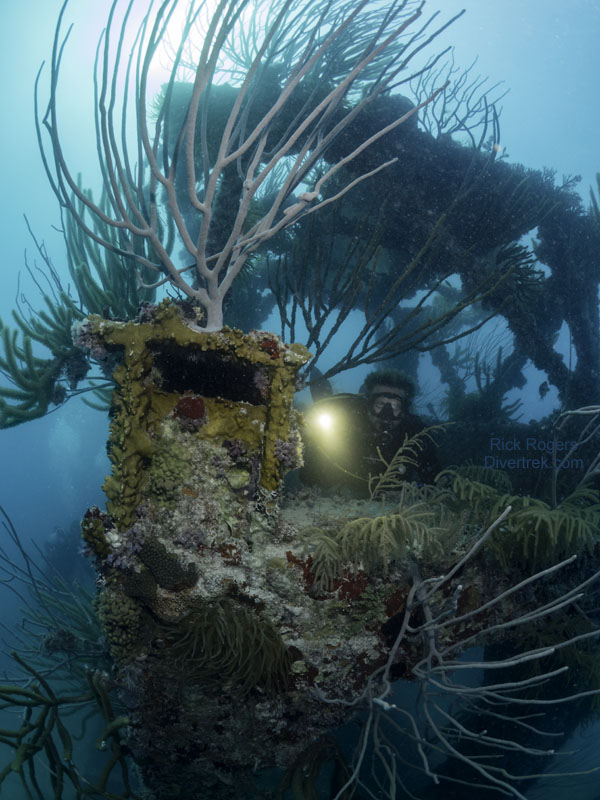
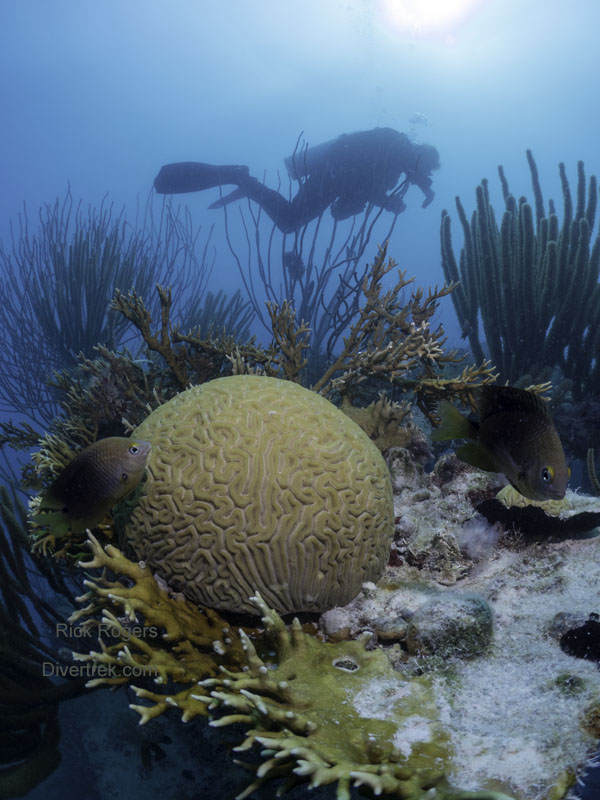
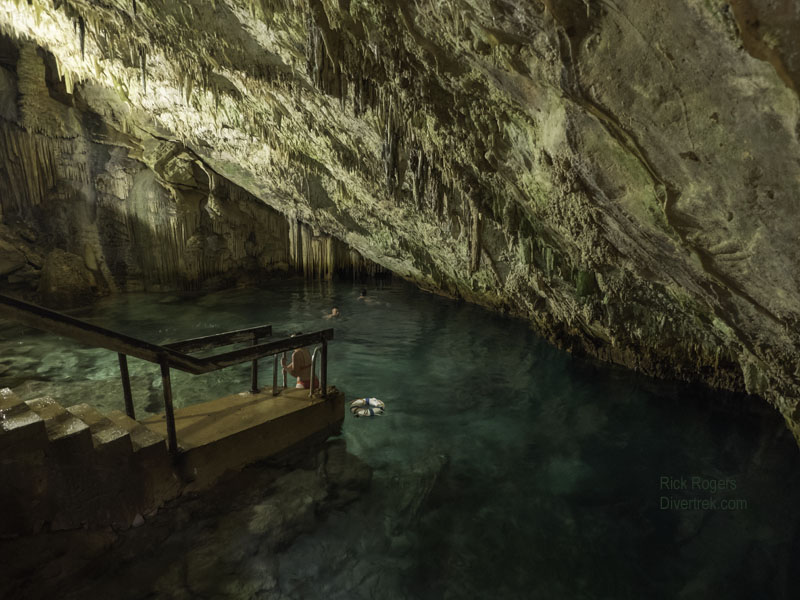
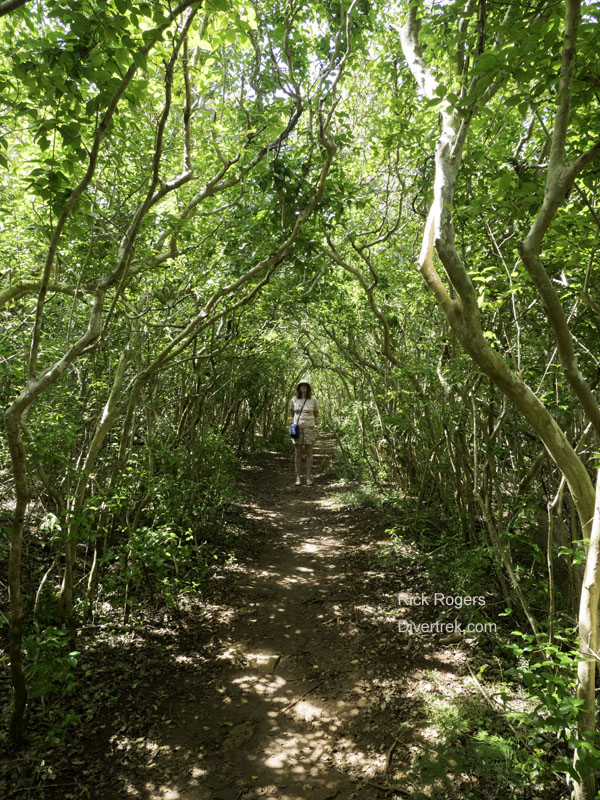
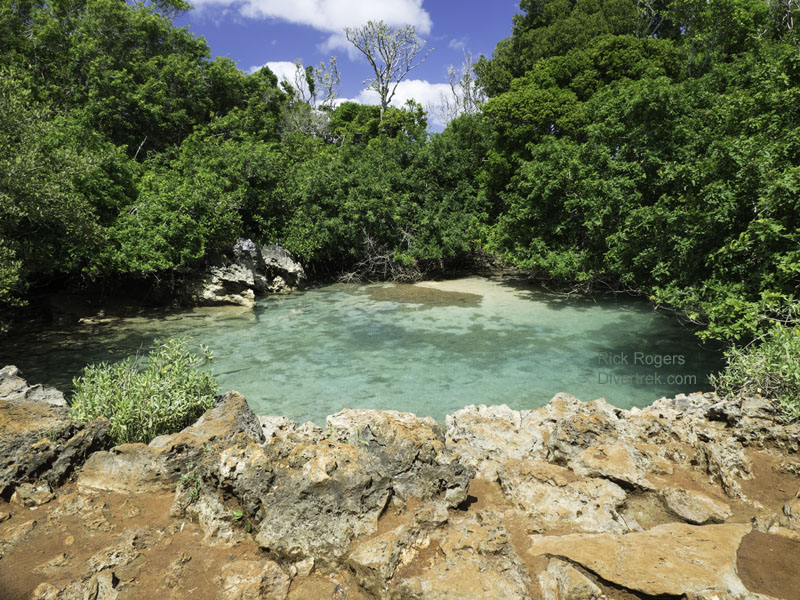
Dive Bermuda typically offers a 2-tank morning charter, with an optional afternoon reef dive. But we preferred to use the afternoons to explore the island. A nice way to spend the afternoon is a walk through the Blue Hole Park, at the end of the Causeway in Castle Harbour, a few minutes walk from the Grotto Bay Beach Resort. This Nature Reserve is known for its dense foliage, walking trails, scenic views of the Harbour, caves to explore, and of course, the Blue Hole spring to admire or swim in.
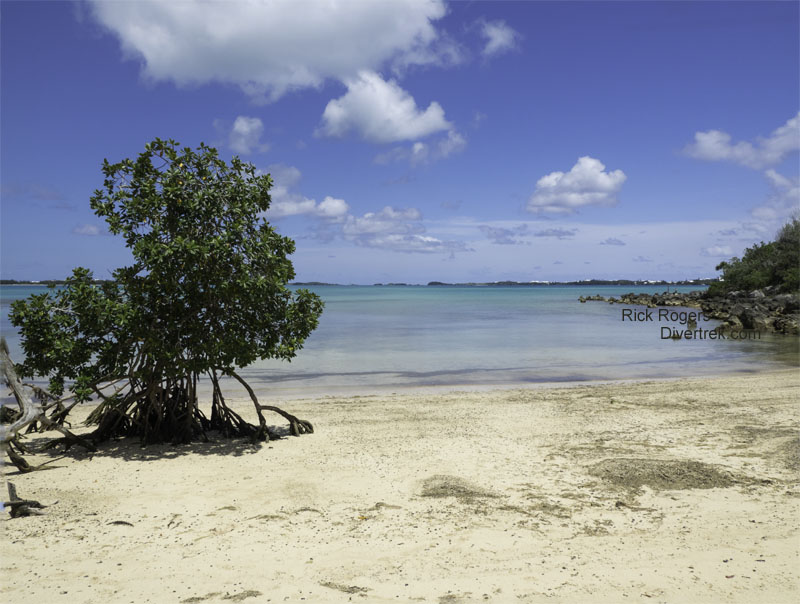



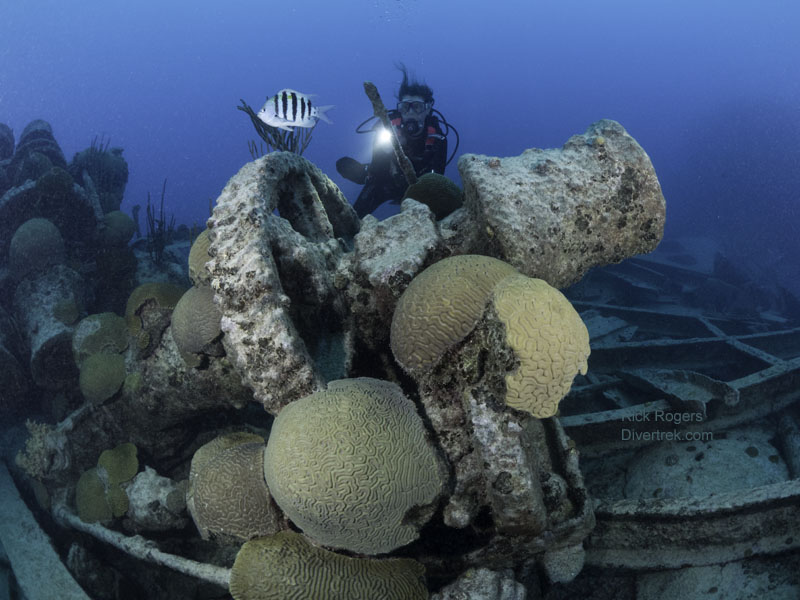
On the second day we dove the Pelinaion, a large 385′ cargo steamer, with the visibility still in the 30′ range. In 1940 the ship was carrying a load of Manganese and iron ore from west Africa to Baltimore. Because of WWII, the British had blacked out the lighthouse to prevent the Germans from spying on the Island. This confused the Captain, who had sailed past the Island many times before, and ran aground on a fringing reef. The ship split in two sections, and now lies on reef from 30′ to 70′ of water. The wreck is an awesome sight because of the many parts (machinery, engine, winches, boilers, anchor, spare propeller, etc.), the large debris field, and swim throughs under the wreck and through the surrounding reef.
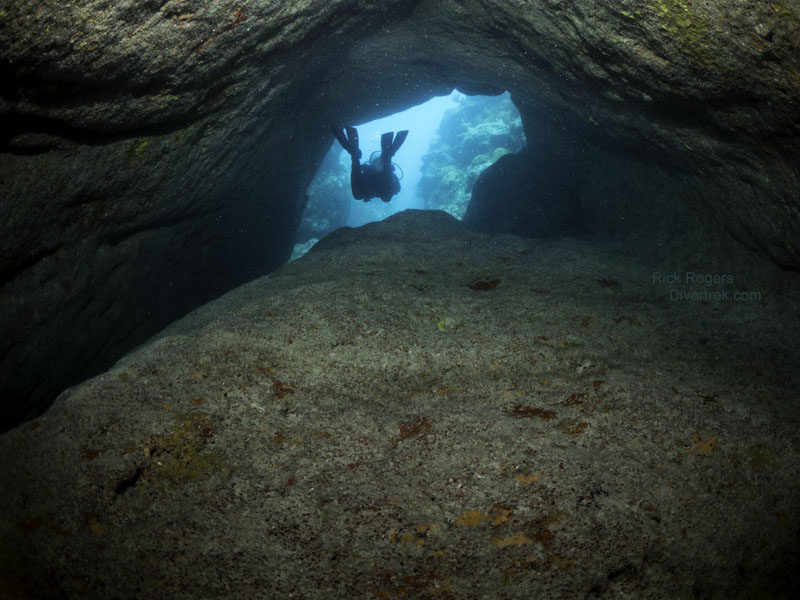
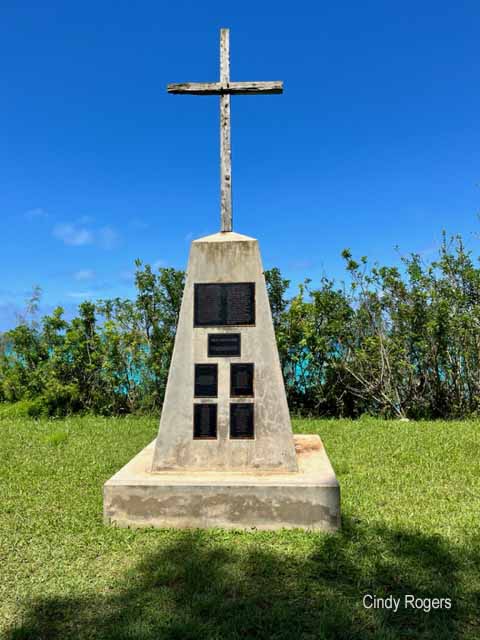
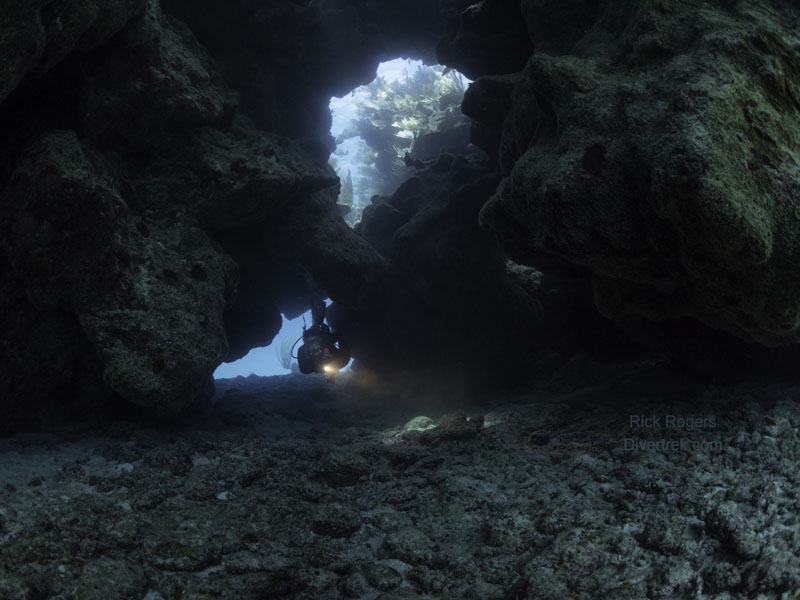
The second dive was at the ever-popular Cathedral, a huge underwater dome that I estimated to be about 50′ high. It’s a natural rock formation where -on good days- ethereal shafts of light illuminate the darkened interior through several upper windows. This would be an impressive sight in bright & clearer waters, but the images available that morning don’t do it justice. Just outside the entrance is a memorial with an anchor in memory of a CCR diver who passed away at this site. This was his favorite dive.
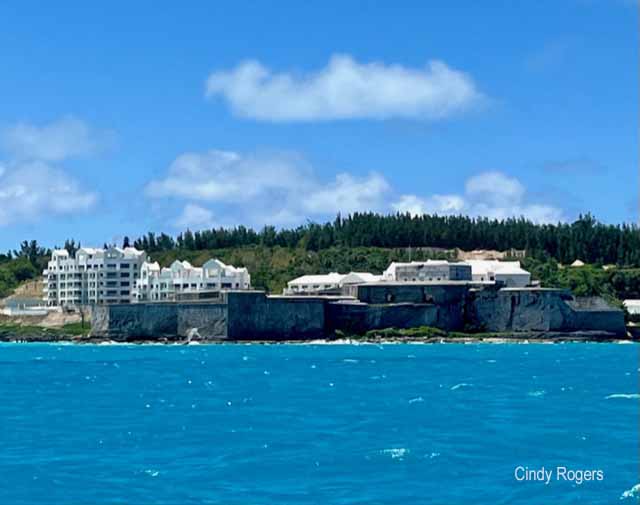
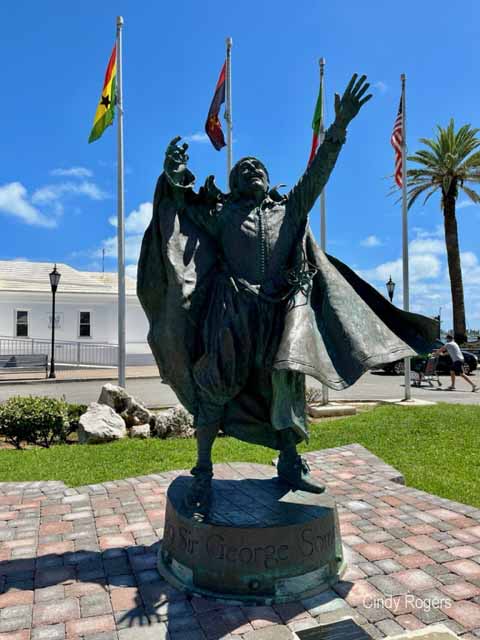
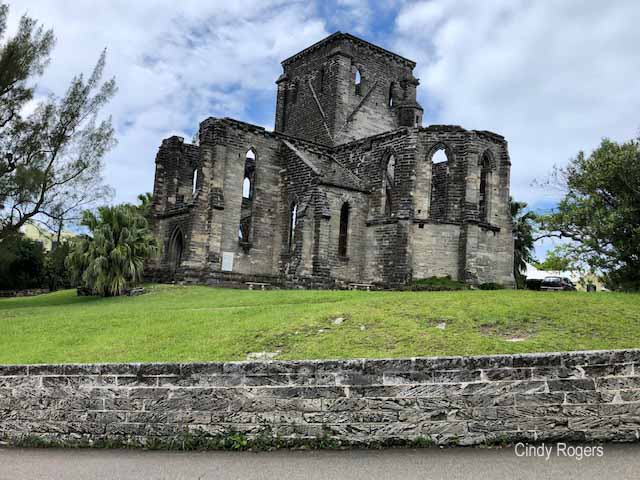
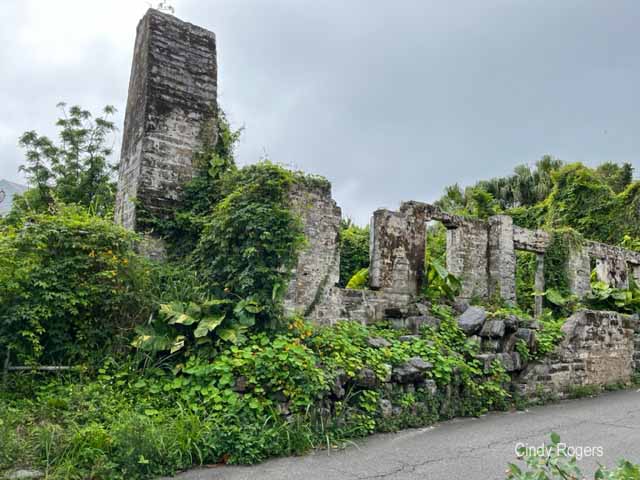
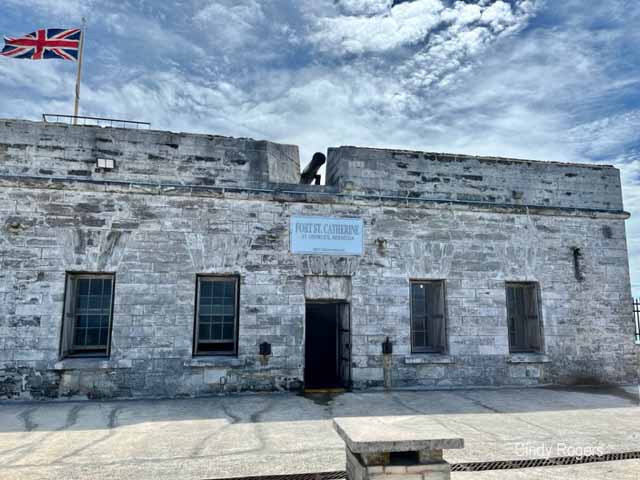
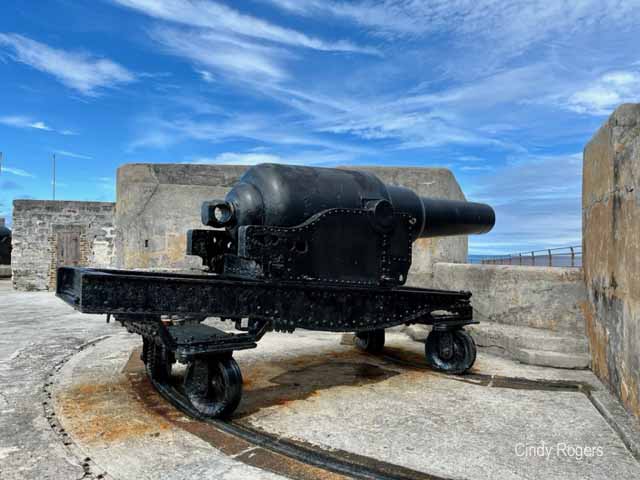
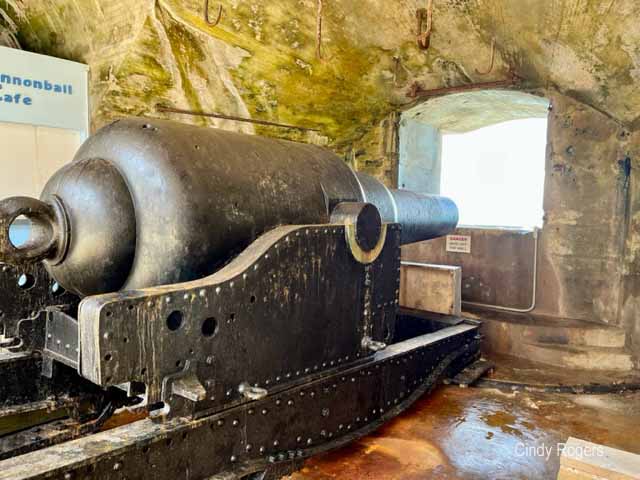
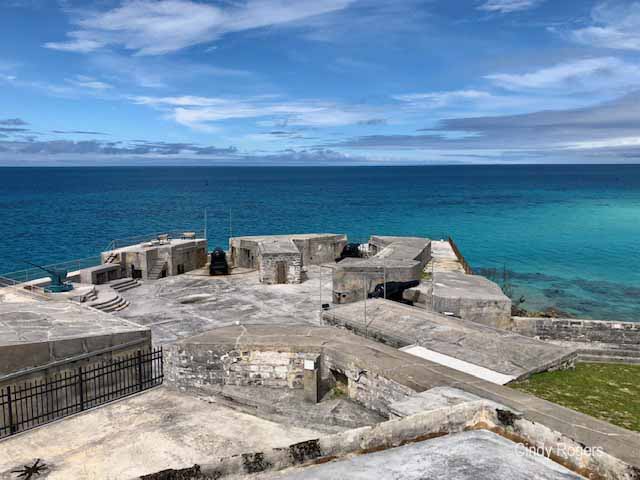
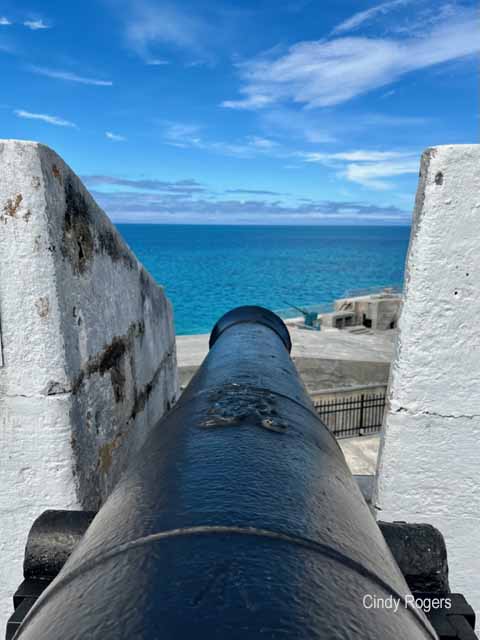
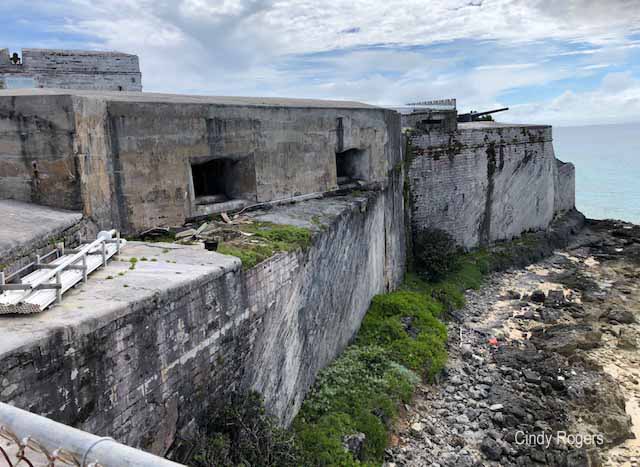
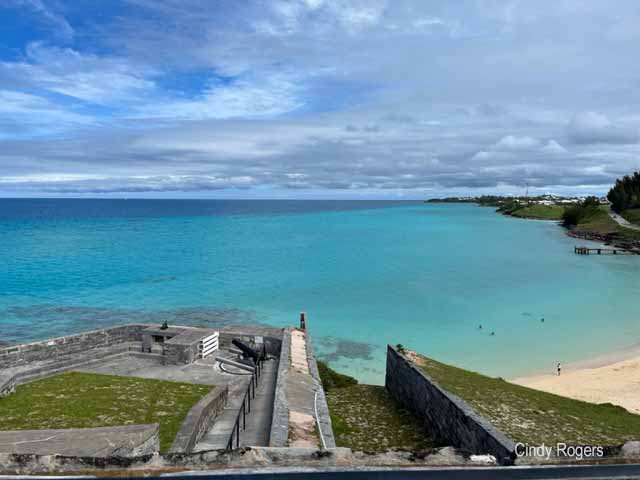
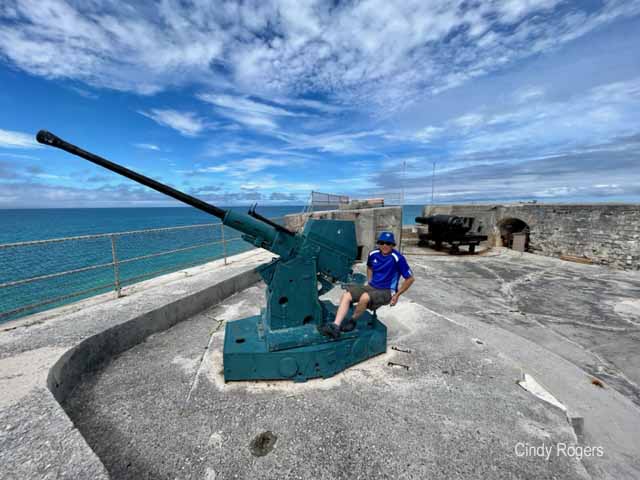
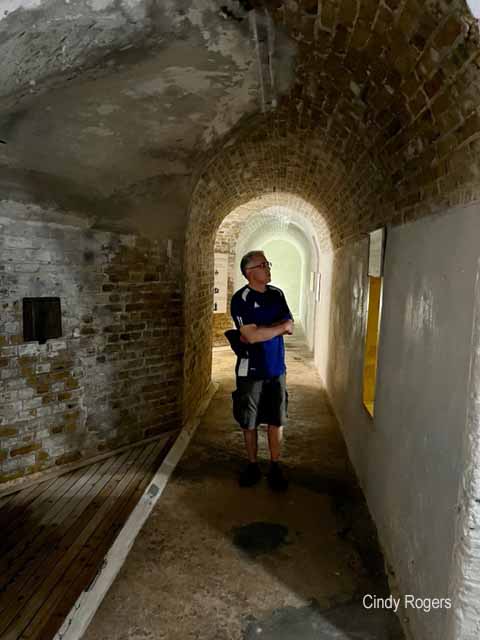
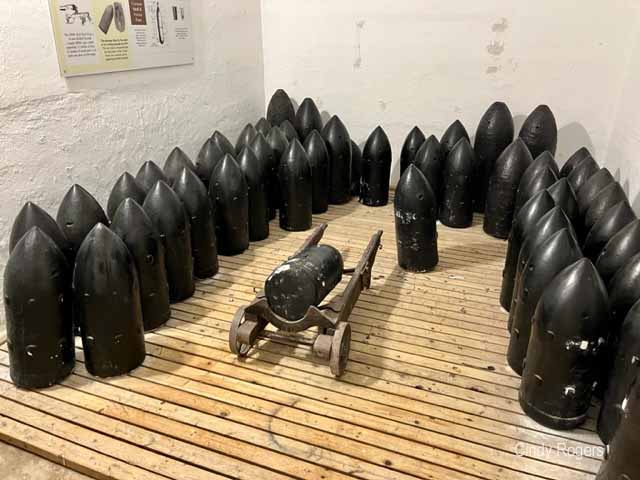
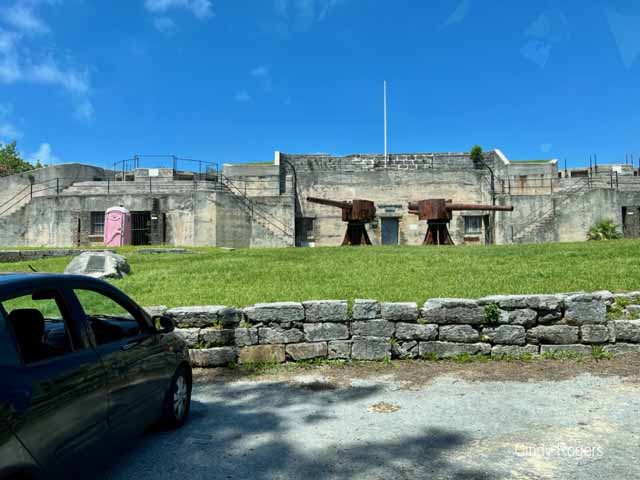
Having boated past the imposing Fort St. Catherine for two days now, I knew I just had to visit it. It’s a UNESCO world heritage site, and the most ominous looking fort in Bermuda among a huge string of some 90 forts that dot the coastline. It’s located in the historic town of St. George, the first permanent settlement in Bermuda, at the very Northern tip of the island (what they call the eastern end). You can easily catch a bus there from Grotto Bay Beach Resort and be there in 10 minutes. You can spend one afternoon visiting the town, its shops, and historic sites, including the Town Hall and the oldest church. Then in another afternoon, take the half-hour walk up to the fort (which, beware, is uphill) past other interesting sites. The fort has many artifacts and exhibits to see, and much to explore and is well worth the time spent. Note that the fort is only open on weekdays from 10-4 pm, $7 per adult.
On the third day we dove the Rita Zovetta, a 399′ cargo steamer. The ship ran aground in 1924 during rough weather while following a pilot boat. Most of her cargo of manganese ore was offloaded before sinking, with no loss of life. The ship was later heavily salvaged several times for non-ferrous scrap metals (brass, copper, etc.) after WW II.
Today there is a wide debris field to explore between 20-70′, including the propeller, prop shaft, engine, boilers, winches, chains and other items.
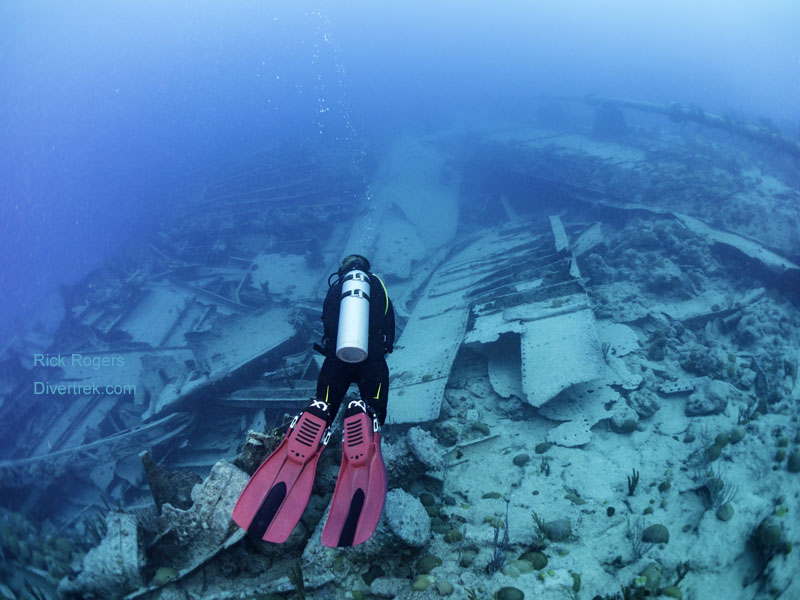
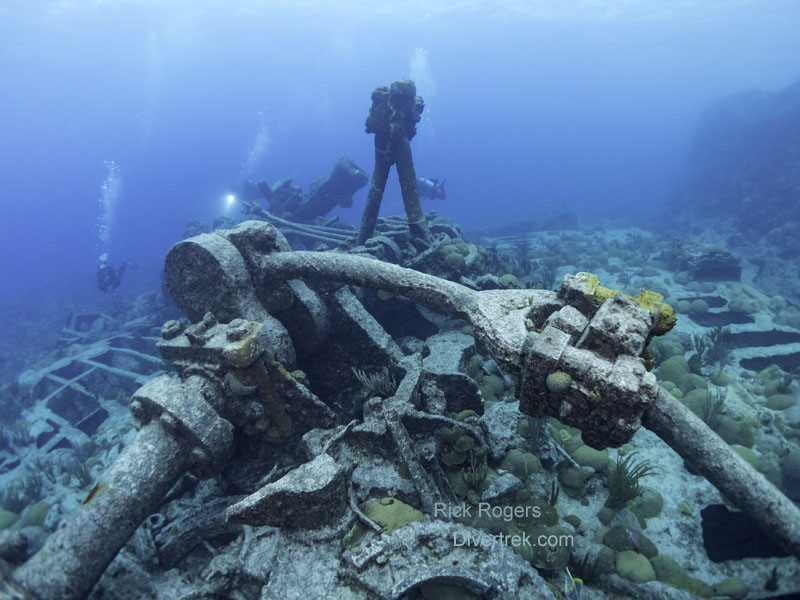
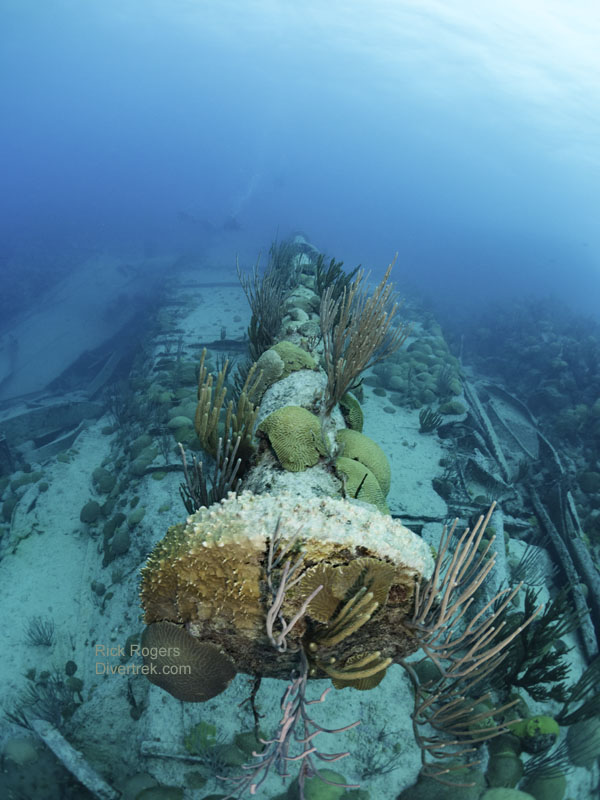
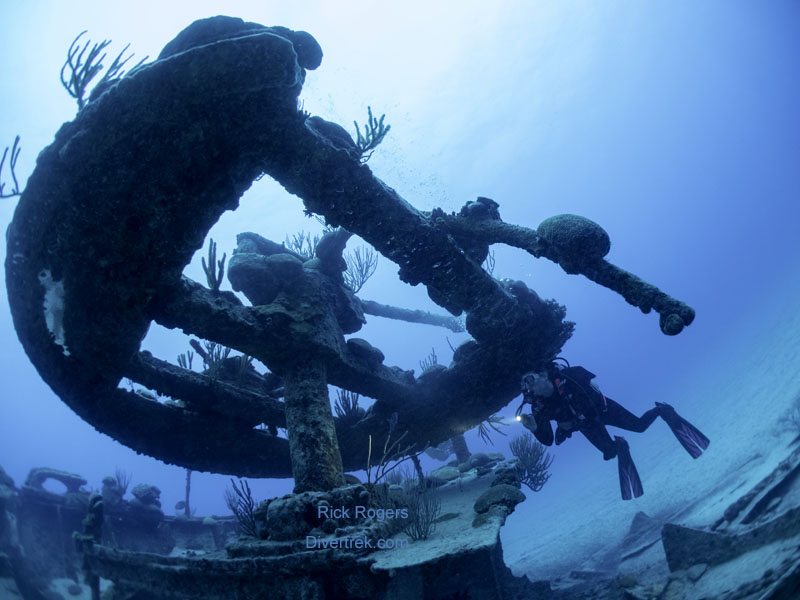
The fourth day was a “wind” day, so all the diving was cancelled. One of the many positive things about diving in Bermuda is that they’re so much to do top-side, and we used this down time for a worthwhile visit to the Bermuda Aquarium, Museum & Zoo. Bermuda is a very friendly island, and it’s very easy to move around there using their bus & ferry system. If you’re staying with Grotto Bay Beach Resort you get a pass included. The locals were always happy to give directions, and others we never even met before chatted with us, and wished us a nice day.
For our last day of diving I put in a request to dive the Cristobal Colon wreck, and North Reef, which they (Bermuda Divers) were happy to accommodate. These two sites are always mentioned in the top must-do dives in Bermuda.
The triple-decker, luxury cruise liner Cristobal Colon is the largest shipwreck in Bermuda at nearly 500′ long. In the fall of 1936, while steaming ahead at 15 knots, the Captain mistook an offshore communications tower for a lighthouse which was under repair, and not working. The ship crashed into a coral reef 8 miles North of Bermuda, without loss of life. After all attempts to dislodge the ship failed, she was salvaged, with the contents brought ashore and auctioned. And every night, the resourceful Bermudians would take their boats to the wreck and return with bags full of loot. By 1939 the ship had broken in two, and there were further salvage operations to recover metal parts, including some of the propeller. Allied forces then finished off the hulk by using it for target practice.
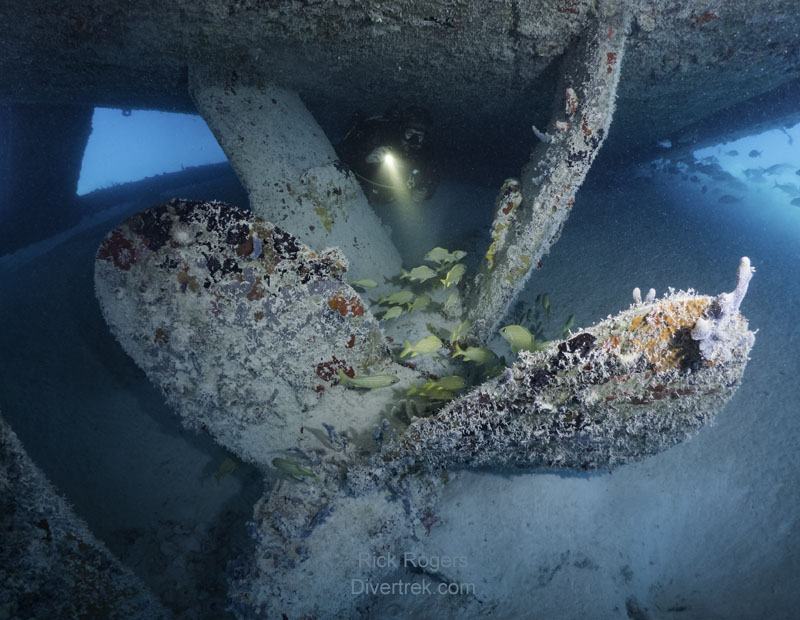
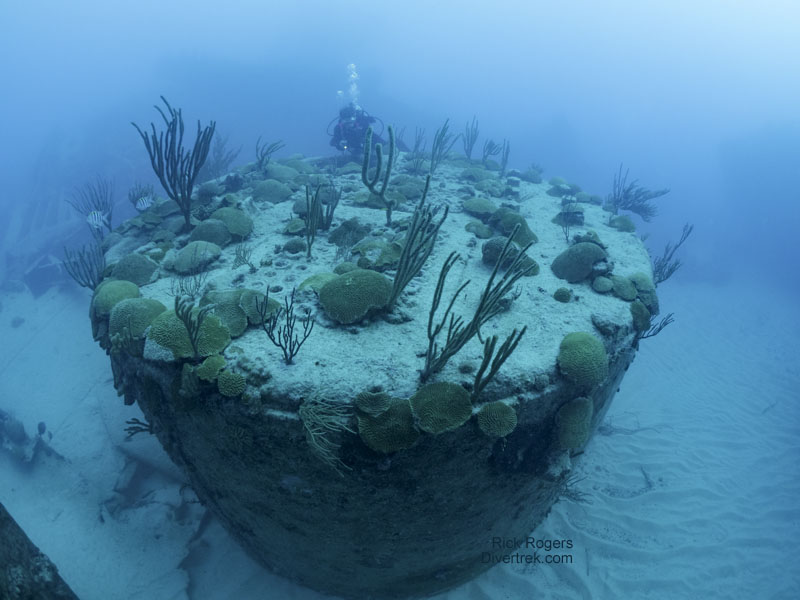
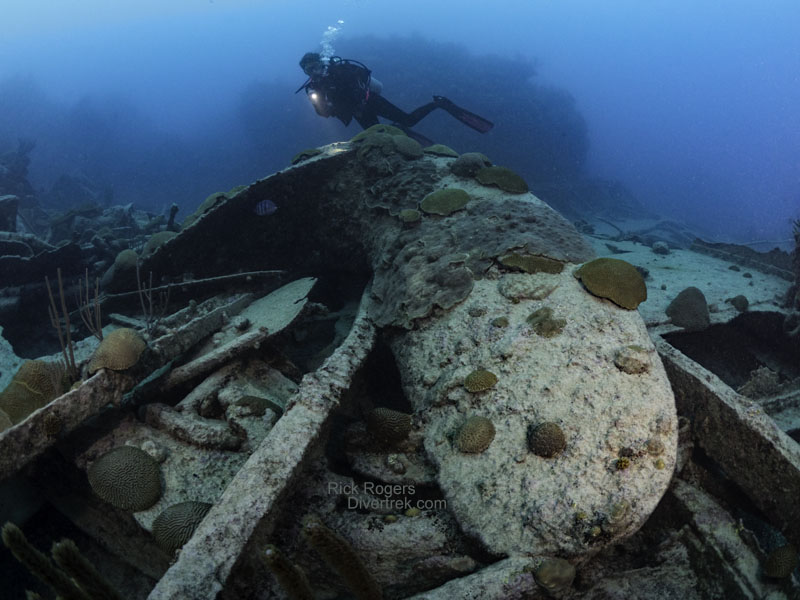
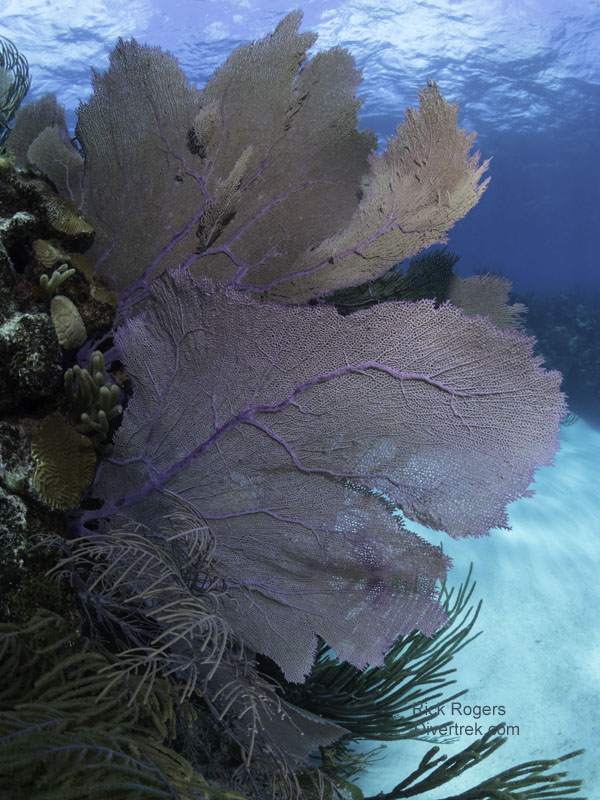
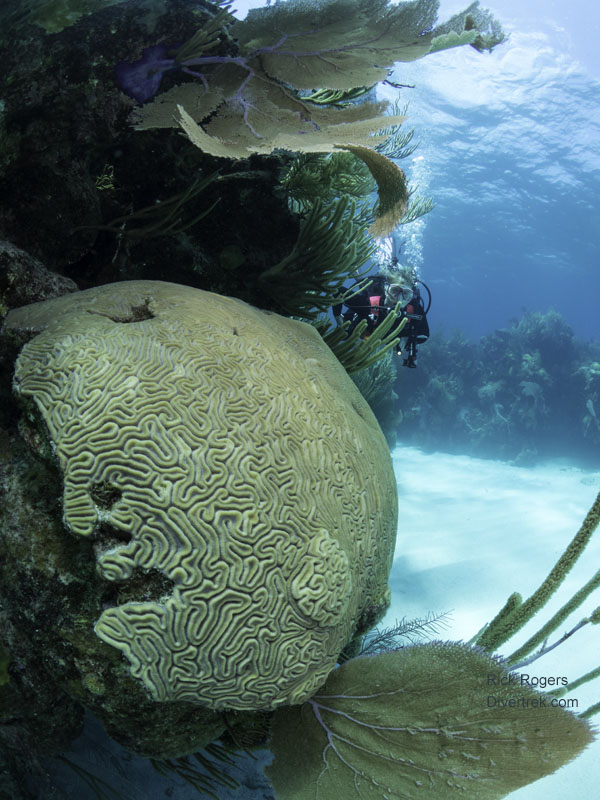
Today the wreck lies in 15-60′ of water, spanning both side of the reef, with the debris field covering an expansive 100,000 sq.ft! You could spend days diving this wreck! But one of the first things that strike you on entering the water is the vast field of Brain corals that blanket this site, along with Sea fans. Divers can also see the engines, propellers, prop shafts (see the intro photo at top), winches, boilers, the bow, and even unexploded munitions.
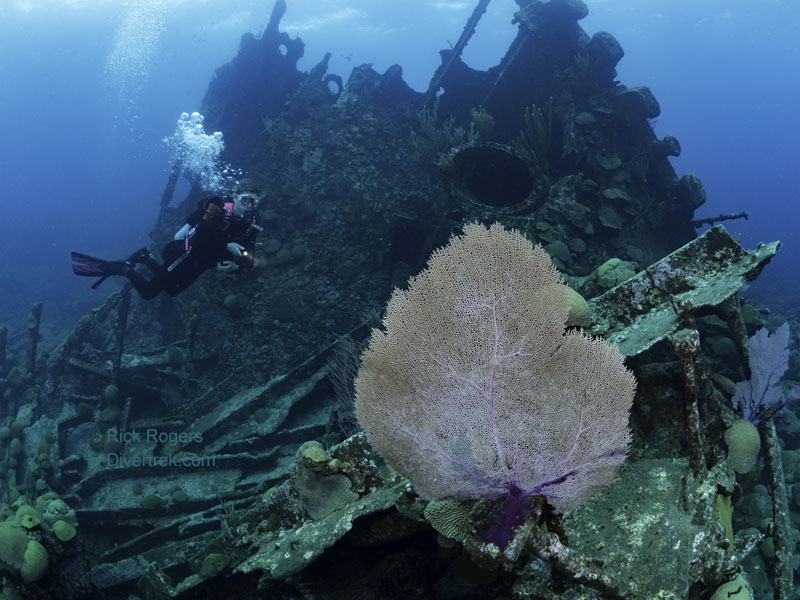
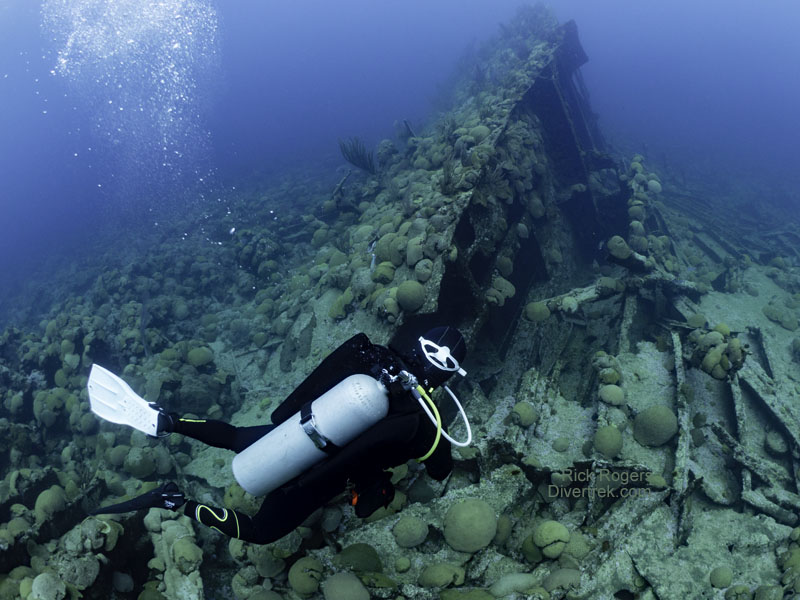
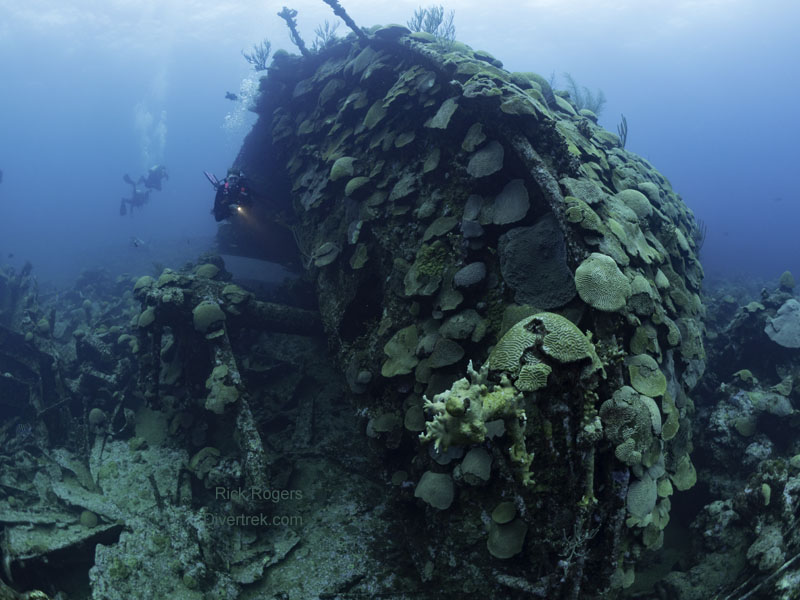
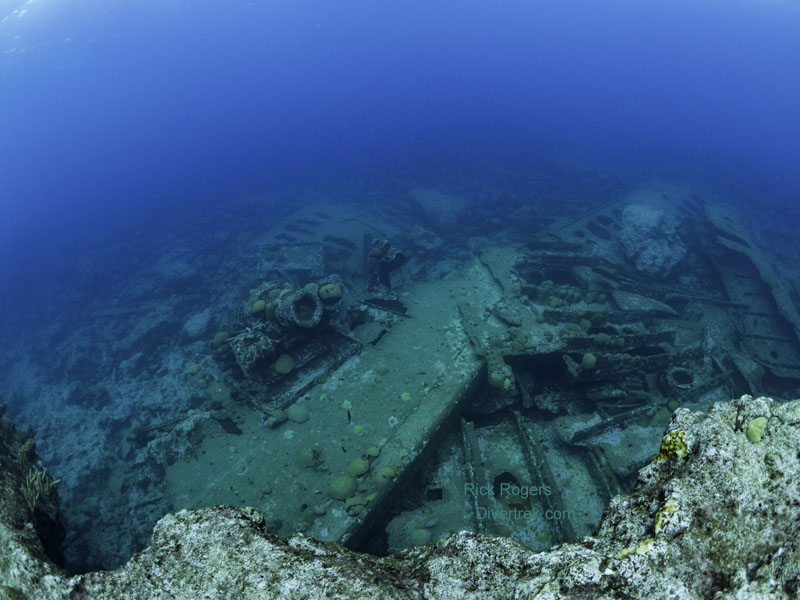
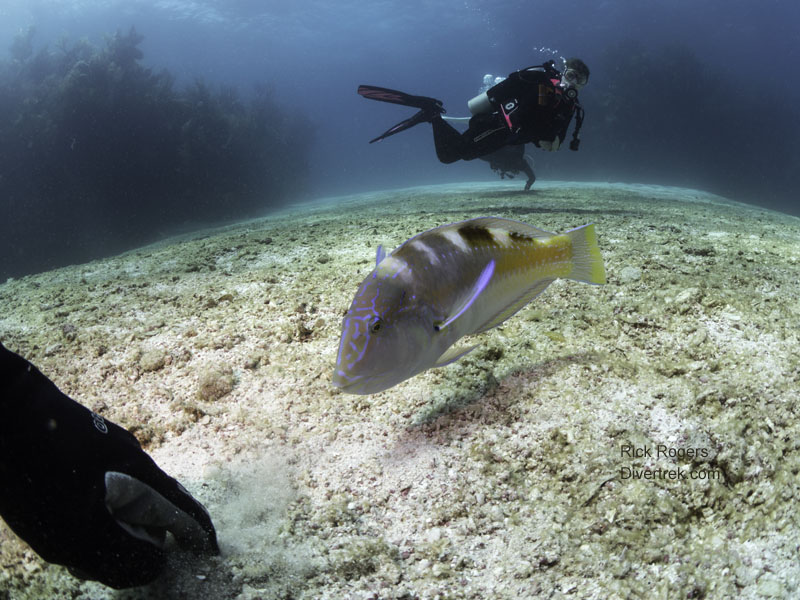
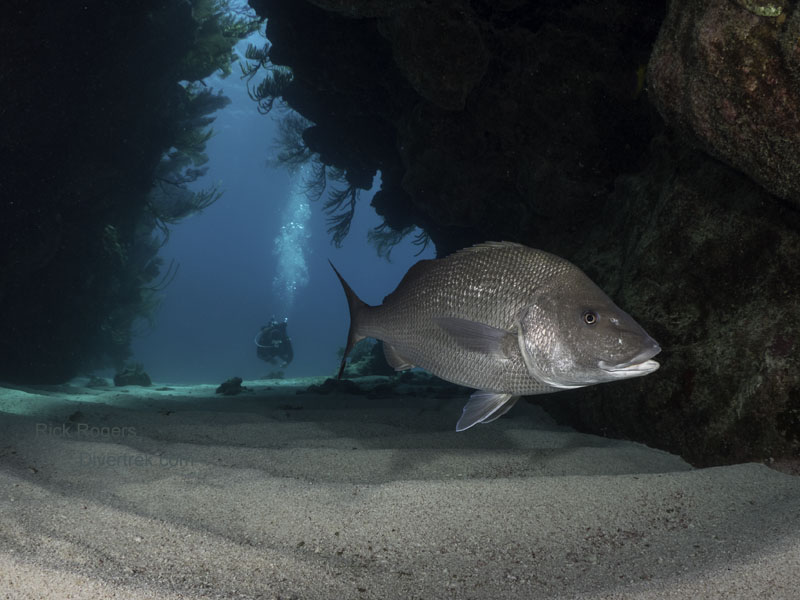
Our last dive was at the much anticipated North Rock, the most northerly coral reef in the Atlantic, with a max depth of about 30′. The warm waters of the Gulf Stream, which bathe the island, make these tropical reefs possible so far north. You can expect to see coarse pink sand, massive Brain Corals & Sea fans, and loads of friendly fishes of all types. Bermuda has long been on board with conservation of its reefs, and it shows. The reefs were in really good shape. It was very heartening to see numerous Parrotfish busily cleaning the reefs there, in contrast to some other reefs that I’ve seen in the Caribbean where they’d been largely been fished out, with all of its cascading effects becoming apparent. As the effects of climate change worsen, I imagine the reefs of Bermuda- and North Rock in particular- to be the last standing reefs in the Greater Atlantic Basin.
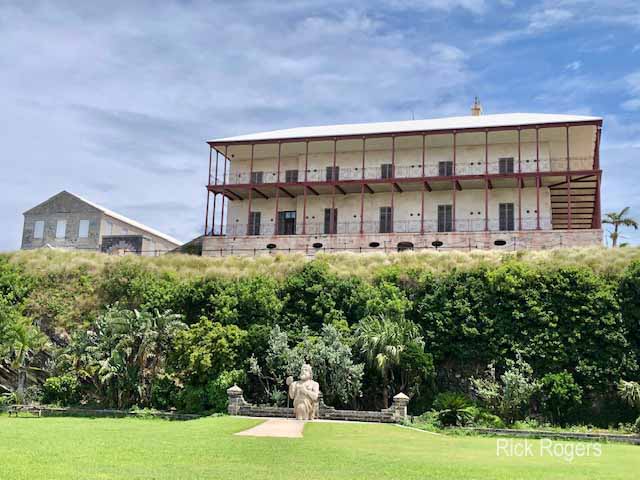
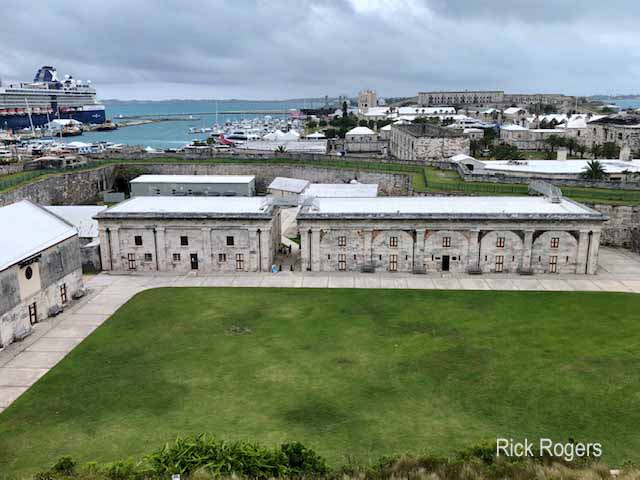
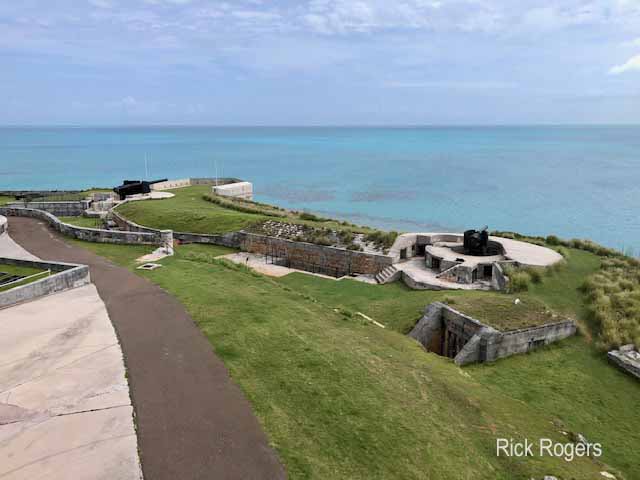
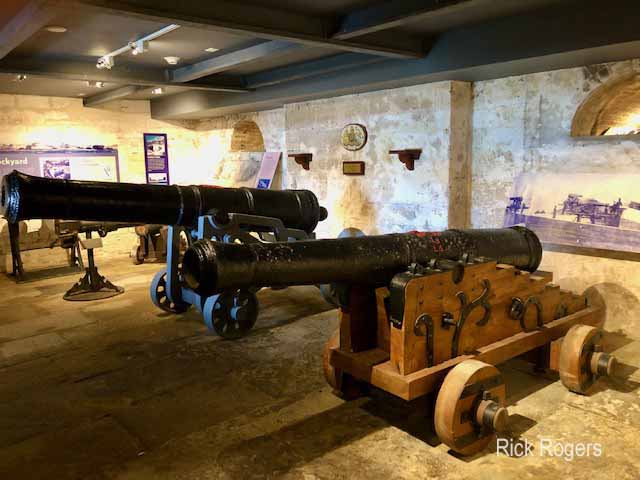
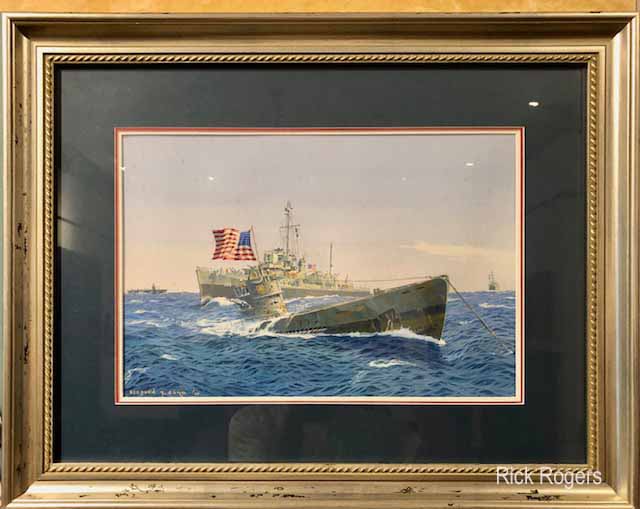
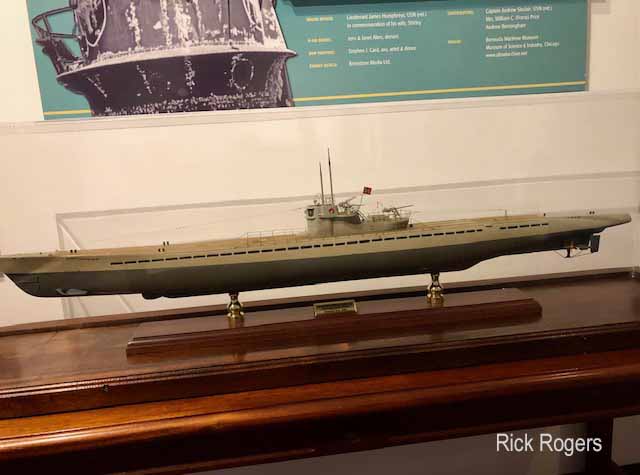
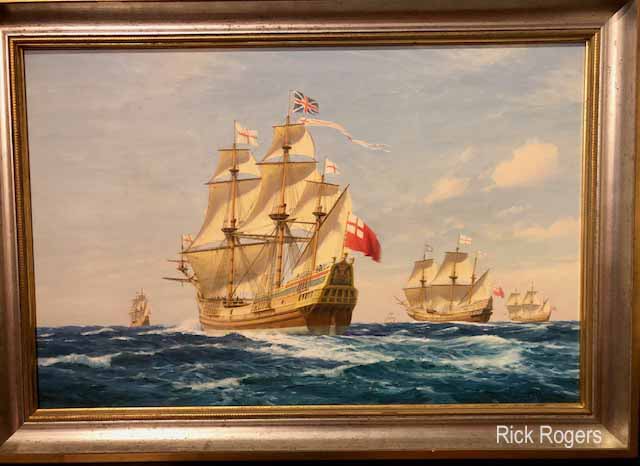
On our day off before flying home, being history buffs, we wanted to visit the historic Royal Naval Dockyards at the West end. From Grotto Bay Beach resort we took the bus to Hamilton (the capital), then caught the Ferry. This is a really good way to explore more of the island, and is much cheaper than a taxi (approaching $100 USD).
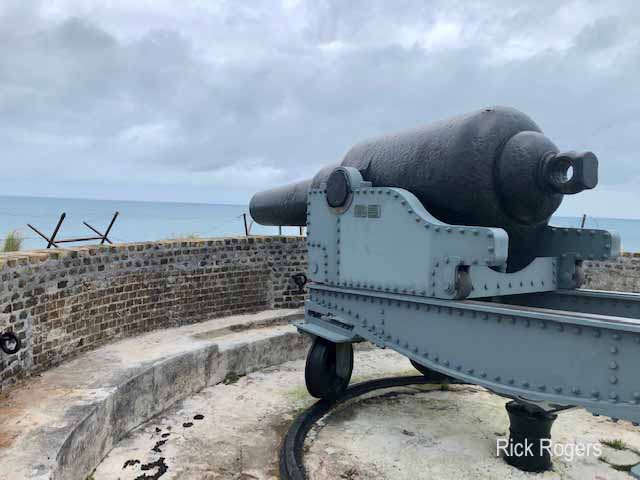
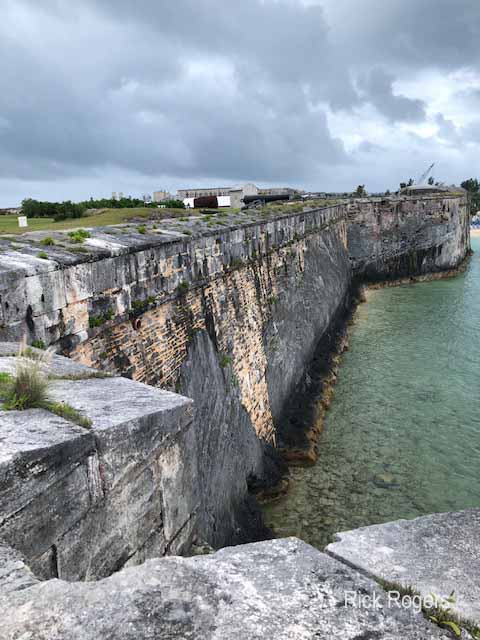
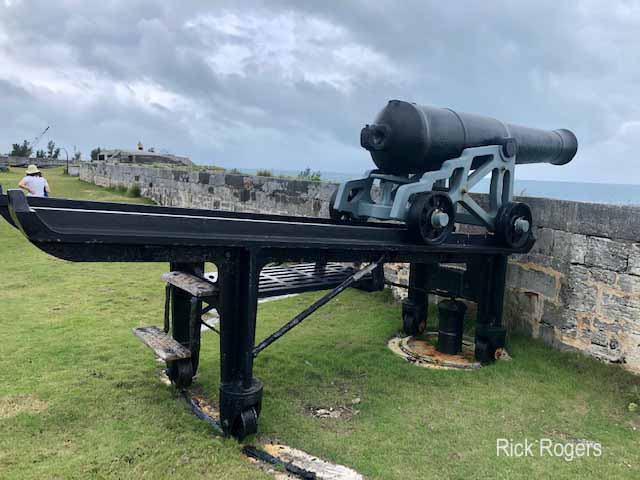
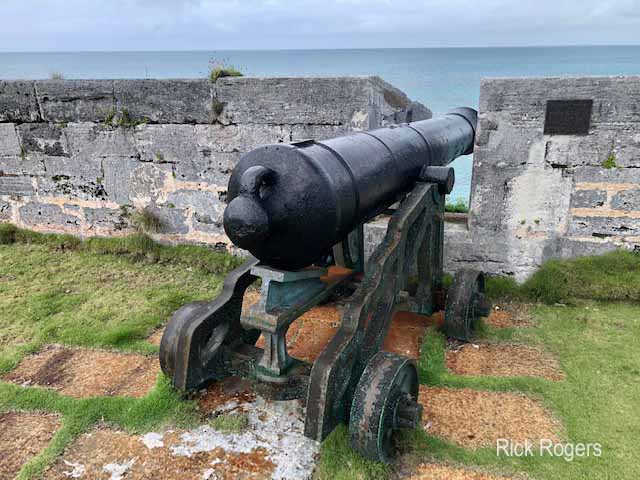
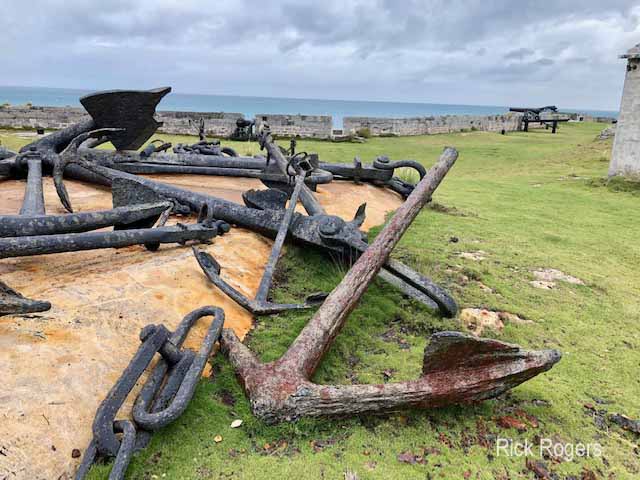
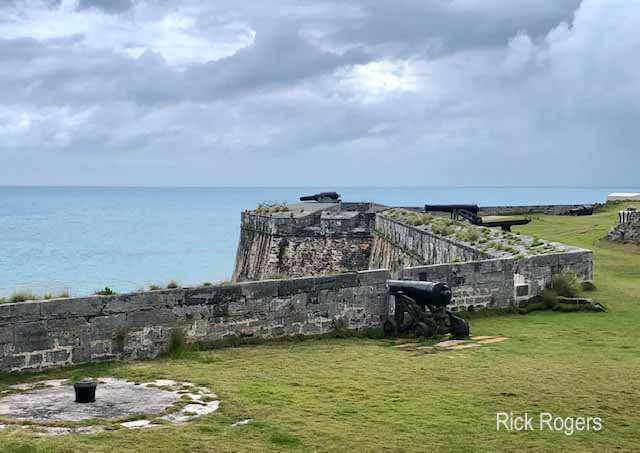
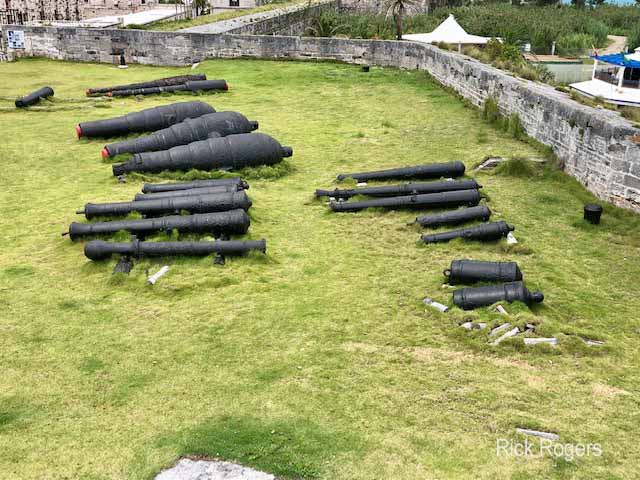
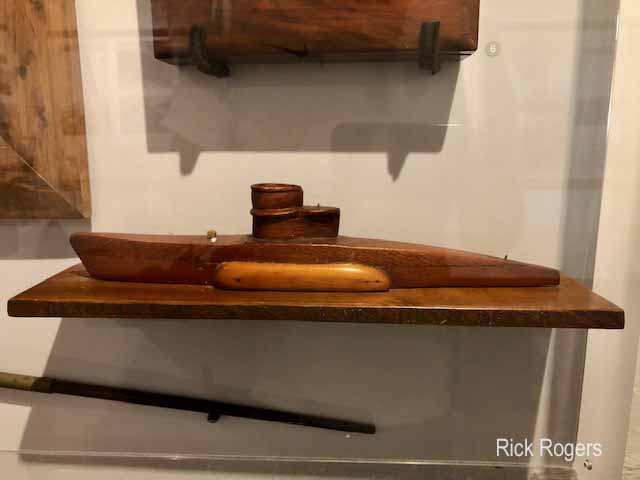
Built in the early 1800’s, the dockyard is now the largest museum in Bermuda, and features extensive exhibits on the island’s maritime history, shops and restaurants. No trip to Bermuda is complete without a visit! We also found the perfumer Lili Bermuda at the entrance to the Bermuda National Museum. They sell a re-creation of the perfume recovered from the Mary Celestia wreck, a civil war blockade runner located at the other end of the Island. The gallery below is just a sampling of what you can see & explore.
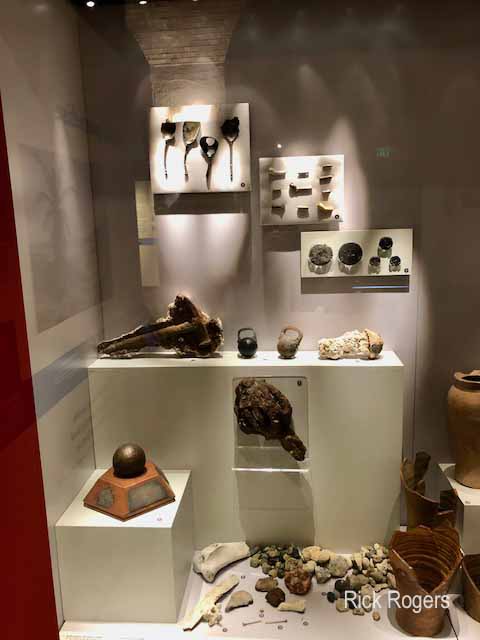
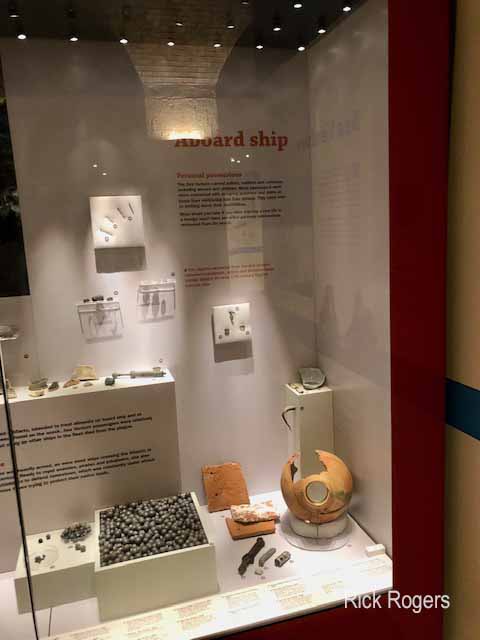
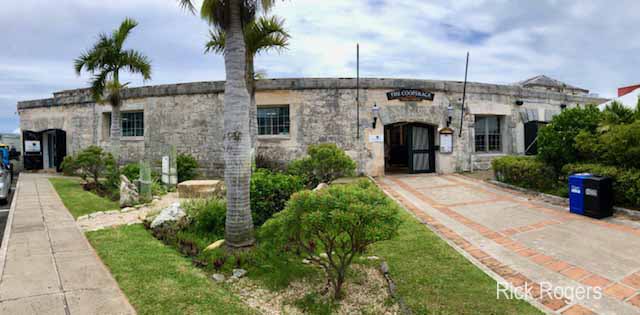
Tips:
Grotto Bay Beach Resort is scenic place to stay, right at the water’s edge in Bailey’s Bay, a few minutes drive from the airport. The grounds are beautiful, spacious and well maintained. It’s the only resort with an all-inclusive plan, an important consideration since food prices are about double those in Canada (before exchange!). When diving, you can order breakfast boxes the night before and pick them up before the restaurant officially opens. The food is excellent, and has both vegan & vegetarian options.
Dive Bermuda Grotto Bay is located on the premises down by the water. We enjoyed diving with them since they have spacious boats with low divemaster to diver ratios (no cattle boats here!). The dive guides & crew were very personable, and even went the extra mile to learn your name. Warm drinks and fresh baked goods were offered after every dive. A 7 mm wet-suit was more than enough for multiple dives in 72-73 degree water. The best visibility is from mid-August into the fall (before the first hurricane).
Oh, and don’t forget a rain jacket (just in case)!