Diving Curacao, Dutch Antilles.

July 2017.

diving curacao
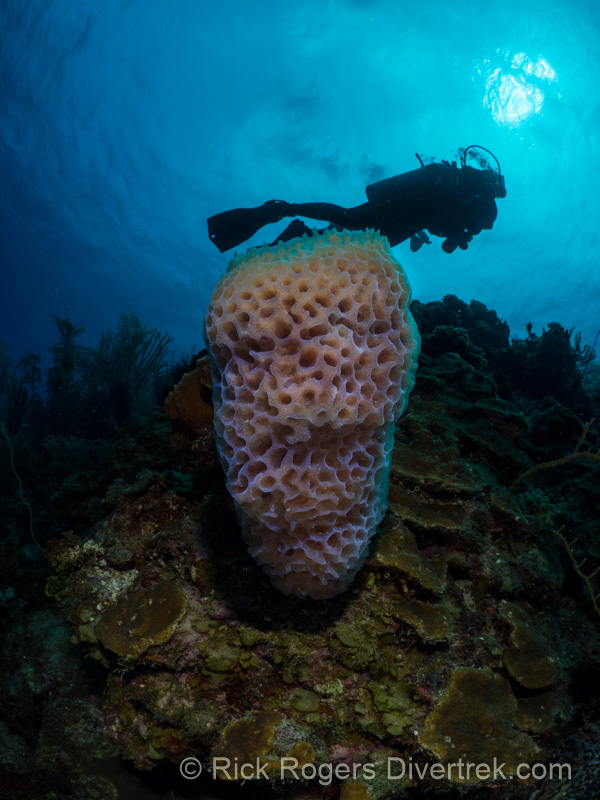
A Purple Tube Sponge at the Car Pile Site, an artificial reef created to attract underwater wildlife.

Curacao is the well known “bigger brother” of Bonaire, and is one of the three “ABC” islands in the Dutch Netherlands, located in the southern Carribean.  It has some good diving-shore diving in particular-offering the independence and top side attractions that many divers enjoy.  Here’s an update on some of the well known sites, as well as an introduction to some of the lesser known and must do sites.

East End Diving

If you like the thrill of discovery and taking your time to “poke around”, then you’l love the Car Pile site.  We found it interesting enough to spend several days diving it. And we had it mostly all to ourselves.  It originated as an underwater junkyard to which old trucks, cars and boats from the 1950’s were added in the early 1970’s to form an artificial reef, in an effort to attract underwater life. It has succeeded. Some of the cars have become so integrated with the reef that you have to look carefully to recognize it as a man-made structure. You can expect to find everything from massive tube sponges, schools of fishes and numerous middle-predator fishes like jacks, barracuda, and snappers.  I also saw a large Chain Moray eel, and looked for a resident Green Moray that calls the barge home. Infrequently other divers have reported seeing a Lemon shark here at this site. 
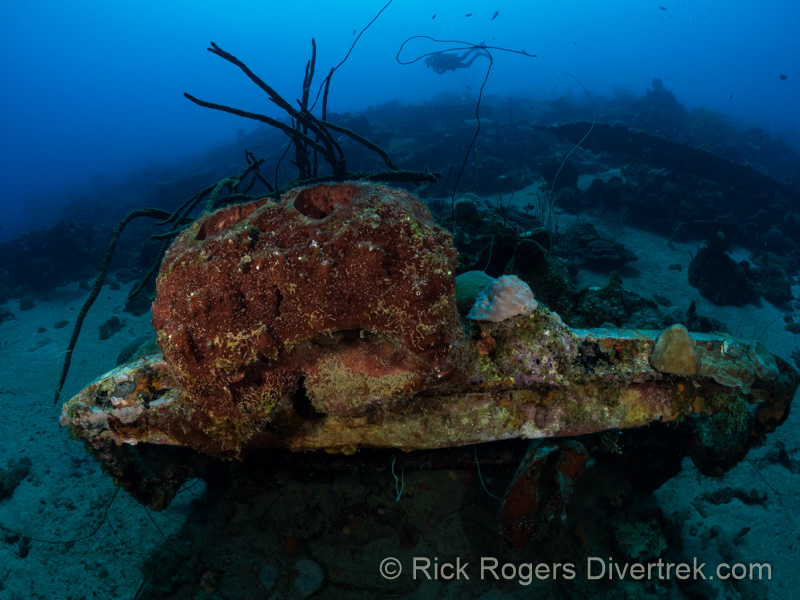
Car Pile dive site at Curacao
A large sponge grows on the bumper of an unrecognizable vintage car at the Car Pile. Only the chasis remains.

The Car Pile can be easily reached from the shore across from the Dive Bus shop (you have to cross a road) or directly from the Ocean Encounters docks. Leaving from the Ocean Encounters docks requires a little further finning, but it’s more than doable and very convenient.  This is how the Ocean Encounters shop recommended that I reach it:  Leave the dock and head West (turn right) past the breakers and descend to about 30′ in order to conserve air.  Look for a tire with a sponge on it (see photo below) in 45′ fsw. 
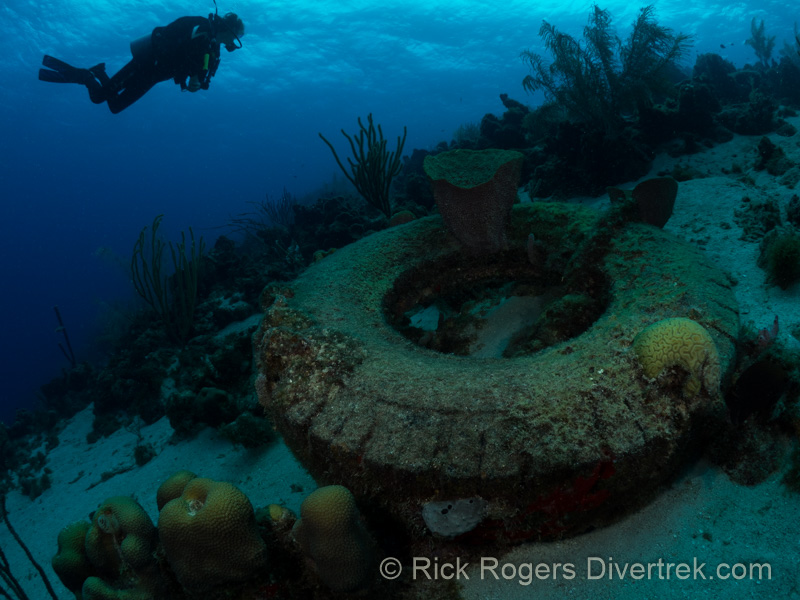
Car Pile dive site Curacao
The marker to look for to reach the Car Pile. It sits at 45′, and takes less than 10 minutes of moderate finning to reach it. Note that you will approach from the other side to that of the diver in the photo.

About 30′ away you will see a large fist-sized pipe (about 20’long) that is sloping down and pointing in the direction of the Car Pile in the sand at the bottom of the reef. There you will see a barge lying in the sand at about 100′. Explore further out and West, but watch your depth! It goes much deeper. Take your time to explore the shallows (40-50′) on your way back. There’s other “artifacts” and large sponges and soft corals to admire. If you run low on air, you can surface swim back to the dock. Beware of afternoon winds that will create surge in the shallows which will require more effort to fin back to the dock. Here’s some photos of what you can expect to see:
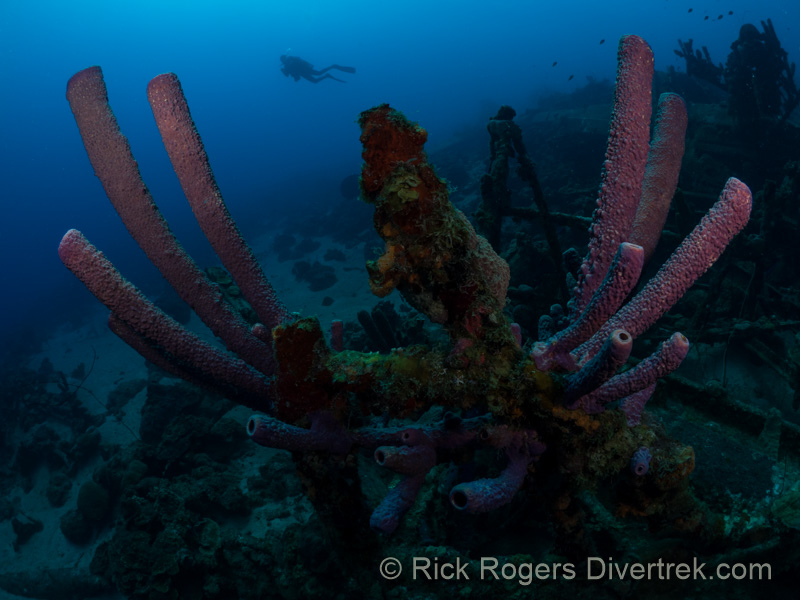
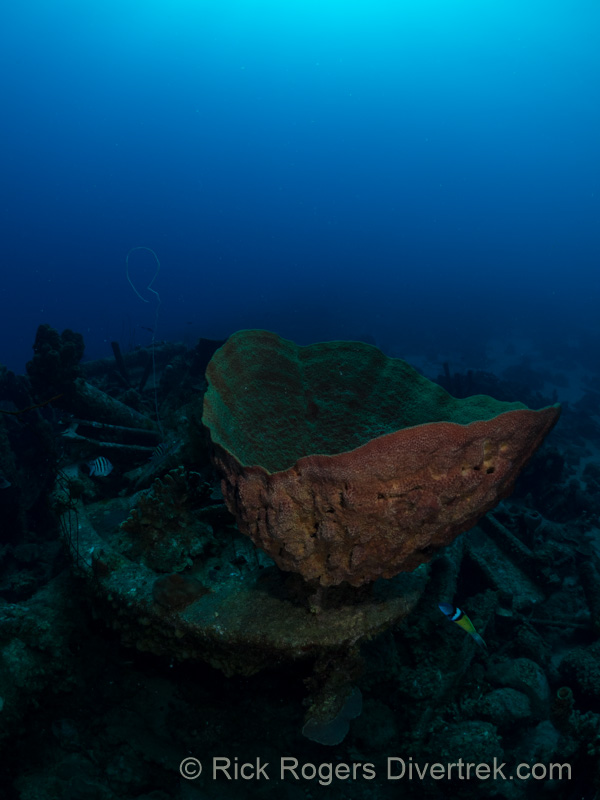
Car Pile dive site at Curacao
A very large Purple tube sponge at the Car Pile dive site. It’s size made it very difficult to “light up”.
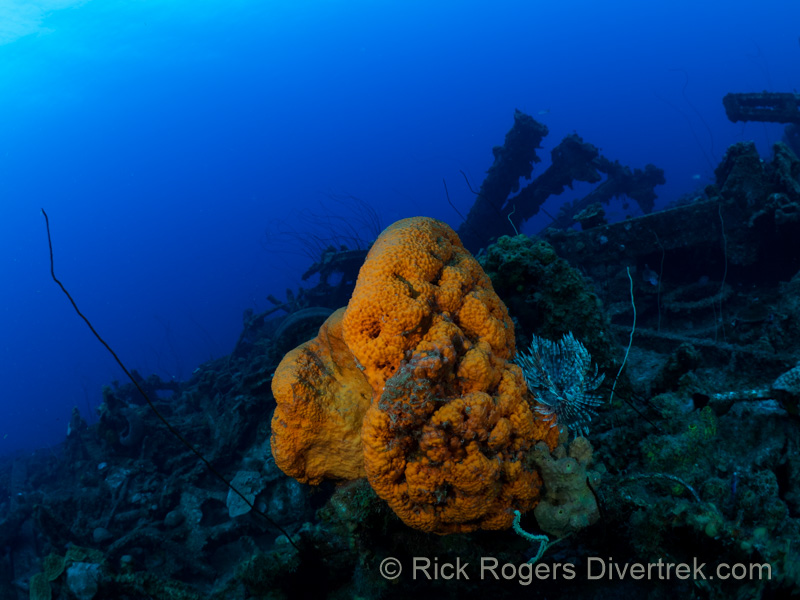
Car Pile dive site at Curacao.
A Fan Worm grows on a Citron Sponge  at the Car Pile.
Bell sponge at Car pile dive site curacao.
A Bluehead Wrasse poses in front of a large Bell sponge that’s growing on the bow of an old boat.
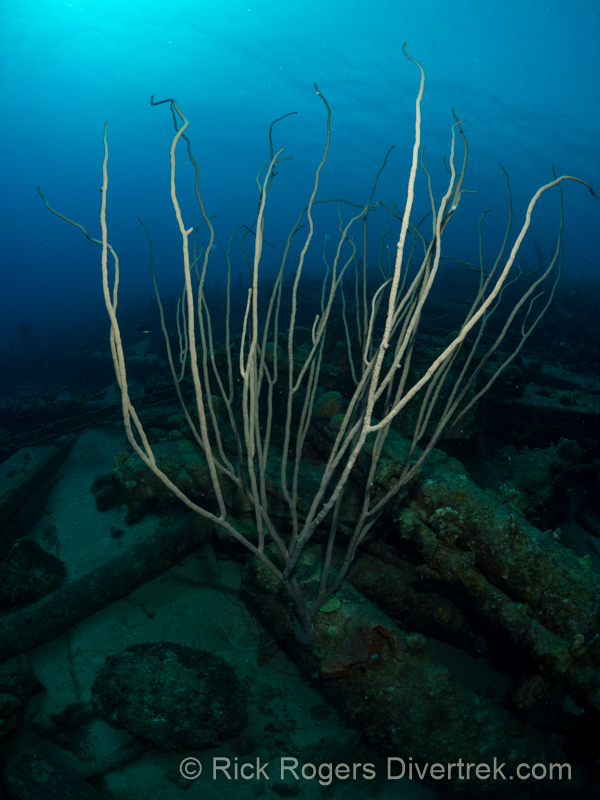
Large Bent Sea Rod grows on debris at Car Pile dive site in Curacao
A large Bent Sea Rod grows on debris at the Car Pile.
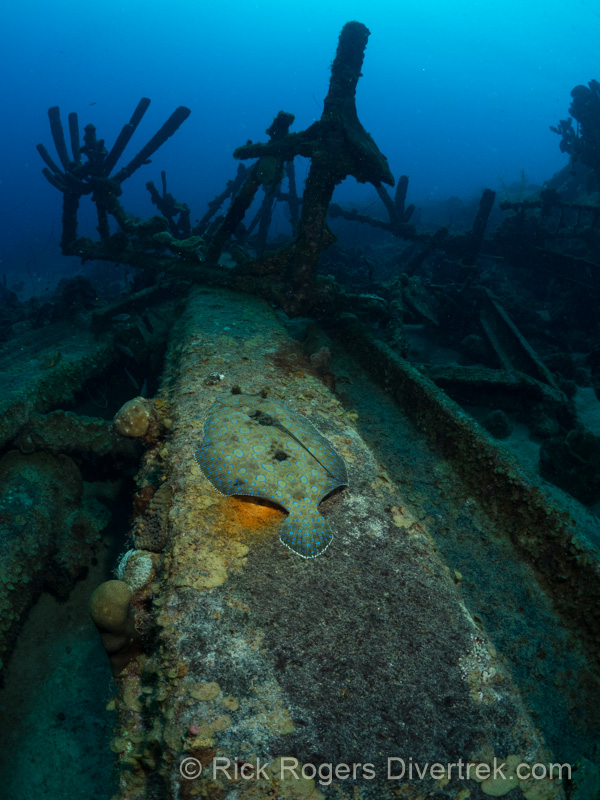
Peacock Flounder at the Car Pile Dive site Curacao
A skittish Peacock Flounder has figured out that they’ve been spotted, at the Car Pile Dive site.
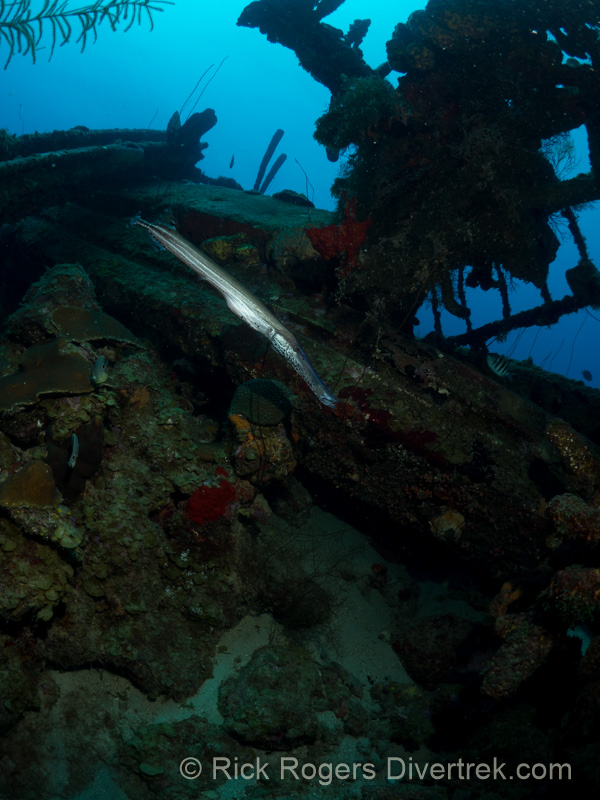
Trumpetfish at the Car Pile dive site Curacao.
A Trumpetfish with a “full belly” seeking shelter at the Car Pile.
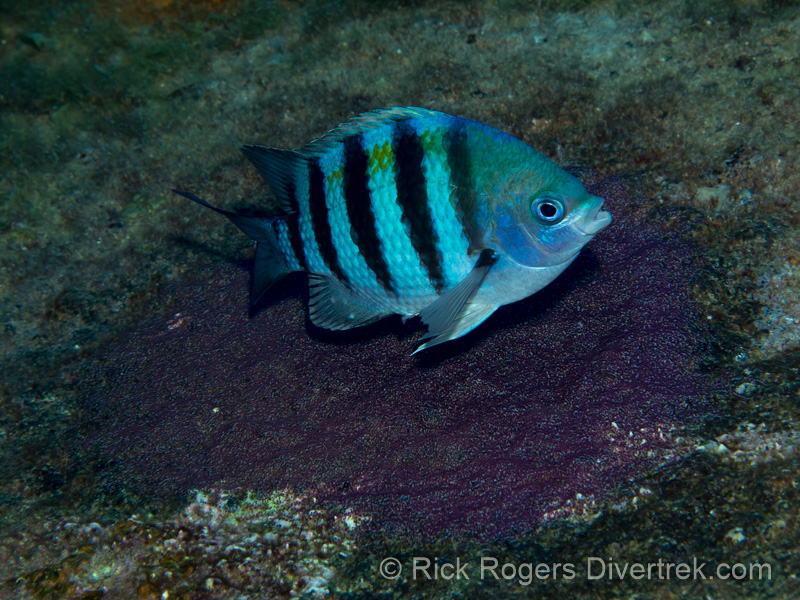
A male Sergeant Major guarding eggs.
A male Sergeant Major fish guarding his egg patch until they hatch. Note the bluish colour that the males turn during this period. I observed many patches like this on the wrecks and debris in the Car Pile.

The Ocean Encounters House reef, which you have to pass through to reach the Car Pile, is well worth the dive. We had the reef to ourselves for almost the whole week!  I think this is because people assume that it can’t be worth diving if it’s a house reef. But I saw a large Southern stingray there, a large Tarpon, Reef squid and all the other usual suspects.  But I think the House reef’s name should be changed to Blenny City.  In the shallows, if you look closely, you can find many different types of Blennies, in large numbers. Here’s some pics from the House reef:
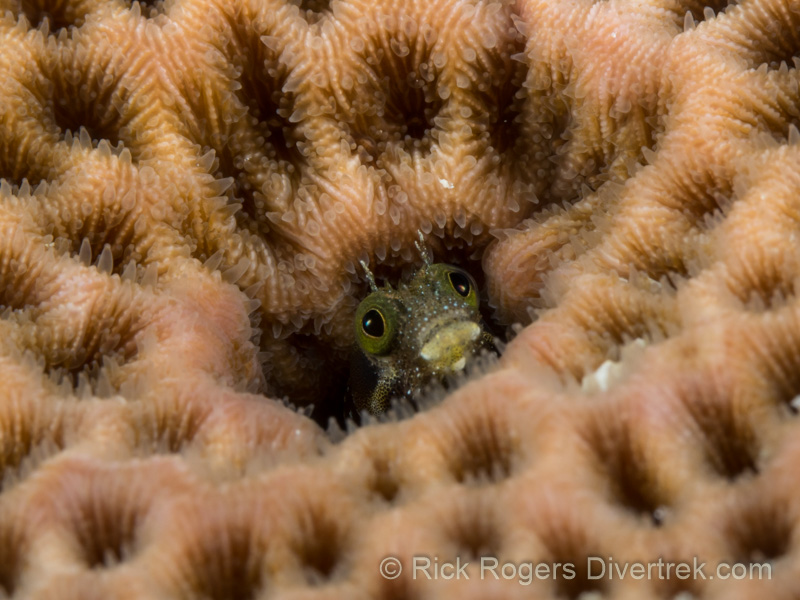
Secretary Blenny at Curacao.
A Secretary Blenny. They’re about the size of a small pea, and live in old Feather Duster worm tubes in shallow water. A difficult photograph to get because of the surge created by a weather system driven wind that lasted for a couple of days.
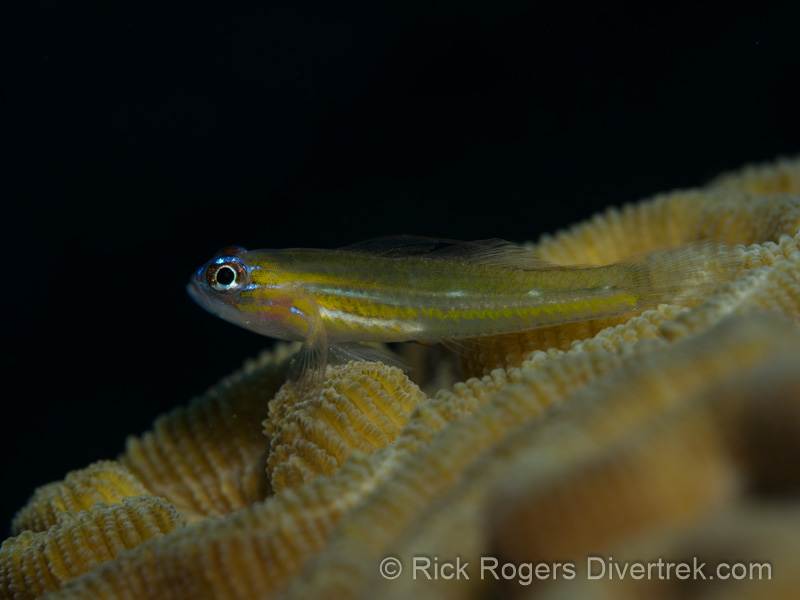
Peppermint Goby, or Bluenose Goby.
A Peppermint Goby, or Bluenose Goby. It’s listed as threatened on the IUCN Red List due to Lionfish predation.
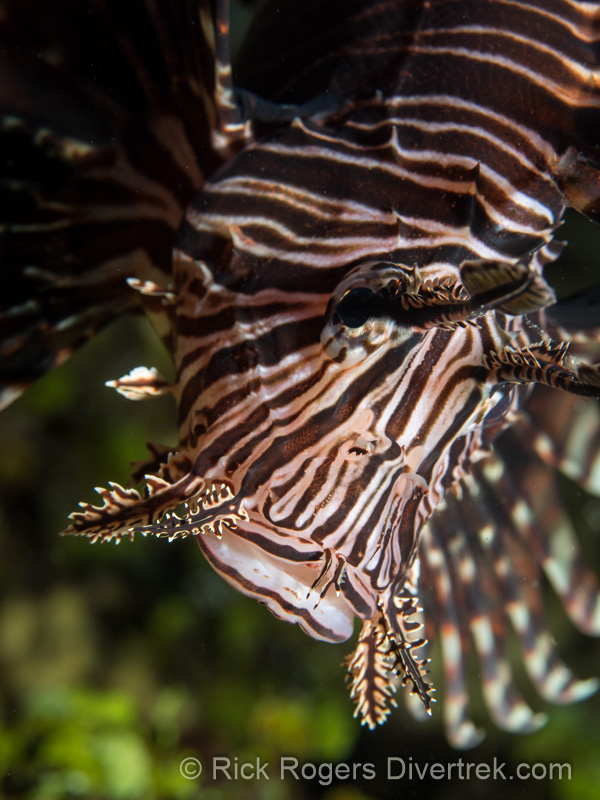
portrait of an invasive lionfish in curacao, caribbean
I found this Lionfish-a highly destructive and invasive species- cooperatively hunting with two others during a dusk dive. They would fan out there feather-like fins, and corral smaller fishes, and move in for the kill. This is a recently discovered behaviour, demonstrating a higher cognitive ability than we give them credit for.
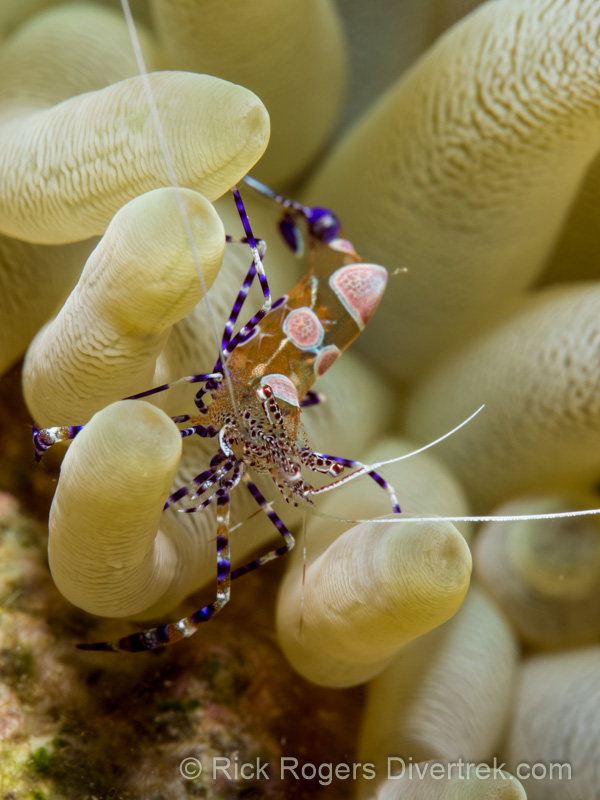
spotted cleaner shrimp
The beautiful Spotted Cleaner shrimp, about an inch in length. This shrimp must have been hungry, as it climbed across the anenome down to where I was, in order to “clean” me. It flicked its antennae to me several times, I assume to signal me to come closer for a “cleaning”.
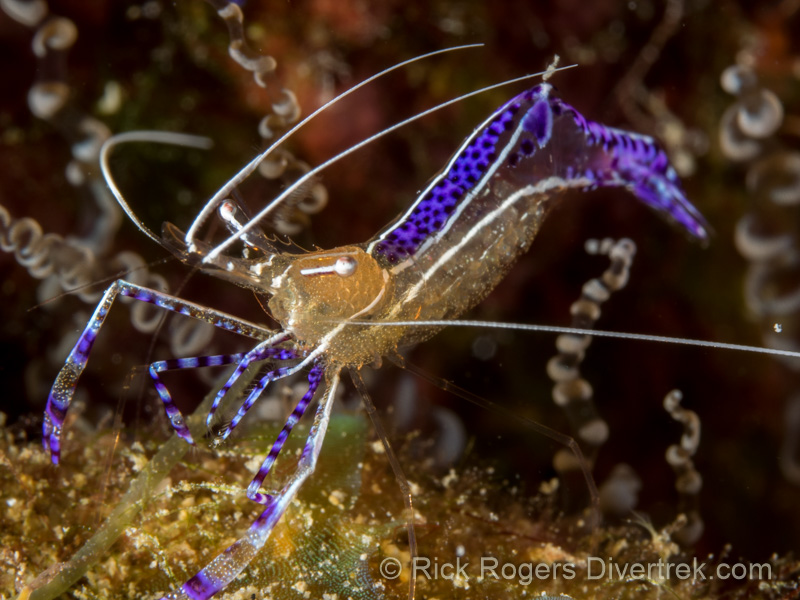
Pederson Cleaner shrimp
A Pederson Cleaner shrimp, less than an inch long. They sway their bodies and antennae “back and forth” in order to attract fish. When I carefully extended my fingers, the shrimp happily swam out to give me a manicure.

Since shore diving is so accessible, I only did a few boat dives on the East End, a short distance from the shop. They were both wall dives: Lost Anchor (no, there’s no anchor to see, as it’s lost) and Saba.
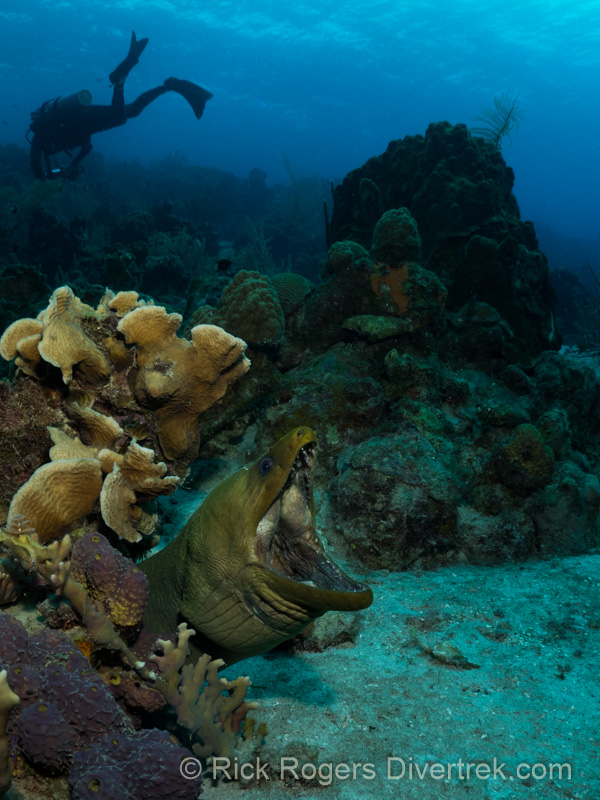
Green Moray eating prey.
No it’s not upset with me! My wife spotted this large Green Moray eel in the process of swallowing prey (note the swollen throat). It was patient with me, and allowed me to get within arm’s reach. Photographed near the boat mooring at Lost Anchor.
 sunken Tugboat at Saba dive site Curacao.
The Tugboat II.  An intentionally sunk boat at the Saba dive site. It was meant to be an alternative site to the popular and overbusy Tugboat dive site. However, as it turns out, it’s in a windy spot, and often too wavy for snorkelers,
Azure Vase sponge at Saba divesite in Curacao.
An Azure Vase sponge at Saba. In my opinion, it’s one of the most beautiful of the sponges. Our divemaster Lexy’s silhouette,  a young Scottish lady, glides by.


West End (Westpunt) Diving:

We dove three sites on the West end: Mushroom Forest, Alice in Wonderland (housereef at Go West Diving, at Playa Kalki beach), and Watamula. The quality of the diving increases across the aforementioned list. Some of the shallow sites were hit hard by a warming event in 2010, and most recently by hurricane Matthew in 2016.
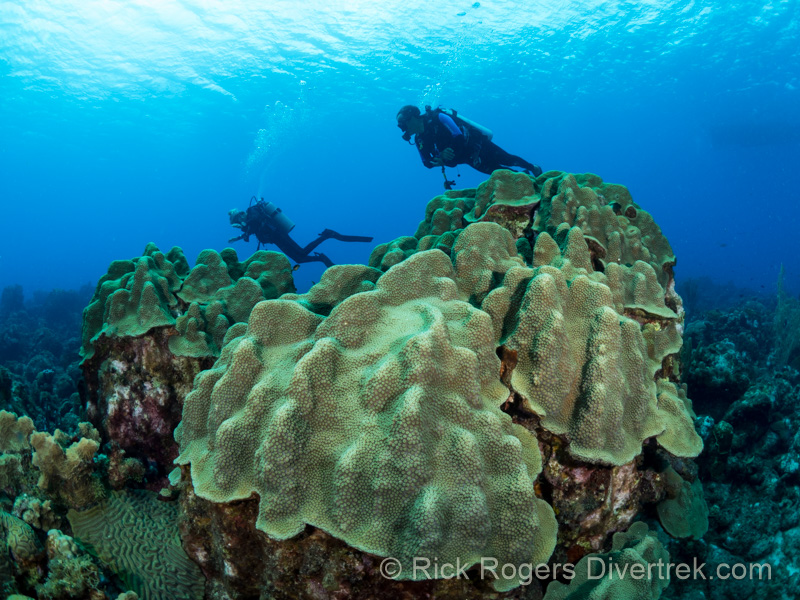
Current state of the Mushroom Forest in Curacao.
Mushroom Forest is one of Curacao’s signature dives. The bases of the coral have eroded to make them look like their namesake fungus. My wife’s log book entry for this site was only one word: Sad! It’s a shadow of its former glory from when we last dove it in 2008- it was a magical experience. But now, honestly, it was difficult to find a subject worthy of photographing. This site needs some time to recover.
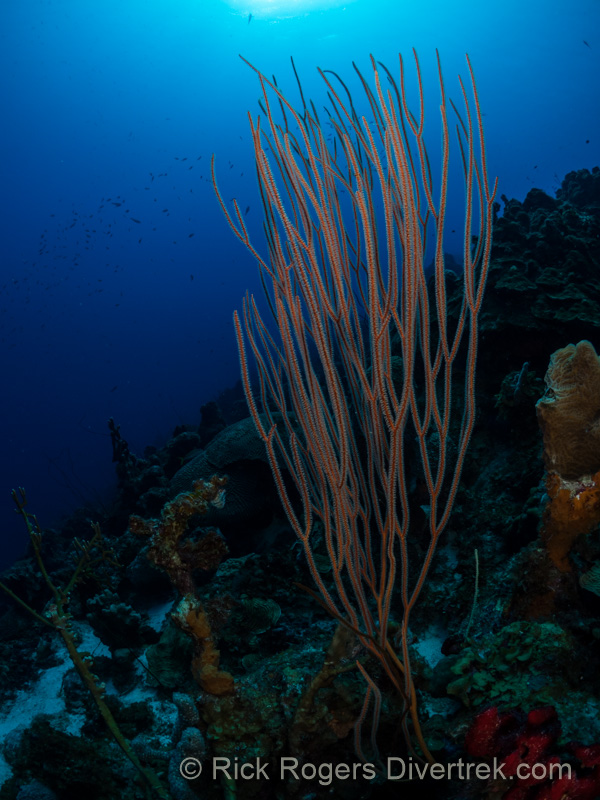
Long Sea Whip at Alice in Wonderland at Curacao.
A Long sea Whip photographed at “Alice in Wonderland” dive site.

Watamula is one of Curacao’s most famous dive sites, and for good reason. The reef is very healthy, full of fish, and visually spectacular. It has more hard corals than the East end, giant Barrel sponges, and towering soft corals waving in the small current that is usually present. It’s only done from a boat, and then usually as a drift dive.  Visit Ocean Encounters West for boat trips.
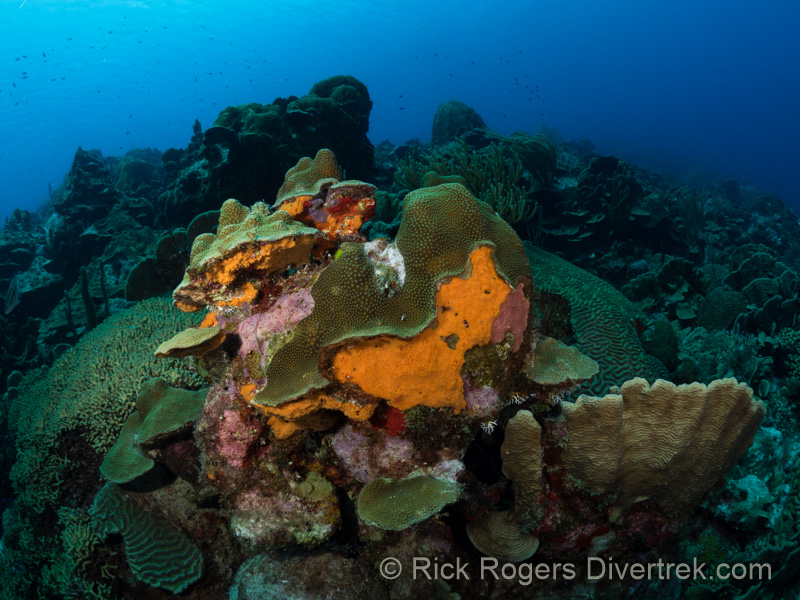
Current state of Watamula dive site
Watamula lives up to its reputation. A “must do” dive when at the West End. You can also see many of the same type of coral formations that resemble Mushroom forest.
Reef at Watamula dive site curacao.
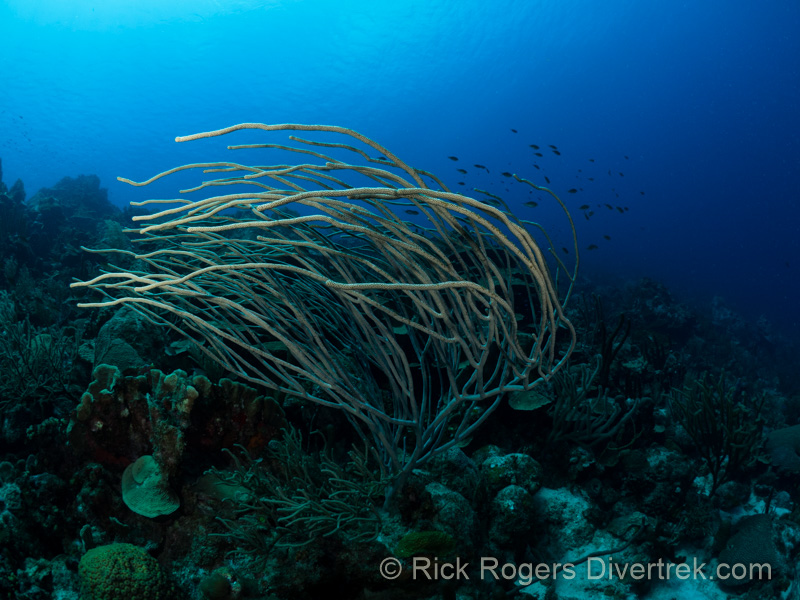
A Sea Rod bends defiantly to the current at Watamula.
Sea Plume at Watamula dive site curacao.
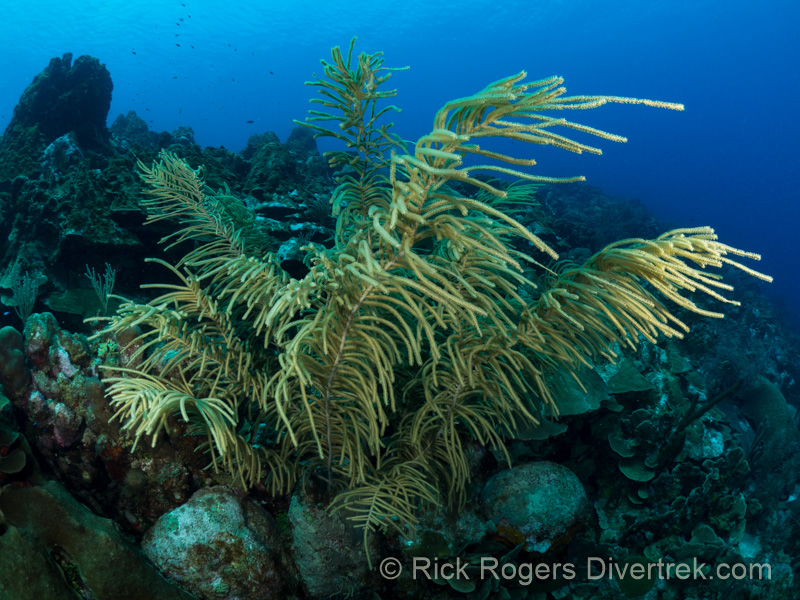
Massive Sea Plumes-many in excess of 6 ft tall- at Watamula.
Watamula reef at curacao
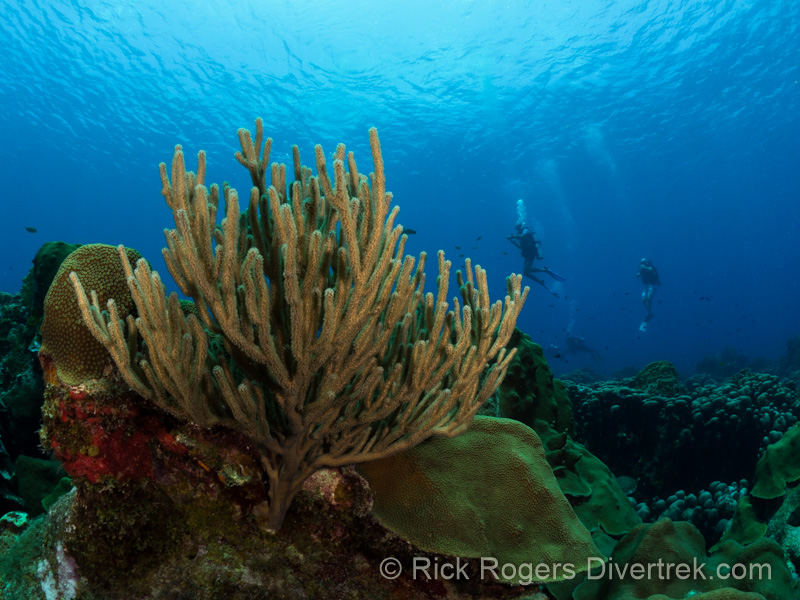
A Sea Rod at Watamula frames a group of divers at safety stop.


Tips:

Sunscape is one of the few all inclusive resorts, which can help save money on meals, drinks and snacks.  Ask for a room in the wing close to the dive shop which makes it easy to access your room between surface intervals.  Being able to shore dive on site made it easy to access snacks and meals between dives, which also saved on money.  Ask for a second floor or higher room in order to safely hang dive gear on the balcony to dry. We purchased an off season summer trip that included air fare and the Sunscape all inclusive in Canadian dollars through Air Canada Vacations.  Alternating shore diving and boat diving also keeps the cost down.  
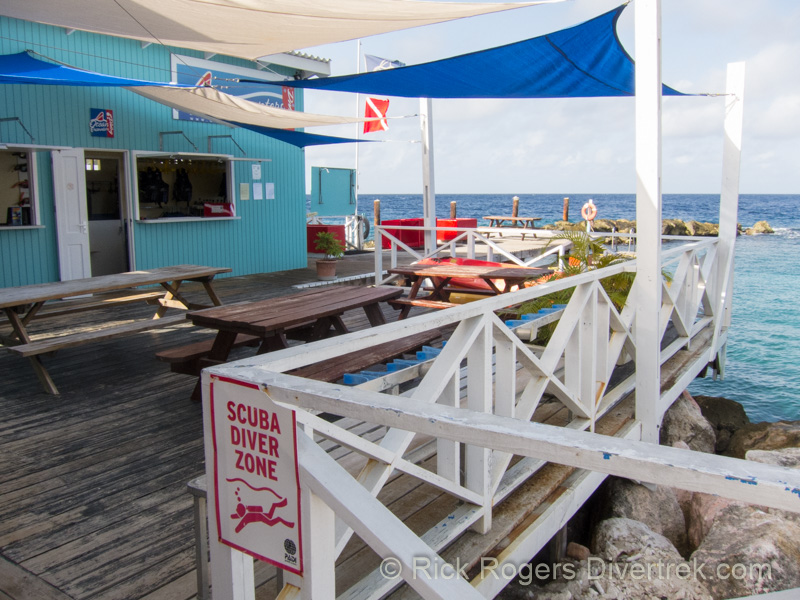
Ocean Encounters at Sunscape Curacao.
Ocean Encounters dive shop is at the water’s edge adjoining Sunscape Curacao Resort. Spacious, shaded, showers, locker room, and large fresh-water rinse buckets for cameras and gear.  We rented tanks and weights on site.  Nitrox is readily available. A very friendly and accommodating shop.  The shop managers Yvonne and George were both a great help.  George shared his knowledge around the Coral Restoration Project and provided a great shortcut to the car pile. They will give you a complimentary “diver down” flag to use. Water temperatures were a consistent 82 deg F.

In order to access Westpunt we had to rent a car.  They do drive on the right hand side the same as North America but the streets near Willemstad can be quite an adventure.  Maps.me was an invaluable app for your cell and was very helpful for local driving directions.  The Dive Bus dive shop is only a few minutes walk away from the resort, and they can arrange a shuttle and tanks if you wish, or dive with a group.
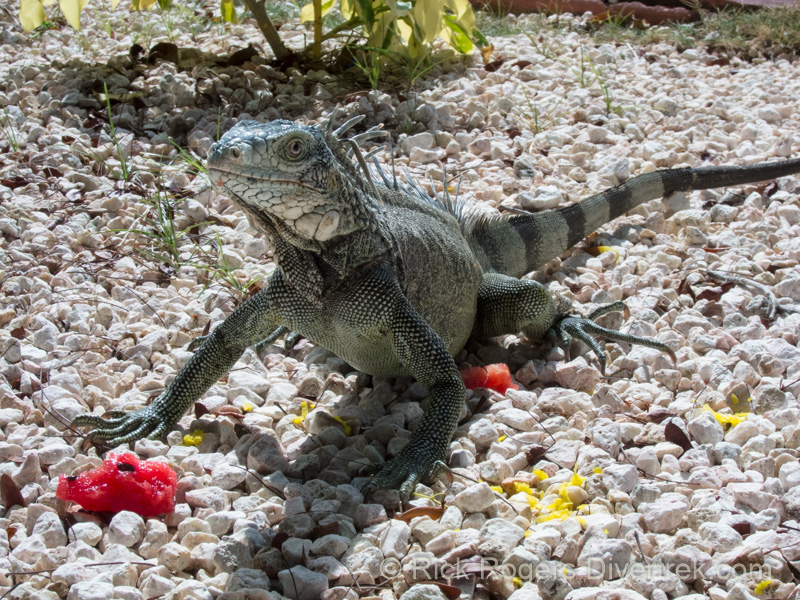
Green Iguana at Sunscape Resort Curacao.
Green Iguanas are everywhere on Curacao, even at the resort. They love watermelon and grapes!
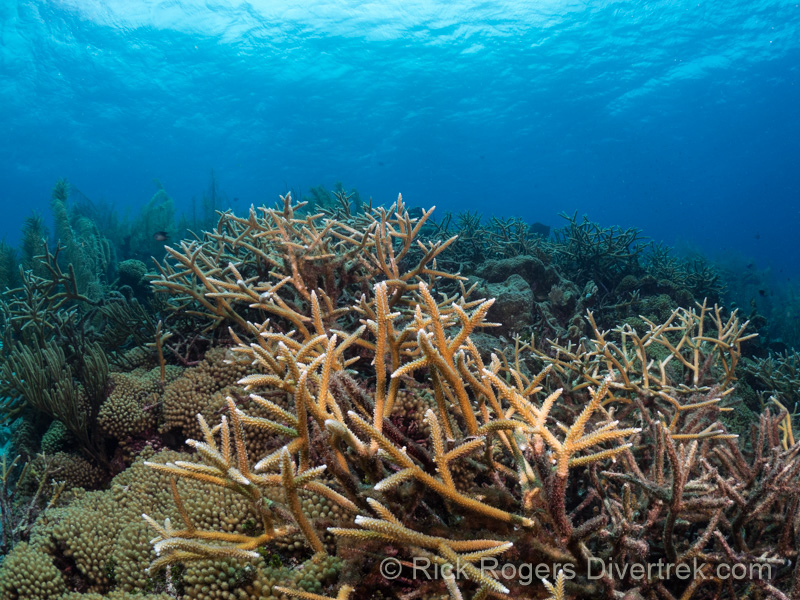
Staghorn Coral from Coral Reef Restoration at Curacao
Please purchase a Coral Reef Restoration Project tag from the dive shop for $20 US to give back to the reef.  Endangered Staghorn and Elkhorn corals are being “grown” to help rejuvenate the reef.  Ask to see the video at the shop. You will see many specimens that have been grafted at various sites to regrow the coral to its former state, like at Saba shown here.


Close Menu