
August 2016.
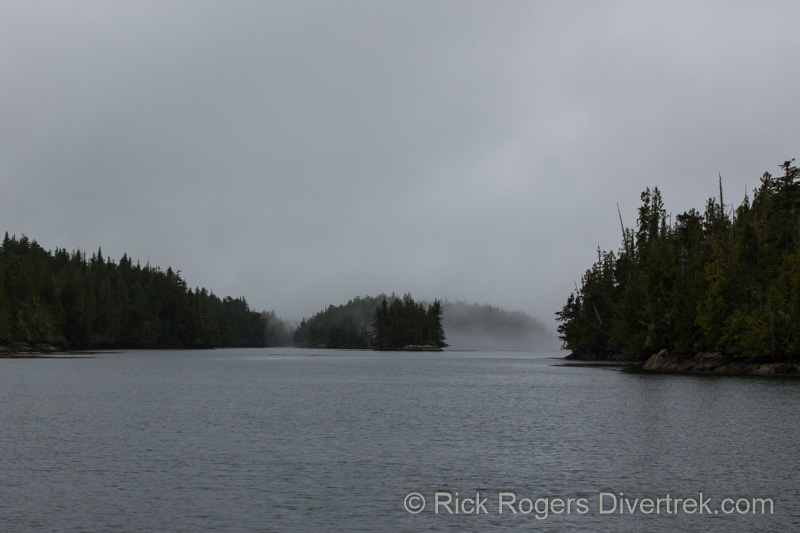
The infamous Nakwakto rapids is one of the top cold water dives that you can do in Canada. The Guiness Book of World records lists the Nakwakto rapids as having the fastest navigable tidal rapids in the world, up to 16 knots (30 km/h). There you can also find the beautiful and unique Nakwakto Goose-neck barnacle, found nowhere else in the world. (Oh, and don’t forget the bragging rights that follow!) Take the plunge…
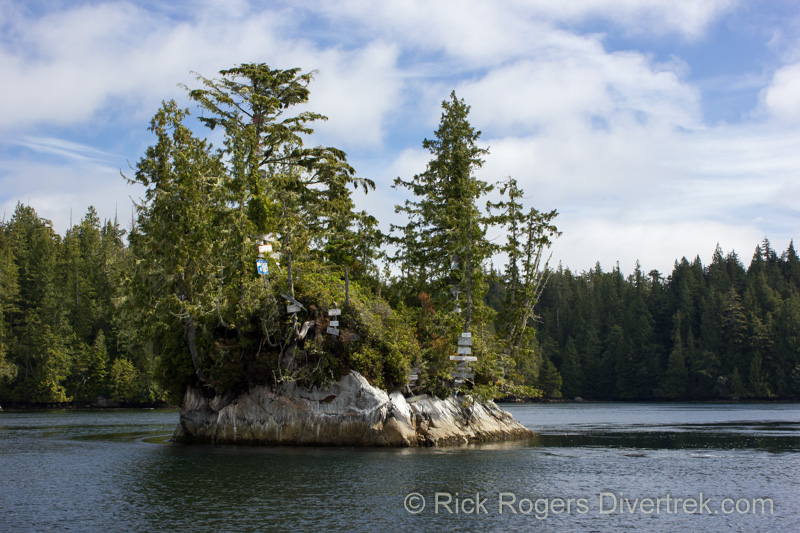
The Nakwakto rapids are located on the mainland, about an hour’s boat ride across the Queen Charlotte Strait from God’s Pocket Resort, on the North end of Vancouver Island (near Port Hardy). The rapids are powered by the changing tides which forces huge volumes of water through this relatively narrow bottleneck. So extreme is the tidal flow here that Turret Rock has also been called “Tremble Island” because it’s reputed to shake from the vibrations of the ripping water at peak flows.
But you won’t be diving it at these times! To safely dive the Nakwakto rapids you need the alignment of three factors: time of day (not dark), weather, and the lowest tidal range of the month at slack water.
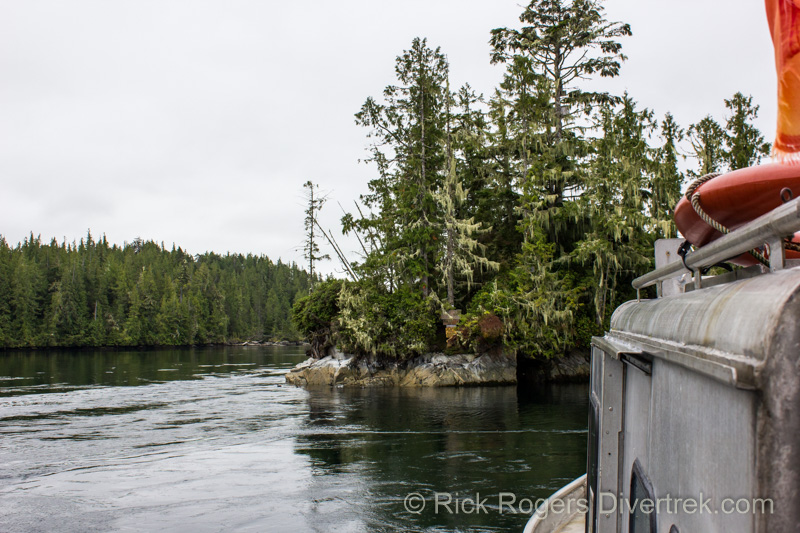
Bill skillfully dropped us all into the downstream eddy of Johnson Point to wait for his signal to drop down near slack water. The basic plan was to test the weakening flood current by “poking in” from the calm of the eddy, evaluate, then move forward when we were able to.
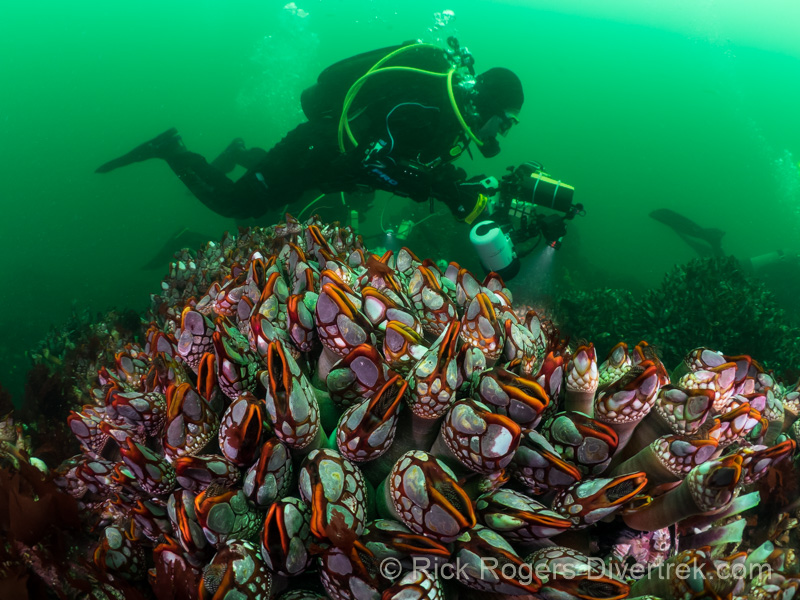
The Goose-neck barnacles are found en masse on a shelf surrounding Johnson Point at about 40-45 feet of water. Resist the siren call to go deeper (into the channel) for other barnacles, as the current swiftly resumes here and you might find yourself being flushed down the channel, as other divers have been! On this particular dive we had about 15 minutes of calm slack water.
Take time to look around – don’t just rush it to the other end of the island. You might expect that the ferocious currents that rip through here would strip the island down to bare rock. But the opposite is true. The current brings oxygen and nutrients, and the supporting base structures are adapted to strong currents. You’ll see an abundance of life here.
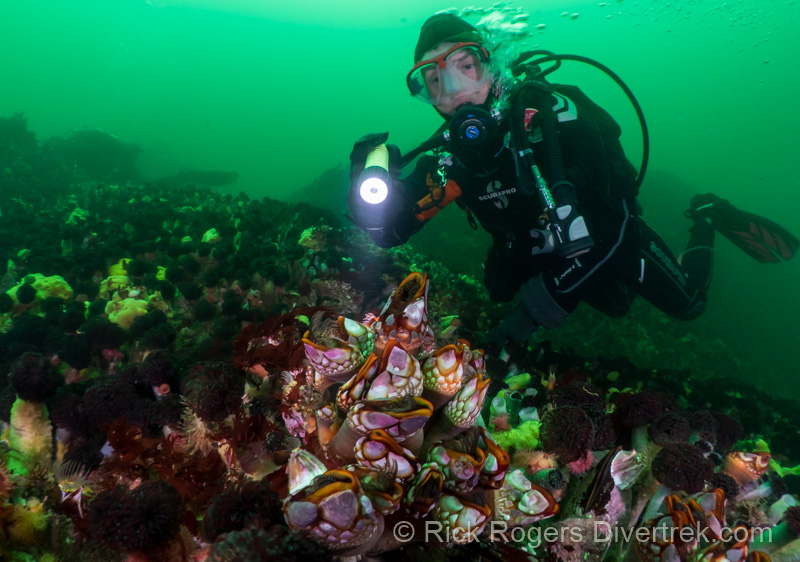
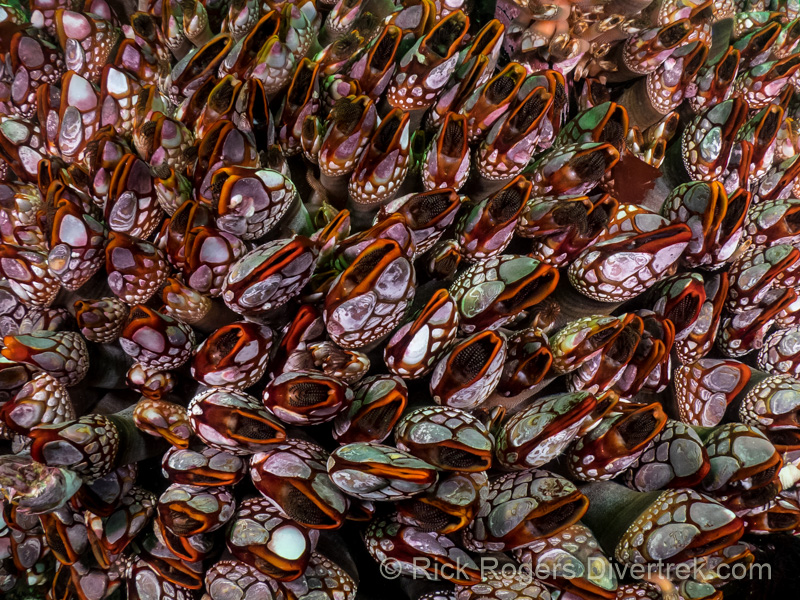
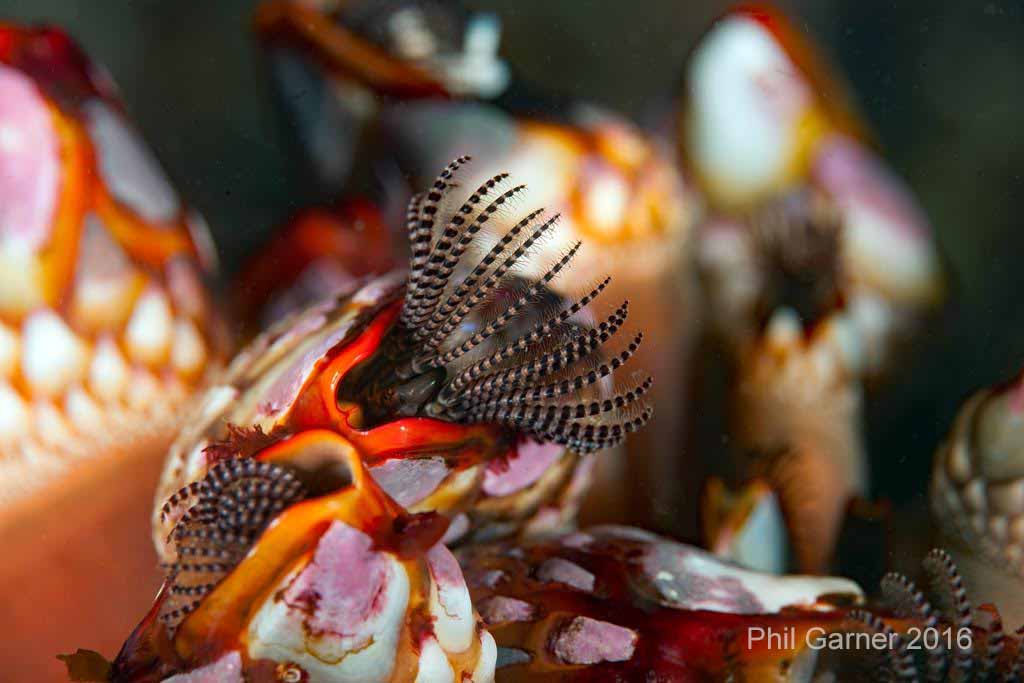
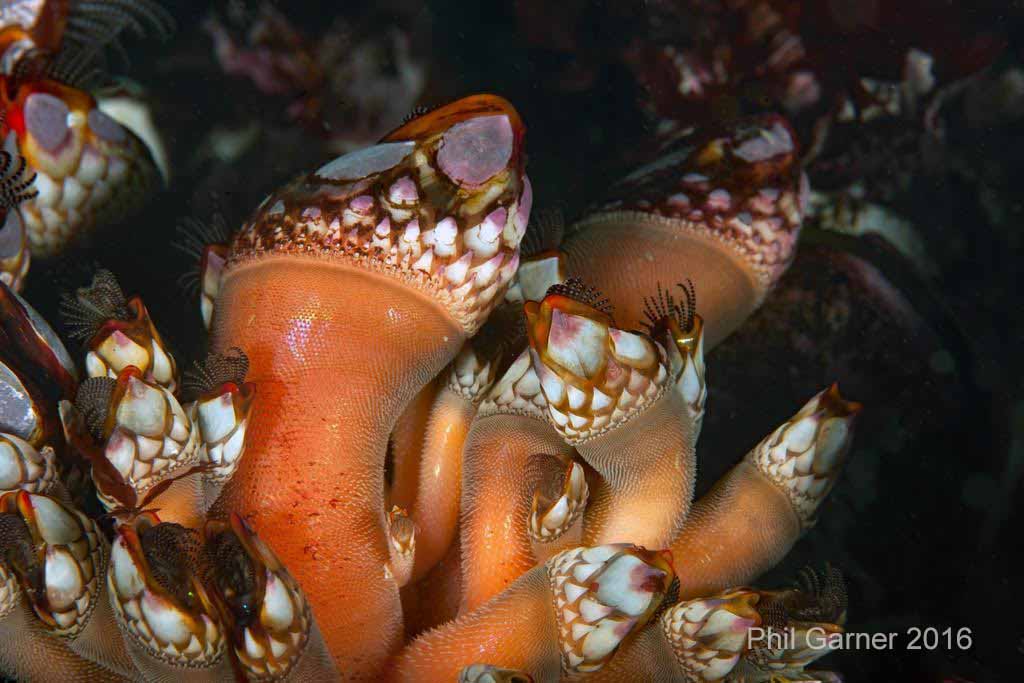
The barnacles are an impressive sight when amassed. They’re a larger and more colourful variation than the normal goose-neck barnacle. They look like a pearlish coloured barnacle wearing lipstick! The normal Goose-neck barnacle is a stone grey colour, and contains a black pigment that protects them from the sun when exposed in the shallows or intertidal zones. But the Nakwakto barnacles have lost this pigmentation, and the striking red colour that you see is actually due to the hemoglobin in their blood.
Since I used a fisheye lens, Phil Garner kindly let me use his macro photos so that you can see close-up, fine detail:

When the reverse current starts to push you along then it’s time to think about heading for the exit. Ideally you want to stay in the safe triangular shaped eddy that is formed by the ebbing current meeting the point. But some photographers may even choose to use this reverse current at the edge of the eddy to help steady them, by comfortably facing into it. This safe triangular eddy will move downstream as the ebb builds, and eventually disappear at the ocean end of the point. You will know when you’re at the end of the point since the shelf ends and you start to see kelp and reach calmer water again.
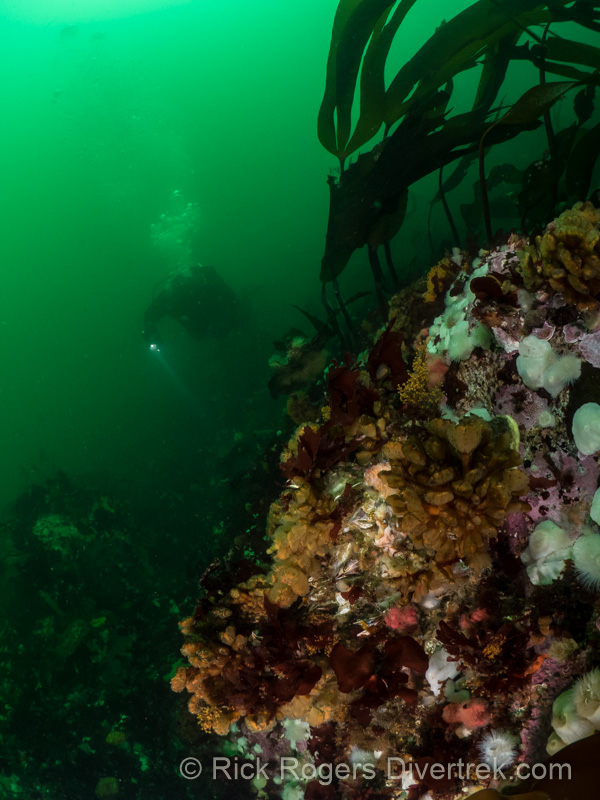
My dive computer recorded 47′, 44 mins (with 3 min safety stop), and 50 degrees F. What it couldn’t record was the exhilaration that I- and everyone else- was feeling!
Looking back, the Nakwakto Rapids was not the “adversary” that I had built up in my mind over the previous year. It’s hard not to when you hear the rapids referred to ominously as the “Northern Cauldron”. This is actually a safe dive- if you dive it appropriately and conscientiously. All you need is a sense of adventure, some measured diving experience, and dive it according to plan with a knowledgeable operator. I met some experienced divers on my trip who had dove it a half-dozen times, and with no loss of enthusiasm for it. I really look forward to returning here to do it all over again!
Tips:
One thing you might consider beforehand is how to photograph the barnacles. I shot this dive with wide angle in order to gain an overall impression. But the only problem with shooting wide-angle is that you are in a relatively confined area with other divers, especially at the beginning of the dive. So you’ll have to wait to get the shot that you want in order to avoid getting legs, fins and truncated divers in your photos. And as usual, consider that flooding tides bring clearer water. Next time I visit I think I’ll bring a macro lens and “stitch” several photos together.
We dove with Bill & Annie Weeks of God’s Pocket Resort located on Hurst Island. Steve LaCasse, of Sun Fun Divers, also runs charters here.
References:
“Marine Life of the Pacific Northwest”, A. Lamb & B. Hanby, 2005.