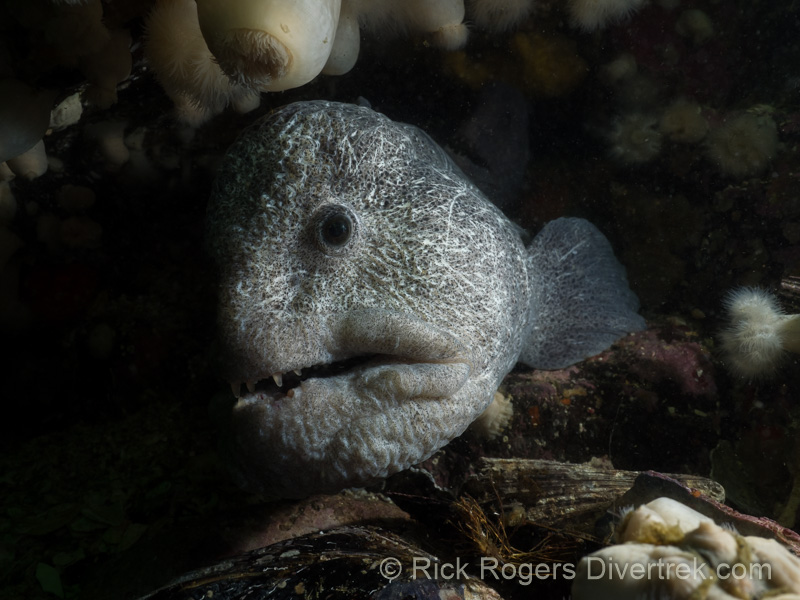
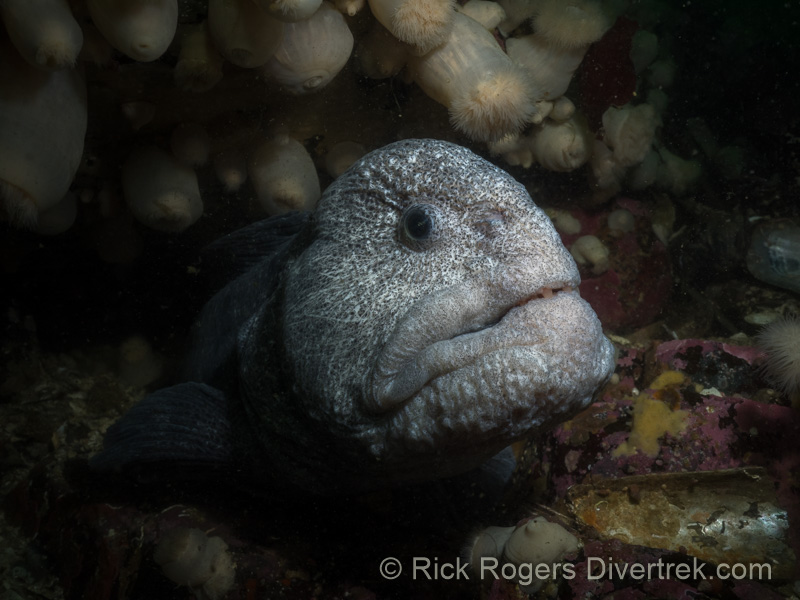
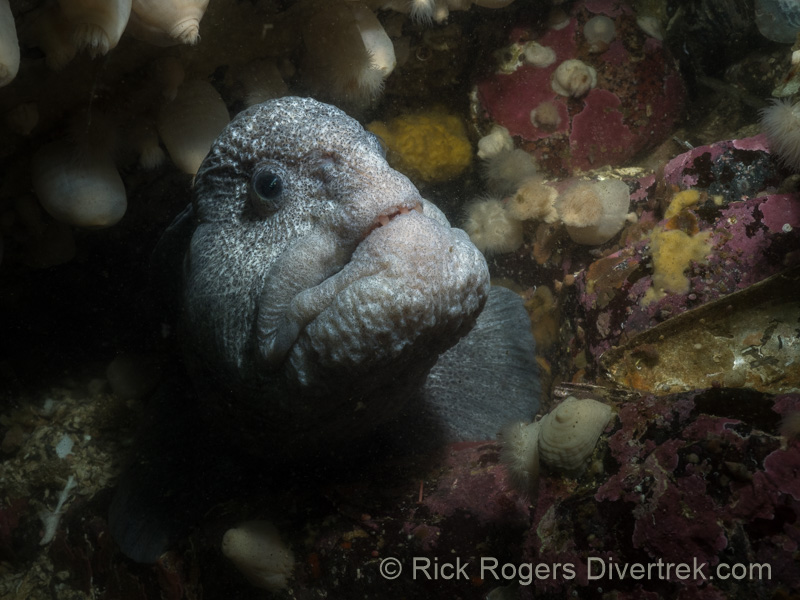
My favourite fish, the Wolf Eel. Despite its ferocious look, its temperament is just the opposite.
August, 2017
On this year’s trip we scored with some close encounters with the Grizzlies on a day trip with Sea Wolf Adventures. But the diving conditions didn’t cooperate as expected. This called for some macrophotography, close-ups, portraits, and turning off the camera to just enjoy the silent moments.
Day Trip with Sea Wolf Adventures:
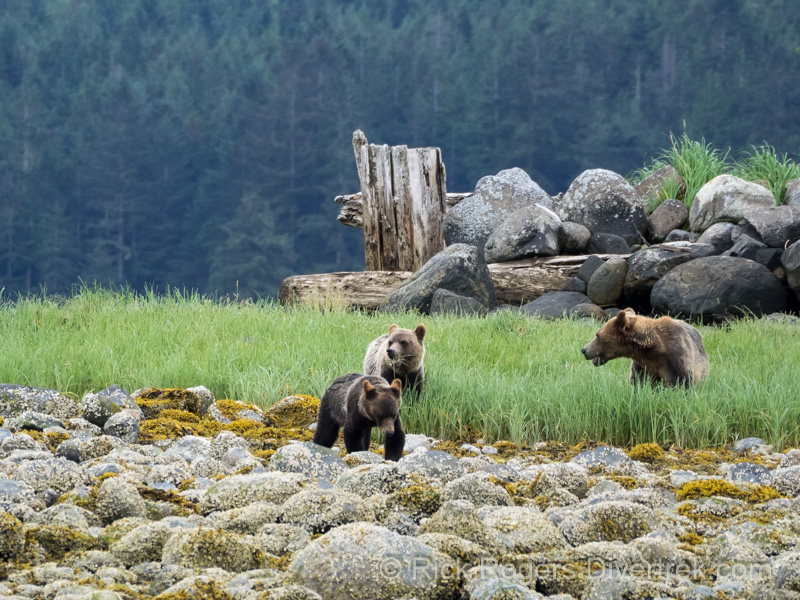
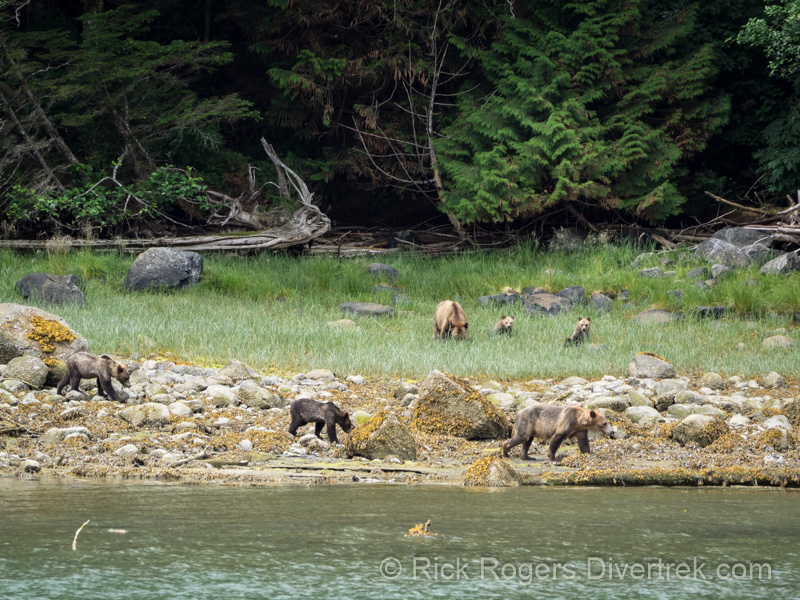
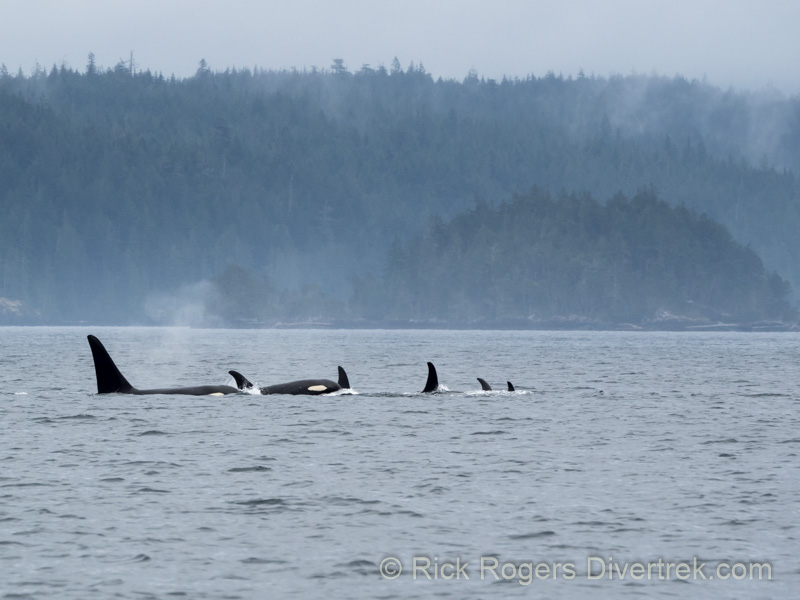
British Columbia is just too beautiful and adventure-packed of a province to limit a trip to just the diving. So this year we decided to have another go at the Grizzlies with Sea Wolf Adventures. They limit groups to six people per boat, and their tours are differentiated with an Indigenous perspective to them. You can expect to see whales, Orcas, Indigenous pictographs, former Indigenous settlements, and of course the main event-Grizzly bears! You will meet at Port McNeil, then make the crossing to the mainland in a very comfortable boat while you are served breakfast. At the mainland be prepared to enter the impressive Knight Inlet, British Columbia’s longest fjord, with vertical mountains rising from the water’s edge. Along the way we visited some remote coves to watch Grizzlies feeding at the water’s edge while we made our way to Glendale Cove, which has one of the highest concentrations of Grizzlies in British Columbia. Here are some pics from that area:
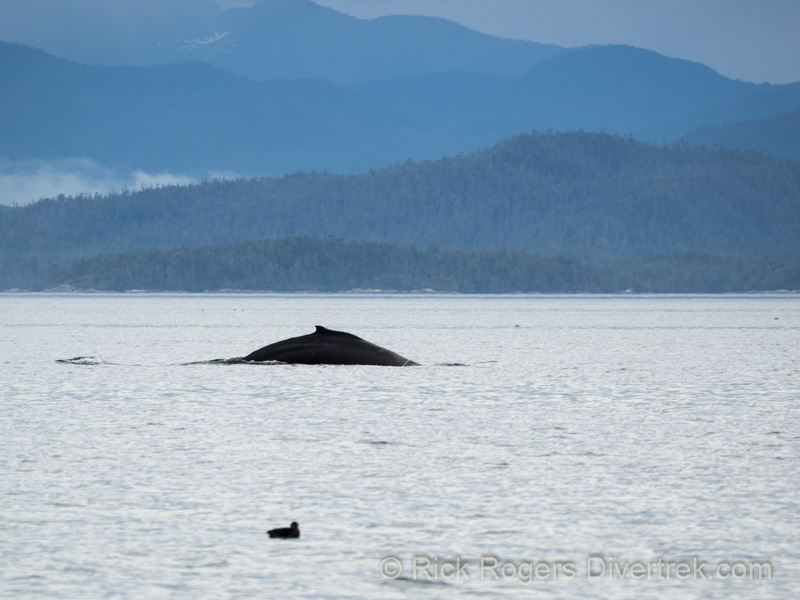
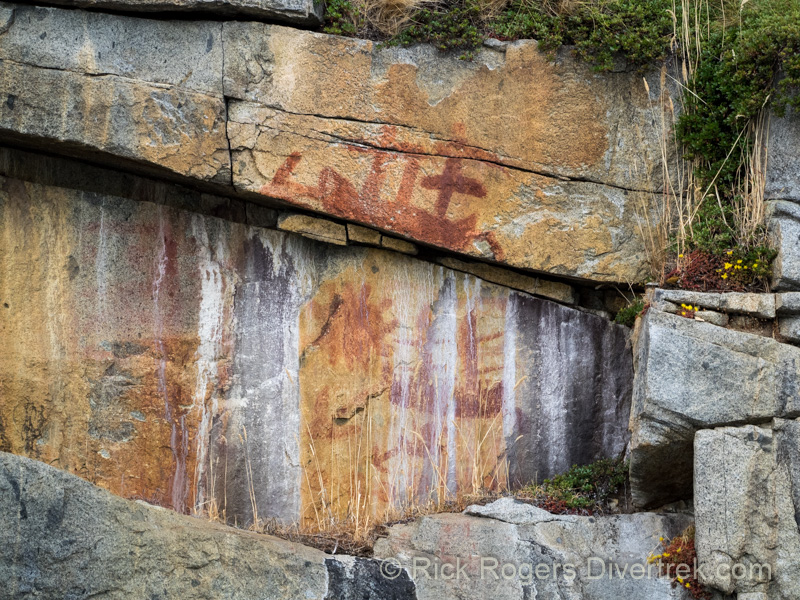
A mother Grizzly with her two cubs at Glendale Cove, Knight Inlet. Here they are eating Sedge grass, which contains up to 25% protein. She will teach them how to forage for food throughout the different seasons. They will stay with her for two years, during which she will fiercely protect them.Tense moments. We waited to see what would happen when these two different families met. They peacefully passed one another with a mutual respect. They apparently know each other. The guides believed that the foreground mother bear is a daughter of the other.Orcas are another common sighting in the Johnstone Strait area. The Humpback whale, a guaranteed sighting here. The adults come to feed in the cold but rich and productive waters found here. A section of the Indigenous pictographs found on Turnour Island, depicting sailing ships. Our guide, K’Odi, believed them to representions of the first visits in the early 1790’s by Captain George Vancouver to the Island bearing his name.
Diving God’s Pocket:
Unfortunately this year’s trip coincided with a large plankton bloom that reduced visibility to anywhere from 3′ and pitch black on some dives, to an improved milky 10-15′, depending on the depth, tidal cycle and location. This coupled with a small tidal variation didn’t help to “flush out” the channels and clear up the water as it would have happened normally. And fog and large swells stopped us from diving some of the remoter northern sites. These conditions called for close-up work, and abandoning the wide-angle seascapes that I had been thinking about since the last trip. On some dives I thought I only carried my camera as a sort of amulet to ward off Murphy’s Laws-that I would surely see something extraordinary if I didn’t bring it. Here are some of this years’ highlights:
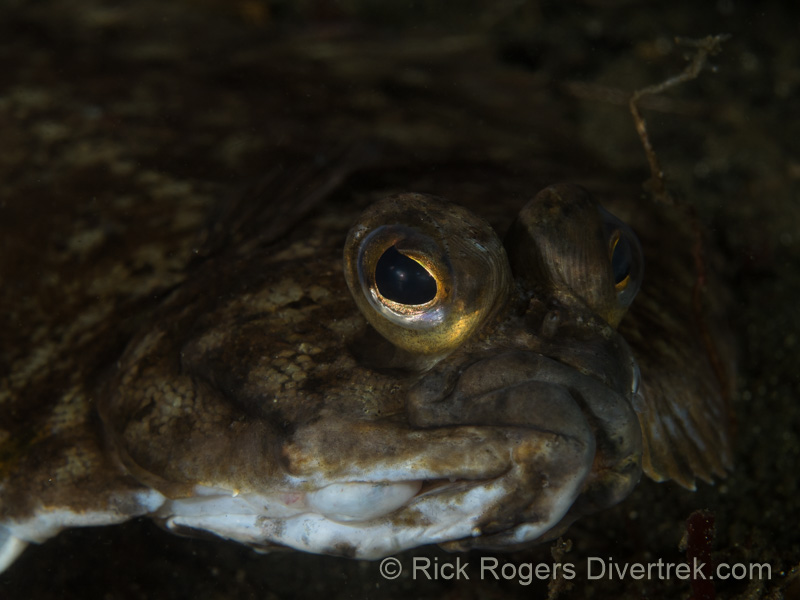
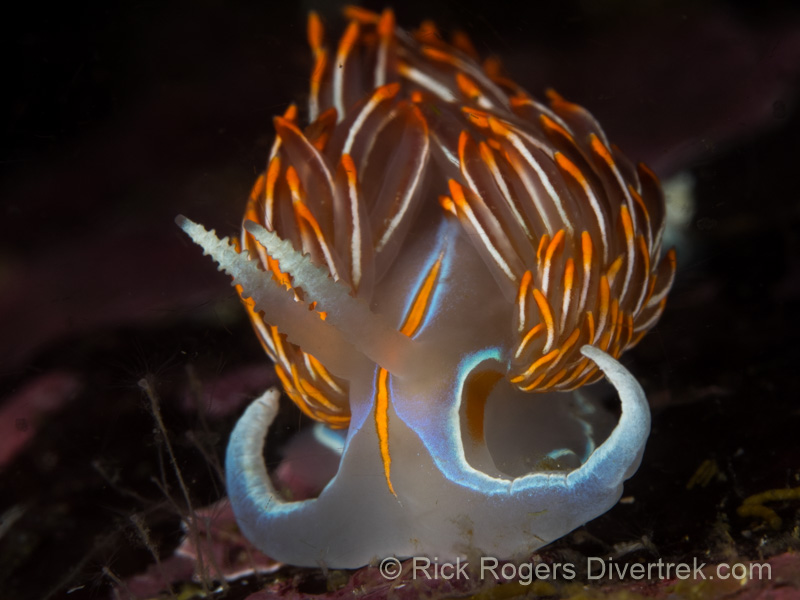
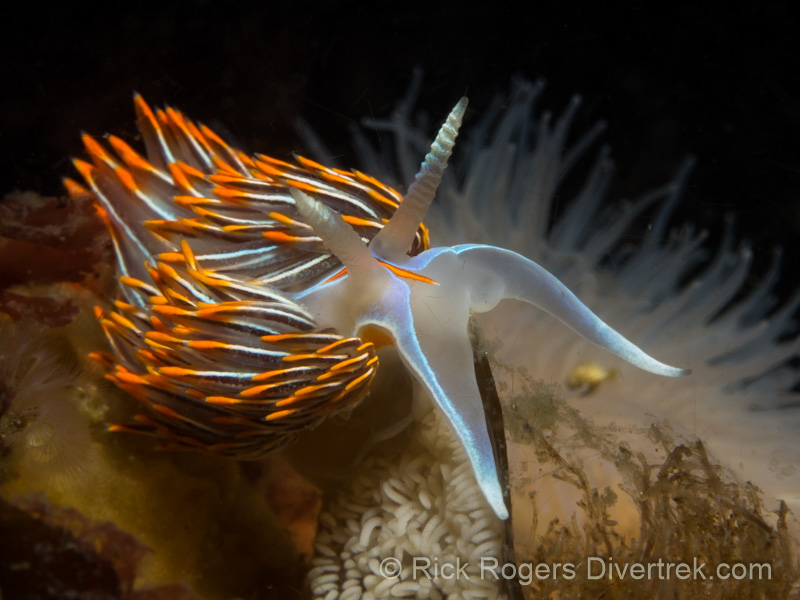
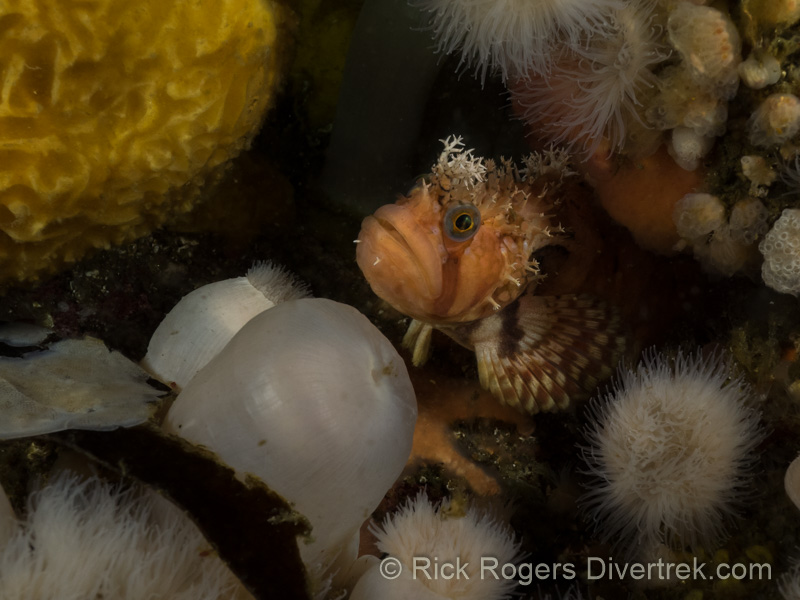
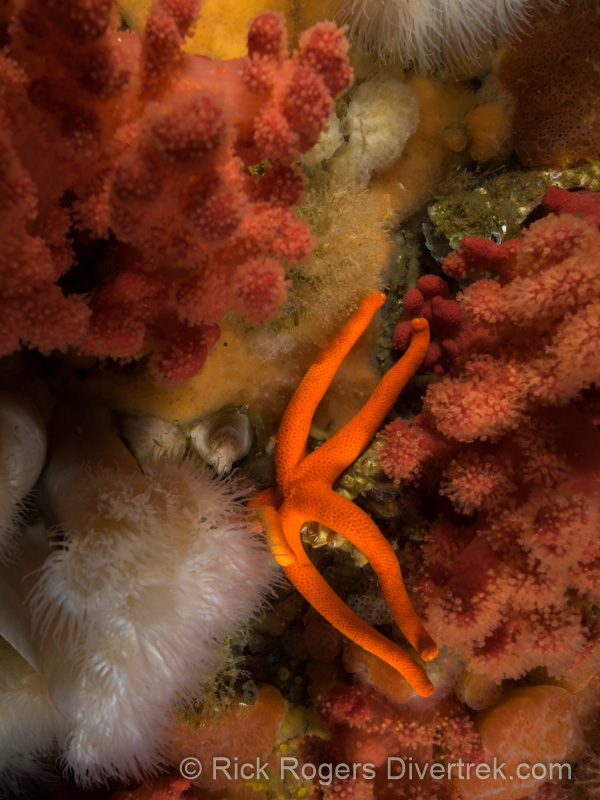
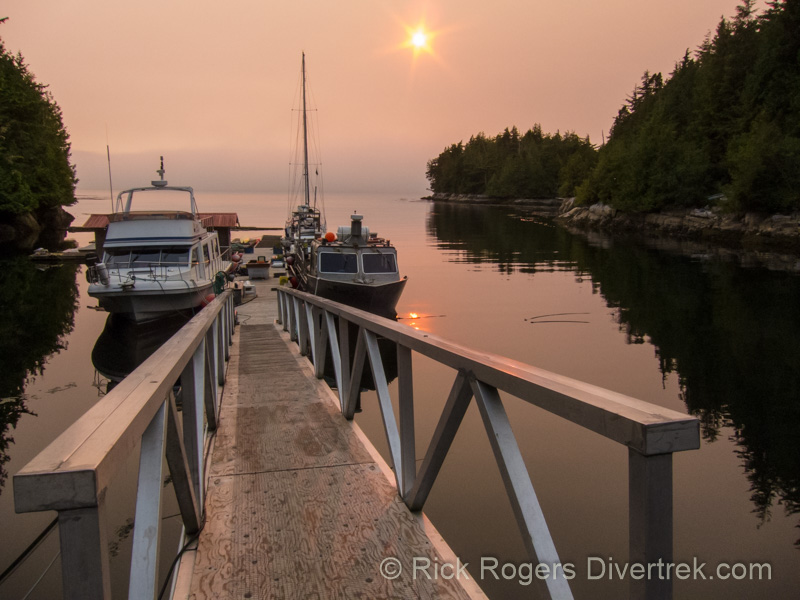
An enthusiastic model. This flounder-a Rock Sole, I believe-really wanted their picture taken. They’re normally very skittish, in my experience. But I think this one was attracted to my focusing light. I would back up to get a shot, and the Flounder would close the distance. This went on and on until I got a decent shot, all the while trying not to disturb the silty bottom.A lucky find- a mated pair of Wolf Eels in their den. As you can see, the male (left) is very different in appearance from the female (right). The males are larger, lighter coloured, have a blunted forehead, and are more “puffy”. It was once thought that they mated for life, but this has been found to not necessarily be true.A calm and relaxed subject. Time for a Wolf Eel Portrait.…and another!Sure he could’ve got the Urchin himself-their favourite food-but they seem to enjoy having it handed to them. As you can see here, the roof of their mouth is lined with molars, designed for crushing things like urchins, mussels, clams, snails, and crabs.Wolf Eels are really just a long fish, up to 8 ft in length. They have pectoral fins, which distinguish them from true eels.A young sub-adult Wolf Eel. The spotted pattern will fade as they mature. They’re not seen as often by divers since they hide so well. I only spotted this one because I just happened to glance back over my shoulder! I would have to patiently wait to snap a photo each time it reemerged, checking to see if I had lost interest.The beautiful Opalescent Nudibranch (Hermissenda crassicornis) feeding on some hydroids. For some reason unknown to me it was the most encountered nudibranch this year-it was everywhere. Note that H. crassicornis has undergone a recent revision into three distinct species. Pictured above is the real H.crassicornis, which ranges from northern California to Alaska. Thanks to Merry Passage for clarifying (1).H.crassicornis with its eggs. They’re very distinct from other species’ eggs.A Red Irish Lord, ready to ambush. They can change colour to better match their surroundings, a yellow sponge in this case.A Decorated Warbonnet. They’re easy to miss unless you move slowly and look very closely and carefully.A Blood Star makes an interesting composition. There’s a considerable variation within this species, with some being a deep “blood red” colour.Space is at a premium here in the Browning Pass! A Giant Rock Scallop overgrown with an urchin and barnacles. Note the tiny black eyes on the orange mantle. If they detect movement (shadows), the scallop will close up.A beautiful and surreal sunset at God’s Pocket resort. Unfortunately this is due to the scattering of light by the dust particles created by the unprecedented forest fires this year in British Columbia.