Diving the Kona Coast, Hawaii, aboard the Kona Aggressor II.
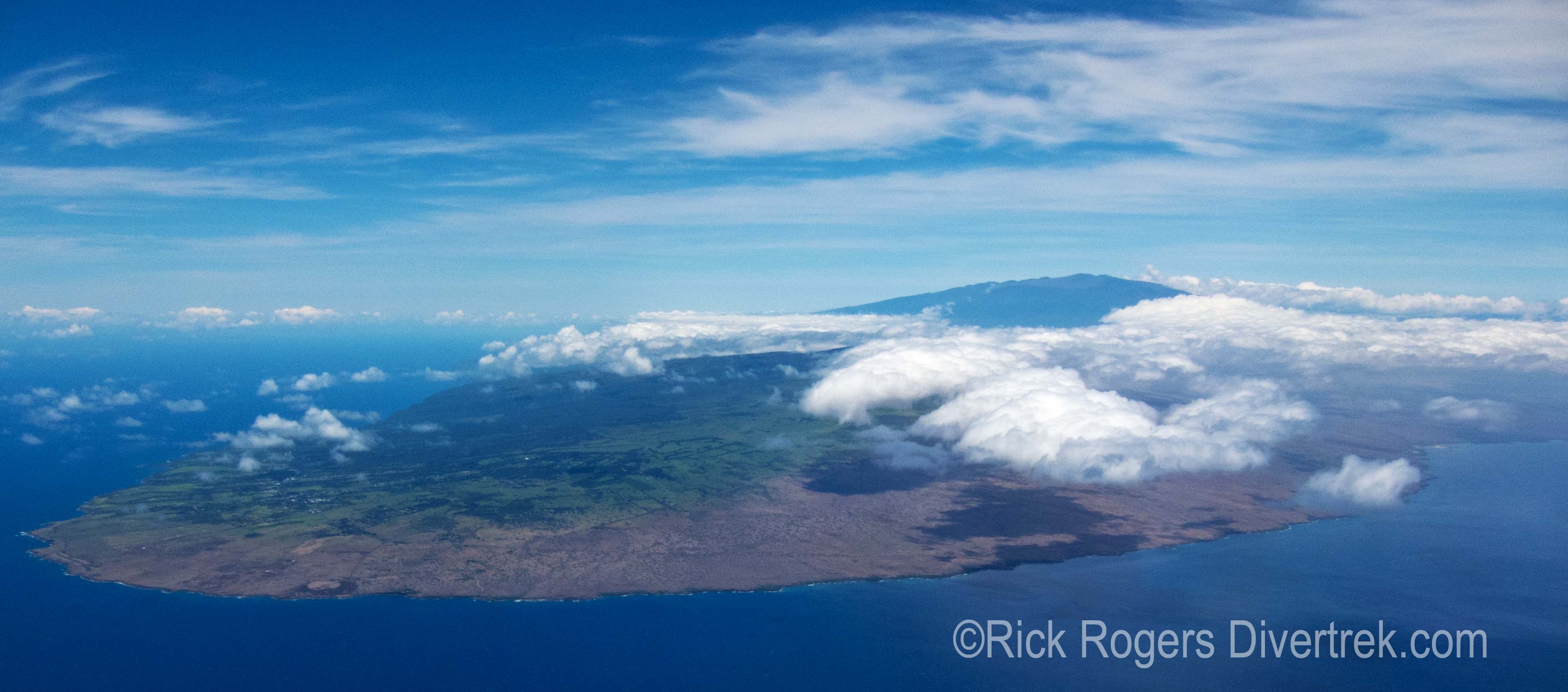
Hawaii_aerial_view
Aerial view of Hawaii, the “Big Island”. The Island is actually comprised of two volcanoes, with Mauna Loa (visible at upper right) distinguished as the world’s largest active volcano. The Kona Coast runs the Southwestern part (at right on the photo).

July, 2015.

The Kona Coast of Hawaii stands out for its interesting volcanic formations that scuba divers can explore: lava tubes, caves, caverns, archways, pinnacles, and plunging walls. And owing to Hawaii’s isolation, about 25% of the fishes that you will see here are found nowhere else in the world. In addition, Kona is home to a resident population of about 130 Coastal Manta rays, with almost guaranteed sightings at their famous Manta night dive & snorkel.

(more…)

Continue Reading

Manta Ray Night Dive, Kona, Hawaii.

July, 2015

Manta Ray at Kona, Hawaii.
A Manta Ray glides effortlessly overhead in the late afternoon sun at “Mantaville”.

The Manta ray night dive is Hawaii’s signature dive and snorkel. It’s consistently rated as one of the top ten dives in the world. In no other place can you see Mantas as consistently, in numbers, and up so close and personal that they will pass within inches of you.  Exciting and visually stunning, this dive will stay with you forever. (more…)

Continue Reading

The Hell Ships of Truk Lagoon.

Death on the Hellships by Gregory F.Michno
Gregory Michno’s book was the first to concentrate on this aspect of the POW experience.

February 20, 2015.
I have a strong interest in history, and I’m always reading to gain insights and context into the places that I have been or want to visit in the future. While reading Jerome T. Hagen’s excellent award winning series “War in the Pacific”, I was most struck by Chapter 9 (Vol.1), the “Hell Ships”. I have reproduced this Chapter below for your reading, with the author’s permission, in order to help promote awareness within the scuba diving community.
The Hell Ships are probably one of the least known atrocities that occurred in WWII by the Imperial Japanese. They earned their namesake from the survivors that describe the conditions on them to be the worst experience of their captivity, even when compared to the Bataan Death March (Michno, p.306).
Having dived several Japanese transports (“Maru”) at Truk Lagoon -the “Wreck Diving Capitol of the World”- I was interested to see if any of these may have been listed as belonging to the more than 150 known Hell Ships. There are at least two. (more…)

Continue Reading

Shark Diving Rangiroa, French Polynesia.

July 15-18, 2014

Shark diving Rangiroa.
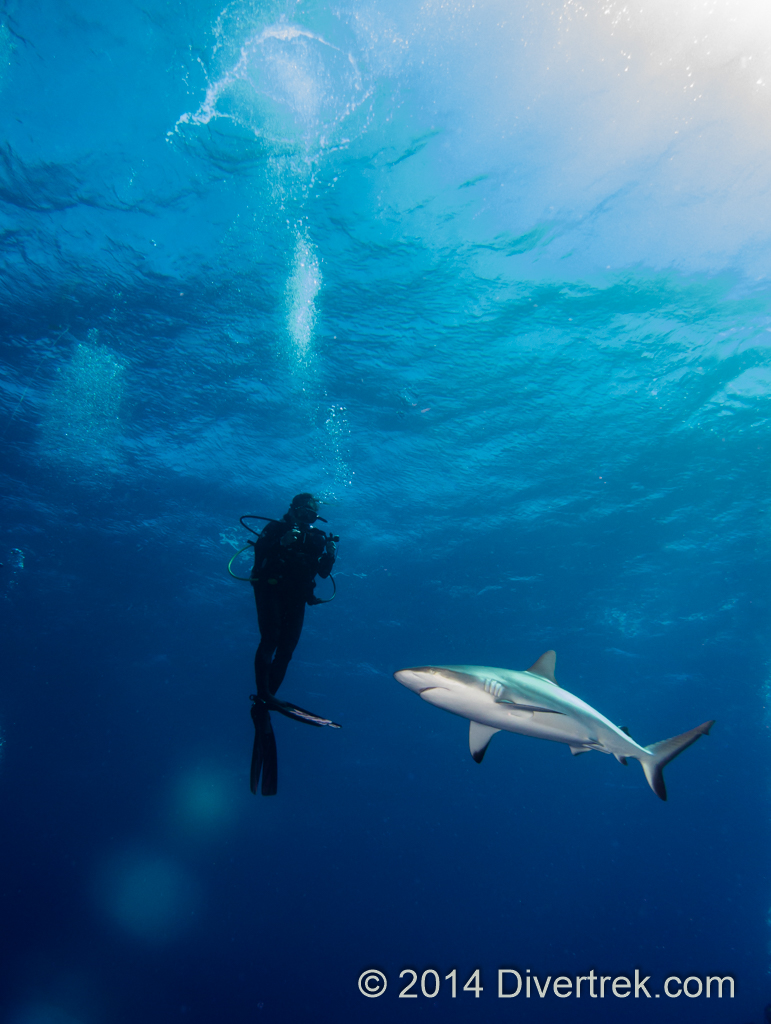
Kristy photographs a Grey Reef shark.

On the second part of our trip we went looking specifically for the bigger animals that Rangiroa is famous for: sharks, manta rays, marlin, dolphins, and huge schools of barracuda and Jacks. And we did see them all, including a Lemon, Tiger, Silvertips, and plenty of Grey Reef sharks.

(more…)

Continue Reading

Fakarava, French Polynesia (Part 1)- the Shark Wall.

July 11-13, 2014

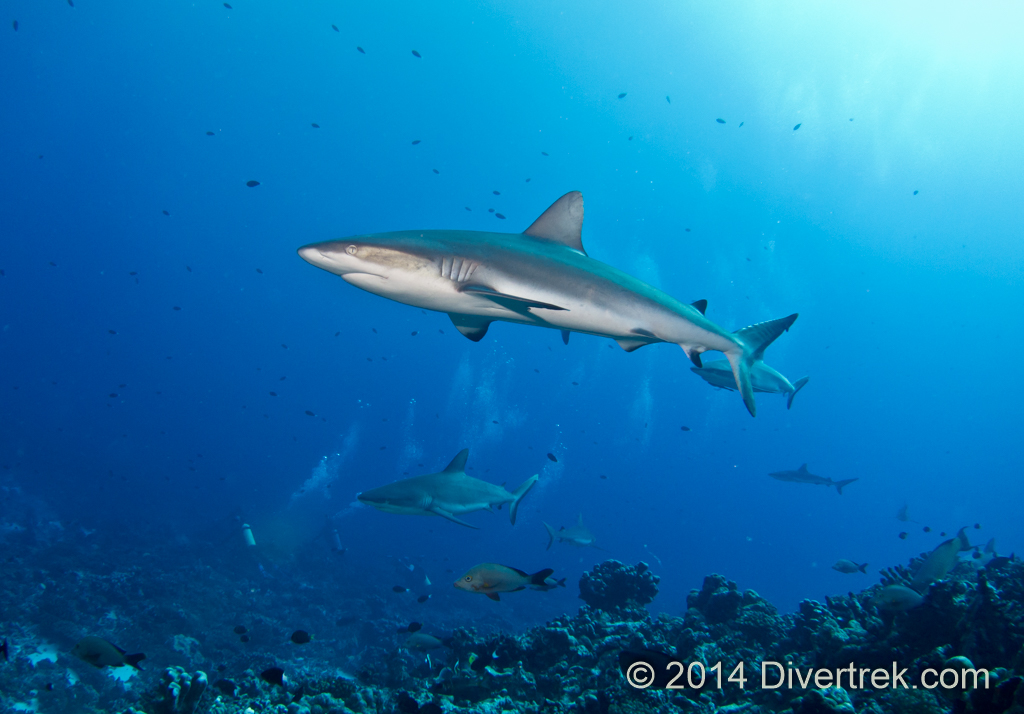
Grey Reef Shark at Shark Wall in Fakarava
Grey Reef Shark at Shark Wall, Fakarava South Pass

Sometimes to get the best diving you have to go further, endure longer flights, and do without the creature comforts that we all take for granted. Fakarava was that kind of trip. I joined a phototour with Scott Geitler’s Bluewater Photo, specifically to photograph schooling Grey Reef sharks (Part 1).  It is reputedly one of the best places in the world to see this. And as a bonus, the timing was chosen to coincide with the annual Grouper spawning event (Part 2). On the second part of the trip, we dove four days at Rangiroa.

(more…)

Continue Reading

Diving Truk Lagoon- the last dives, Submarine I-169, Betty Bomber and Kensho Maru.

Aug 3, 2013

Submarine I-169 at Truk Lagoon
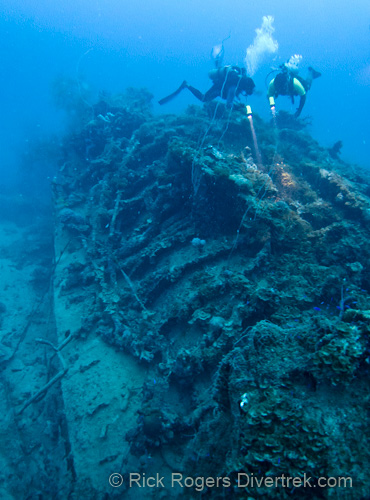
The submarine I-169. Its heavily damaged in places due to depth charging. Here you can see the inner pressure hull exposed.

I’ve always been interested in submarines, beginning when I found out that my great-grandfather served in the Royal Navy on the ill-fated submarine HMS E24 in WWI.  So when I asked about the I-169 Capt. Nelson said “We’re here to make your dreams come true”. (more…)

Continue Reading

Diving Truk Lagoon- the “Ghost Fleet” Wrecks

Fujikawa Maru
Exploring the holds of the Fujikawa Maru.

July 2013

Truk Lagoon was the scene of “Operation Hailstone” (Feb. 17-18, 1944), a devastating aerial bombardment by the US Navy on Japan’s largest Naval strongold in the Pacific.   Today it is known as the “world’s greatest wreck dive”, with more than 48 preserved and diveable wrecks all concentrated in one area.

To dive them is to step back in time.   You will see live munitions, guns, planes and tanks and personal artifacts from the period, such as china, bottles, books, shoes and even the occasional bone.  These wrecks are considered to be war graves.   You are allowed to penetrate the wrecks, but strict policies are in place that forbid the removal of anything from them.   

(more…)

Continue Reading

Truk Lagoon Day 1 Island Tour

July, 2014

Etten Island in Truk Lagoon (Chuuk)
Preparing to land on Weno at Chuuk Lagoon (formerly called Truk Lagoon). Note that Etten Island in the foreground was shaped by the Imperial Japanese (using forced labor) to replicate an unsinkable aircraft carrier. Tonoas (formerly called Dublon) is in the immediate background.

Truk’s (Chuuk’s) historical treasures aren’t just hidden beneath the waves. They’re everywhere.  And a WWII buff’s dream.  The Blue Lagoon Dive shop/Resort is located on Weno (formerly Moen), the main island of Chuuk, and occupies the prior site of an Imperial Japanese fighter & Seaplane Base. On this beautiful property you will find old bunkers, machine guns, propellers and other artifacts.
The dive shop was founded and run by the late Kimiou Aisek, who witnessed the US Navy’s devastating attack on Truk (Operation Hailstone) in February 1944. His son Gradvin now operates the dive shop. Here are some pictures of the dive resort grounds:

(more…)

Continue Reading
  • 1
  • 2
Close Menu